Most licensed movers won’t load propane tanks, paint, gasoline, ammunition, live plants that need an agricultural inspection, perishable food, or pets onto a truck. Federal hazmat rules and California agricultural law make some of these illegal to transport, and moving insurance won’t cover the rest if something goes wrong. San Diego adds a few local wrinkles the national moving blogs skip, especially around backyard citrus trees and coastal propane. Here’s the full do-not-pack list, why each item is on it, and what to actually do with the stuff that has to stay behind. Always confirm the specifics with the mover you book, since each company’s prohibited list may vary.
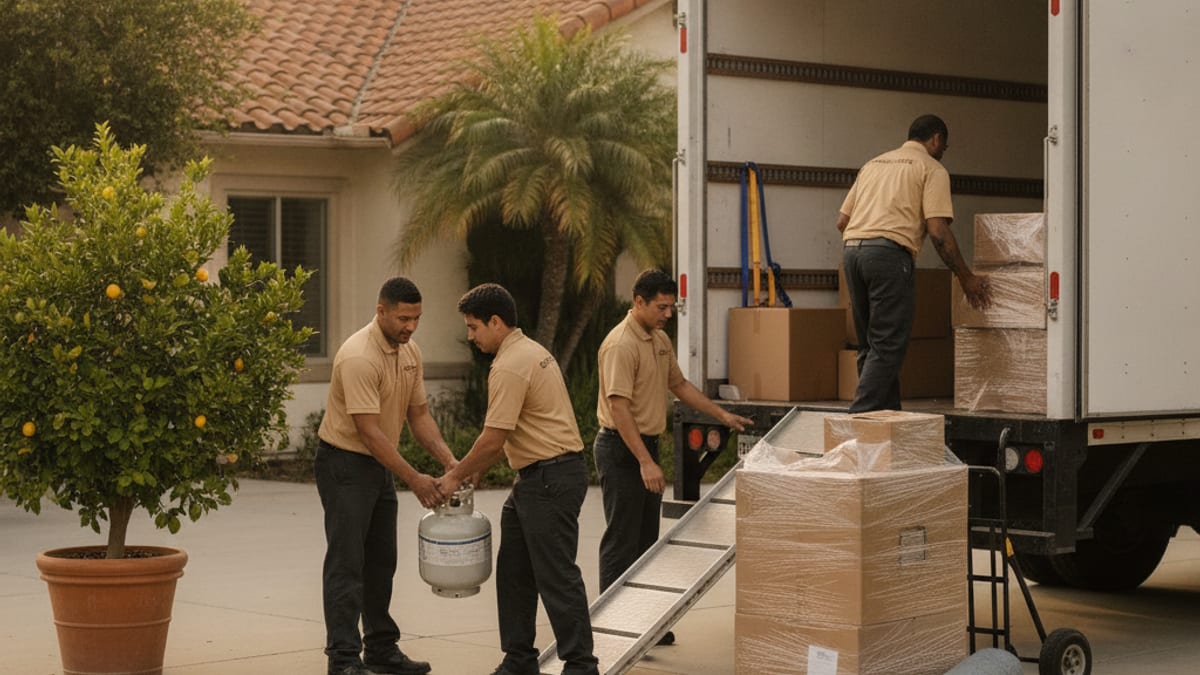
The full list: what movers won’t move
- Hazardous and flammable chemicals. Paint, solvents, pool chemicals, motor oil, and a full case of aerosol cans are federal no-gos under DOT hazmat rules. A single can of hairspray or sunscreen in your toiletry bag is fine.
- Propane tanks and fuel. DOT classifies these as hazardous even when the gauge reads empty, because the residual vapor is what makes them dangerous, not the liquid propane itself.
- Live plants headed out of state. California agricultural law lets border inspectors reject or destroy any plant crossing a state line without clearance.
- Ammunition. Federal rules treat ammunition as an explosive, so it never rides in the truck with your boxes, loaded or not.
- Perishable and frozen food. A cross-country trailer isn’t refrigerated, and even a same-day local move usually isn’t worth the liability for a crew to take on your fridge contents.
- Pets and other live animals. No licensed moving company transports a living animal. They ride with you.
- Cash, jewelry, and irreplaceable documents. Movers insure your furniture, not a shoebox of cash or your passport. If it’s replaceable at any price, it can go on the truck. If it isn’t, it goes in your car.
A few of these categories need more explanation, especially in San Diego, so here’s the detail behind each one.
Can movers move plants in San Diego?
Not across state lines, and sometimes not even across the county. California Food and Agricultural Code Section 6461.5 lets the state’s agriculture inspectors reject or destroy plant material moving between states that could carry pests or disease. Interstate movers won’t put a houseplant on a long-distance truck because one flagged plant at a border checkpoint can hold up the whole shipment.
San Diego County adds its own layer. The county currently sits inside active Huanglongbing (HLB, also called citrus greening) quarantine zones in Fallbrook, Oceanside, Rancho Bernardo, Valley Center, and, as of March 2026, Ramona. Inside those zones, the county recommends against moving citrus plants, leaves, or foliage in or out, even for a move that never leaves San Diego. If your yard has a lemon or orange tree and you’re relocating within the county, check the San Diego County Citrus Quarantine Program first.
For a local move outside a quarantine zone, a healthy houseplant kept indoors in commercial potting mix usually travels fine in your own car. Most movers won’t load it on the truck. For a long-distance move, plan to gift, sell, or donate anything rooted in soil before moving day.
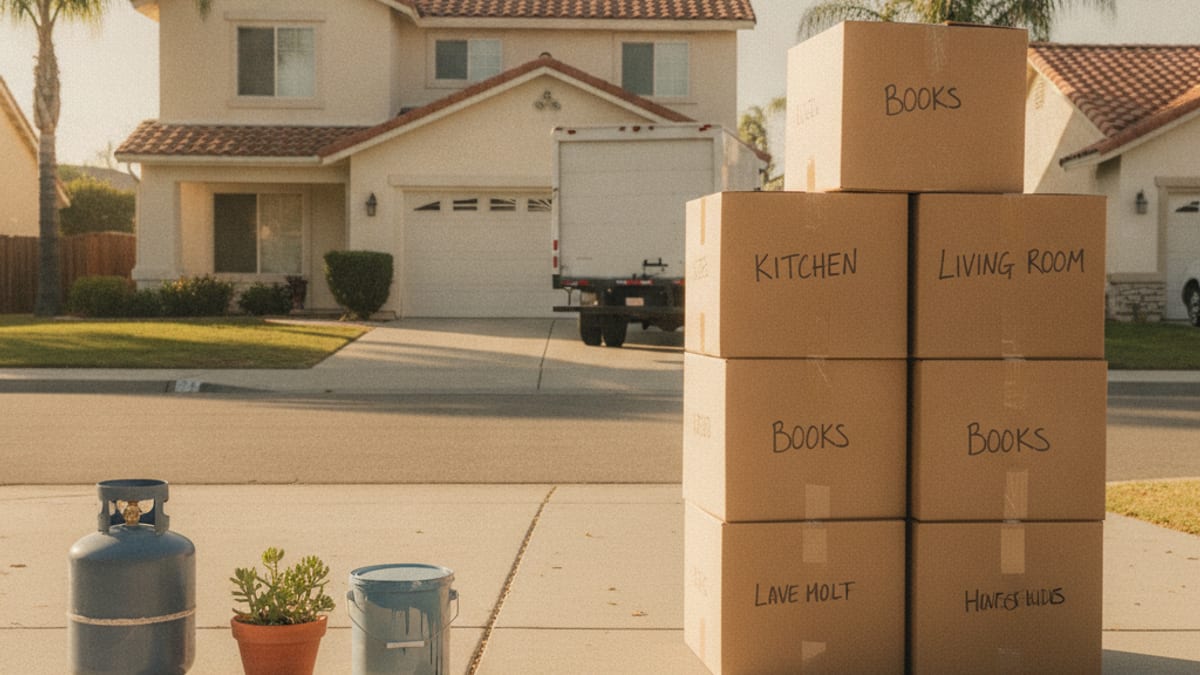
Will movers take propane tanks and fuel?
No, not even empty ones. The Department of Transportation classifies propane cylinders as hazardous material because the tank holds flammable vapor after the gas gauge reads zero. That includes small camp-stove canisters, not just the big tank on your patio grill.
San Diego backyards run heavy on propane. Patio heaters, fire pits, and built-in grills are standard on coastal properties from La Jolla to Coronado, and most people don’t think about the tank until moving day. Drain or exchange it at a refill station (most stores that sell tanks take an old one back), or leave it with the new owner if you’re selling the house. The same rule covers gas cans, kerosene, and lighter fluid. If it can’t be emptied, it doesn’t go on the truck.
Can you put guns and ammunition on the moving truck?
Firearms and ammunition get handled differently. Some movers will transport unloaded firearms with advance written disclosure, and every serial number gets logged on the inventory so the same gun that left your old house shows up at the new one. Ask the mover you book what their specific policy is. Ammunition is a separate question. Federal transport rules classify it as an explosive, which puts it outside what a household goods carrier can legally load, loaded or not, boxed or not.
The practical answer: pack ammunition separately and transport it yourself, following California’s rules for how it needs to be stored and secured. This isn’t legal advice. For specifics, the California Department of Justice’s firearms division is the source to check.
If you’re also moving a gun safe, that’s a different job entirely. A 300 to 800 pound safe needs a dedicated crew and the right dollies, not a rental van. The gun safe moving guide covers what that actually costs.
What about food, pets, and other everyday surprises?
A few more categories catch people off guard because they don’t look dangerous on the surface.
Perishable and frozen food doesn’t travel. A moving truck isn’t refrigerated, and even a same-day local move usually isn’t worth the risk of melted freezer contents. Pack the pantry, not the fridge.
Pets ride with you, always. No professional mover transports a living animal, and honestly, you wouldn’t want them to. If you’re moving with a dog or cat, the guide to moving with pets in San Diego covers the drive, the heat, and how to keep them calm on load day.
A handful of household items sneak onto the not-allowed list too: a full case of aerosol cans, nail polish remover, pool and spa chemicals, and anything with a flammability or pressure warning label.
Cash, documents, and things to keep with you
Movers carry insurance for your furniture and boxes, not for a stack of cash or your passport. If an item is irreplaceable or holds real value on its own, it belongs in your car, not the truck.
Keep these with you: cash, jewelry, passports, birth certificates, Social Security cards, medical records, external hard drives, and anything you’d genuinely lose sleep over if a box went missing. This isn’t a knock on the crew. It’s just how moving insurance works, built around furniture and household goods, not currency or one-of-a-kind documents.
San Diego rules that trip people up
Beyond the citrus quarantine and coastal propane volume covered above, two more local details don’t show up on generic moving blogs written for the whole country.
Vehicles you’re leaving behind. Household goods movers don’t move operable cars or motorcycles. That’s a licensed auto transporter’s job. If you’re relocating out of state and leaving a car in California that won’t be driven, the DMV’s Planned Non-Operation status can keep you from racking up registration penalties while it sits. File it directly at dmv.ca.gov.
Hazardous waste drop-off. Stuck with a propane tank, old paint, or pool chemicals with nowhere to go? The City of San Diego’s Household Hazardous Waste facility at Miramar takes them by appointment, free for residents.
What licensed movers in this marketplace handle that other movers turn down
Plenty of moving companies pass on anything heavy, awkward, or oddly shaped. The piano and gun safe movers page covers exactly those items: gun safes, upright and grand pianos, hot tubs, antiques, and anything that needs custom crating.
A locked gun safe is one of the only heavy items where the difficulty is the weight and the stairs, not the contents. Same with a piano; see the guide to moving a piano without damaging it or your floors. The items on the do-not-pack list above are restricted by law or by insurance, not by difficulty. Heavy and awkward is what licensed movers handle.
What to do with the items movers won’t take
A do-not-pack pile is normal on every move. The goal is to plan for it, not discover it at 7 a.m. on moving day.
Start sorting a few weeks out, not the night before. The San Diego moving checklist and timeline has a week-by-week breakdown with a step for setting these items aside before the crew arrives. Donate or gift what’s usable, a full propane tank, unopened paint, pantry food, to a neighbor or a food bank. Drop hazardous chemicals at Miramar. Transport cash, documents, and firearms yourself.
If packing everything else feels like the bigger project, licensed movers offer packing services: full pack, partial pack, or just the fragile stuff. Book smarter, and the do-not-pack pile is the only thing left to think about on moving day.
Frequently asked questions
What items are movers not allowed to move?
Hazardous materials top the list: propane, paint, gasoline, pool chemicals, and most aerosols. Ammunition, live plants crossing state lines, perishable food, and pets round it out. Cash, jewelry, and irreplaceable documents aren’t illegal to move, they’re just not covered by moving insurance, so they travel with you instead.
Can movers move plants?
Sometimes, locally. Not across state lines. California agricultural law lets inspectors reject or destroy plants crossing a state border, and San Diego County has its own citrus quarantine zones in Fallbrook, Oceanside, Rancho Bernardo, Valley Center, and Ramona. Healthy houseplants usually travel fine in your own car for a local move.
Will movers take a propane tank?
No, even if it reads empty. The tank holds flammable vapor after the gas is gone, which puts it under DOT hazmat rules. Drain or exchange the tank before moving day, or drop it at the City of San Diego’s Household Hazardous Waste facility at Miramar.
Can you move ammunition with a moving company?
No. Federal rules classify ammunition as an explosive, which keeps it off a household goods truck regardless of quantity or packaging. Unloaded firearms can sometimes travel with advance written disclosure, but ammunition needs to go in your own vehicle.
What should I do with items my movers won’t take?
Sort them a few weeks before move day, not the morning of. Donate or gift what’s usable, drop hazardous items at Miramar, and keep cash, documents, and firearms with you. Call (858) 400-4069 if you’re not sure whether something is a yes or a no. The marketplace can connect you with a licensed mover who gives a straight answer.
Do San Diego movers have local rules a national mover wouldn’t know?
Yes. The citrus quarantine zones, the volume of backyard propane on coastal properties, and California’s plant inspection rules don’t show up in a generic checklist written for the whole country. A San Diego-based crew plans around them by default.
Call before you pack the truck
If you’re not sure whether something on your list is allowed, ask before moving day instead of finding out when the crew is standing in your driveway. Call Master Movers San Diego at (858) 400-4069 and walk through your do-not-pack pile. The marketplace can tell you what has to stay behind, what licensed movers on the platform handle that other movers won’t touch, and how to plan the rest.