A San Diego-to-Texas move starts with two key choices: the interstate mover and the load type. Compare registration, written terms, inventory procedures, and valuation choices before booking San Diego to Texas movers.
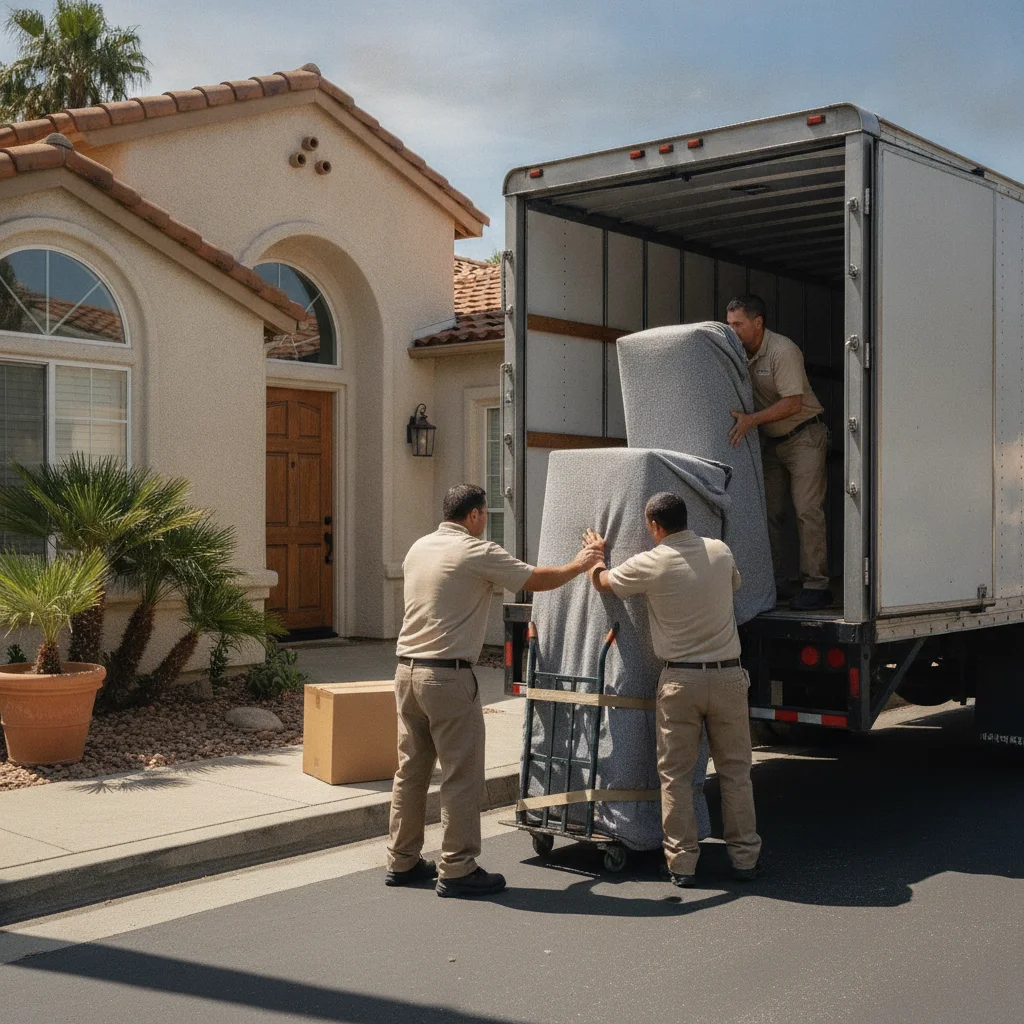
Why a Texas move is priced by weight and distance, not by the day
An interstate quote reflects the shipment and the route between both addresses. It isn’t simply a local hourly rate stretched across several days. Shipment weight, distance, requested services, and access conditions can all shape the mover’s written price.
Give every mover the same information. Include the exact San Diego pickup address and the Texas destination. Identify stairs, elevators, loading docks, long carries, gate restrictions, and parking limits. A downtown San Diego high-rise creates a different pickup plan than a Rancho Peñasquitos driveway. The mover also needs to know whether either home has restricted loading hours.
Your item list matters just as much as the addresses. Record furniture, appliances, packed boxes, garage contents, patio pieces, and specialty items. Tell the mover what won’t be making the trip. A quote based on an incomplete list gives you a weak comparison, even when the document looks polished.
Ask how the mover will determine shipment weight. Then ask how you can review the related records. Don’t substitute bedroom count for an actual inventory discussion. Two homes with the same number of bedrooms can contain very different shipments.
We couldn’t confirm a defensible market price for this route from a primary source. Only the mover can set the written price for your shipment. Our guide to long-distance moving costs from San Diego explains which details to organize without publishing an unsupported route average.
Compare the same service scope across every estimate. Packing, storage, specialty handling, and difficult access should be discussed before signing. Otherwise, you may be comparing different jobs rather than different movers.
Choosing between a dedicated truck and a consolidated load
Load type changes how your belongings share space and how the mover coordinates the trip. Ask each company whether it offers dedicated service, consolidated service, or both. Don’t rely on those labels alone. Get the exact arrangement in writing.
For a dedicated option, ask whether the trailer space is reserved only for your shipment. Confirm whether your belongings may be transferred between vehicles or storage locations. Also ask who controls the equipment during the interstate portion. The word “dedicated” shouldn’t replace clear written terms.
With a consolidated load, your belongings may share trailer space with other customers’ shipments. Ask how each shipment is separated, labeled, inventoried, and tracked. Confirm whether consolidation changes handling points or the mover’s delivery process. Don’t assume every company runs consolidated loads the same way.
Neither option is automatically right for every household. A dedicated arrangement may appeal to someone who wants fewer shared-load variables. A consolidated option may fit someone comfortable with a shared trailer and the mover’s stated process. The decision should follow the written service details, not a sales label.
Think about the pickup before choosing. A beach-city curb, condo loading dock, narrow street, or gated driveway may affect the equipment that can reach the home. Texas access matters too. Give the mover both addresses before discussing vehicle arrangements.
When comparing long-distance moving services, ask every company the same questions. Will the shipment share space? Can it be transferred? How will boxes and furniture stay associated with your inventory? Who should you contact about shipment records? Put the answers beside the written estimate so you can compare like with like.
Master Movers San Diego is a referral service. The independent mover you book controls the equipment, packing, transportation, and delivery terms.
Summer heat and what it means for what you pack
Summer adds another decision to a San Diego-to-Texas move: what should never enter the trailer. Don’t assume ordinary cargo space is temperature controlled. Ask the mover what equipment it will use and whether any temperature-related condition appears in the contract.
Start with manufacturer instructions and mover restrictions. Check labels for electronics, musical instruments, artwork, cosmetics, candles, food, and household products. If a maker gives a storage range or handling direction, follow that guidance. If the label is unclear, contact the manufacturer instead of guessing.
Keep prescription medicine, identification, financial records, keys, travel documents, and items needed immediately at destination with you. The same approach works for irreplaceable photos and small sentimental pieces. Pack them for your personal travel plan, not deep inside a numbered box.
Make a separate decision for plants, pantry goods, liquids, and anything already opened. Ask the interstate mover what it won’t accept. Don’t hide a restricted item inside a box marked “miscellaneous.” A clear conversation before loading is better than a disagreement at pickup.
San Diego conditions can vary between a coastal apartment and an inland driveway. The Texas destination can present another set of conditions. Tell the mover where the trailer can park at both ends. Ask whether your shipment may wait outdoors, inside equipment, or at another facility during the planned handling process.
Before sealing boxes, photograph delicate items and their condition. Use fitted protection when the manufacturer provides it. Label boxes by room and handling need, but avoid advertising valuable contents on the outside. Keep your own copy of every label and inventory entry.

The inventory to build before the truck leaves
Your inventory should help you answer three questions. What left San Diego, what condition was it in, and which box or furniture piece held it? Build that record before loading begins.
Give every box a unique number. Add the destination room and a short contents description to your private list. “Box 24, kitchen, small appliances” is more useful than “kitchen stuff.” Keep the detailed list on your phone or computer. Don’t pack the only copy.
Record furniture as individual pieces. Note removable shelves, hardware packets, cushions, glass panels, and detachable legs. If a table’s hardware travels in a labeled bag, link that bag to the table’s inventory entry. Photograph each furniture piece from several angles before wrapping.
Take closer photos of existing scratches, dents, chips, stains, and worn areas. Include enough surrounding detail to identify the item. For electronics and appliances, save model and serial information when available. Documentation can’t promise a claim result, but it gives you a clearer record of the shipment’s starting condition.
Separate items that may qualify as articles of extraordinary value. Federal interstate rules allow a mover to limit liability for those items unless they are specifically listed on the shipping documents. Examples can include jewelry, antiques, china, rugs, and computer software. Ask the mover how those items must be declared before signing.
Our interstate moving inventory guide gives you a practical room-by-room method. Use it before estimate day, then update the list after donating, selling, or adding anything.
At pickup, compare your private inventory with the mover’s paperwork. Read item descriptions and condition notes before acknowledging them. If something is unclear, ask for an explanation while everyone can still see the item.
Keep the final inventory accessible during the move. Don’t place it inside the shipment. You should be able to review box numbers and furniture records when the shipment reaches Texas.
What has to be in the interstate paperwork
A move from California to Texas falls under federal interstate oversight. The interstate mover must have USDOT/FMCSA registration. Use FMCSA’s Protect Your Move resources to review the mover’s registration record before booking.
California intrastate household movers are regulated by the Bureau of Household Goods and Services, or BHGS. BHGS isn’t the CSLB, and the CPUC no longer regulates California household movers. A California household mover license isn’t a substitute for the federal registration needed for interstate work.
Start with the written estimate. Federal interstate rules require that estimate to notify you about two liability choices: Full Value Protection and Waiver of Full Value Protection, Released Value. This election is between you and the mover. Master Movers San Diego doesn’t set, sell, or guarantee either option.
Read the valuation section closely. Don’t treat the two choices as interchangeable. Ask the mover to explain what you would owe, what documentation it needs, and how each selection affects its liability. We don’t publish a valuation figure here. Review the mover’s current written terms instead.
Check that every document uses the correct pickup and destination addresses. Review your name, contact details, requested services, inventory references, access notes, and load arrangement. If the mover discussed consolidation, transfers, storage, or special handling, confirm where those terms appear in writing.
Pay close attention to blank fields and handwritten changes. Ask for a completed copy of every document you sign. Keep those copies outside the shipment. Save related emails and photographs in the same folder.
Articles of extraordinary value need special attention. Identify them before pickup and ask how to list them on the shipping documents. Don’t assume a private spreadsheet replaces the mover’s required declaration process.
We couldn’t confirm a Texas-route-specific transit time or price. Ask the registered interstate mover to state its schedule, charges, and service conditions in writing. If spoken promises don’t match the documents, resolve the difference before loading.
When to call us
A professional crew makes sense when the route involves a full household, shared-load decisions, specialty items, or difficult access. Call us at (858) 400-4069 and we’ll connect you with a mover registered with FMCSA for interstate household moves.