Leaving a Clairemont bungalow for a Queen Anne walk-up is one shipment with two city rulebooks. San Diego to Seattle movers handle it as an interstate household-goods job, priced by weight and miles under federal rules. Set the pickup, the inventory, and both curb plans before you compare written estimates.
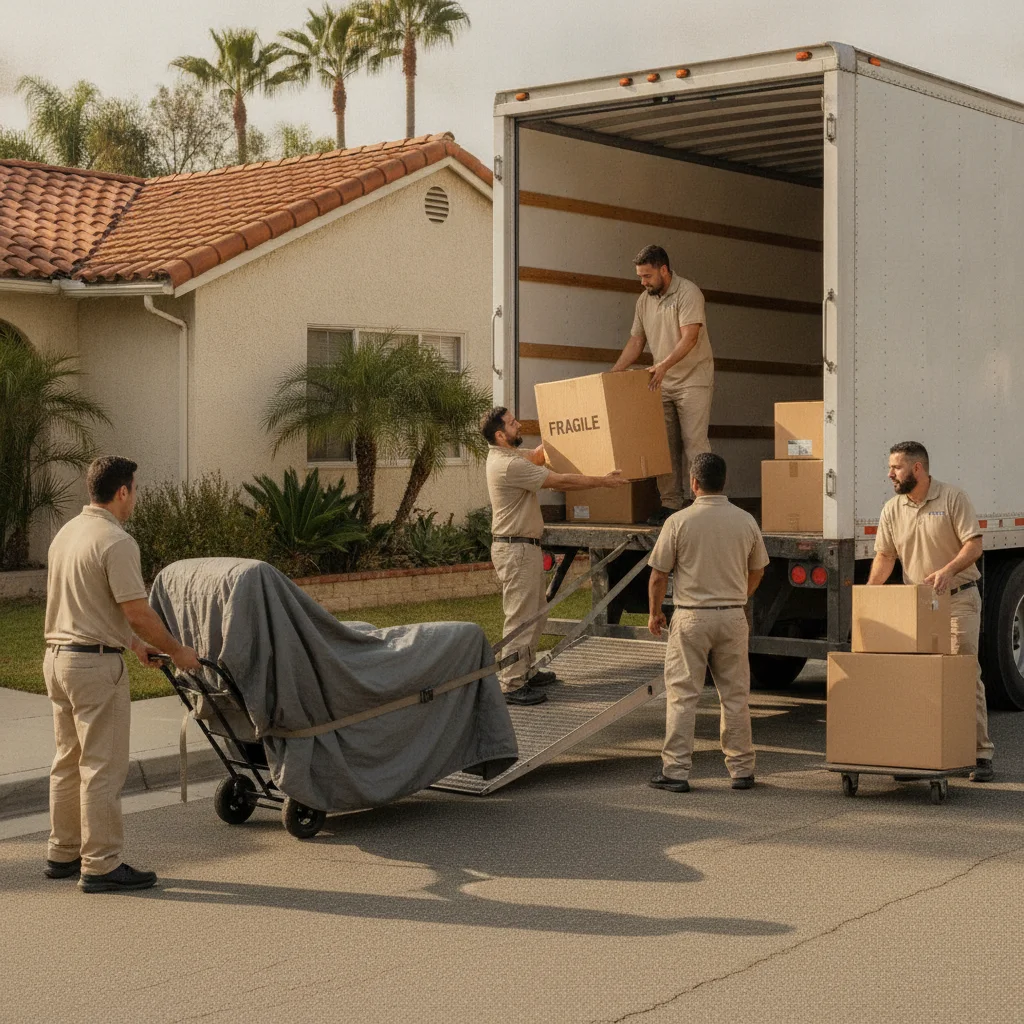
Define the San Diego pickup and Seattle delivery scope
This is not a local hourly job that starts in Mission Valley and ends in North Park. A San Diego pickup and a Seattle delivery cross California, Oregon, and Washington. Federal household-goods rules apply once the shipment leaves California. Long-distance moving is the service that matches that map.
Write both addresses in full, including unit numbers and loading notes. Origin in San Diego County is not one pattern. A Chula Vista garage off I-805 is a different day than a Hillcrest walk-up, an Encinitas coastal street, or a Poway driveway off I-15. Coastal North County, inland North County, the central city, East County, and the South Bay do not share the same curb, heat, or truck path. If the licensed mover cannot park at the door, the written estimate has to say so.
Name the Seattle pin the same way. Capitol Hill, First Hill, and Queen Anne stack stairs and hills. Downtown and South Lake Union often add a dock and a building window. West Seattle sits across the bridge. If the lease says Seattle and the pin is Bellevue, Redmond, or Kirkland, put that Eastside city on the paperwork. If the pin is Bainbridge Island or Vashon, flag it before anyone prices the load. This page could not confirm a ferry cargo rule from an official source. Ask the licensed mover and the operator of that crossing.
Ship only what should ride. Furniture you will sell in University Heights should come off the list. Boxes staying in San Diego storage should come off too.
If you rent the origin home, California Civil Code 1950.5 governs the landlord, not the mover. Most deposits cap at one month’s rent. A narrow small-landlord exception allows two months, and it does not apply when the incoming tenant is a service member. After you vacate, the landlord has 21 calendar days to send the itemized statement and remaining balance. Master Movers San Diego does not enforce that statute. Keep photos. If the keys do not overlap, ask how storage appears on the written estimate.
Households leaving Naval Base San Diego or Camp Pendleton for Joint Base Lewis-McChord use this same corridor. The brand does not issue government bills. Take entitlement questions to your transportation office and your orders.
Build an inventory before comparing interstate movers
Interstate quotes without a real inventory are guesses dressed as numbers. What to document on an interstate inventory is how you keep two quotes on the same shipment.
Walk the San Diego house room by room. List furniture, box counts, and anything awkward: a piano, a gun safe, a treadmill, a marble top. Photograph each room and the serial plates on appliances. The licensed mover still needs a visual inspection for a written estimate. Your list is the checklist against that inspection.
Weight and miles drive this market. In the San Diego long-distance market, a 2-bedroom interstate move often runs $4,500-$9,000, and a 3-bedroom often runs $7,000-$14,000. Those bands are market observations, not a Master Movers San Diego rate card, and not a Seattle average. The mover you book puts the price in a binding written estimate after they see the inventory.
High-value items need their own line. Under federal interstate rules, an article of extraordinary value is anything worth more than $100 per pound. Jewelry, silverware, china, furs, antiques, and some electronics sit in that bucket. If you fail to notify the mover in writing, carrier liability on that article may be limited to $100 per pound. With written notice, recovery can go up to the declared value of the article, not above the declared value of the whole shipment. Master Movers San Diego does not set that election. You and the mover do.
Do not put cash, passports, or the first-night bag on the truck. Keep those with you. If a kitchen pack or a furniture crate belongs on the job, add it as a requested service on the estimate, not as a verbal aside.
Routes and weather on the I-5 corridor
The usual spine is Interstate 5. From San Diego it runs north through Los Angeles, the Central Valley, Sacramento, Redding, Oregon, Portland, Tacoma, and into Seattle. Inland origin jobs in Escondido, Poway, or Rancho Bernardo often reach that spine on I-15. South Bay jobs often reach it on I-805. None of those on-ramps is a published transit time.
This page does not promise a drive clock, a delivery spread, or a calendar day on the Seattle end. Ask for those dates in the mover’s written documents. If the paperwork shows a spread instead of a single day, plan Seattle housing and parking around the spread.
Weather is the other half people skip. A September load in Point Loma and an October unload on Capitol Hill are not the same outdoor day. East County and Escondido can be hot at pickup. Seattle can be wet at delivery. No rainfall total or delay rule was verified for this page. Ask the mover how they cover furniture and mattresses if it is raining at the curb. Do not treat a blog as a forecast.
Last-mile Seattle is its own map. I-5, I-90, and SR-99 all touch the city. This research pass did not confirm which tunnels, bridges, or truck restrictions apply to a household-goods van at a given address. Give the mover the pin and the building’s loading notes. Let that company’s dispatcher pick the legal path.
Do not treat this corridor like a San Diego-to-Los-Angeles move. Los Angeles is still California. Seattle is an interstate shipment under FMCSA. Different paperwork, different valuation rules, different last mile.

Confirm building and curb access at both addresses
Access can cost more than the extra box you forgot. It also cannot be guessed from a city name.
At a City of San Diego pickup, posted curb paint means what it says. The city prohibits double parking, sidewalk parking, and blocking driveways, including your own. Yellow commercial loading is for commercial vehicles loading goods. The limit is twenty minutes for materials and goods, 6 a.m. to 6 p.m. except Sundays and holidays unless a sign says otherwise. Yellow is not a personal reserved space. White is passenger loading. Red prohibits stopping, standing, or parking. Street-sweeping restrictions last the entire posted window.
If a storage container will sit in the public right-of-way, City of San Diego Information Bulletin 718 requires a Traffic Control Permit. That permit costs $87.68 per week plus an $87.68 processing fee, and the city wants at least three working days’ notice. Driveway placement rules were not verified here. For Oceanside, Vista, San Marcos, or Escondido, confirm curb and container rules with that city’s planning or code office. Do not copy San Diego’s numbers onto those cities.
Seattle curb rules are not in this brand’s verified ledger. A load-zone or street-use fee for a Seattle delivery could not be confirmed from an official page in this pass. Call the Seattle Department of Transportation for the public street. Call the building manager for the driveway, alley, or garage. Ask about truck length and height. Hills in Queen Anne, Magnolia, and Madison Park are real. Grade percentages for your block were not verified. Send photos of the approach.
No San Diego or Seattle HOA certificate-of-insurance wording was verified for this article. Ask both managers, in writing, what they want named and how far ahead they want the certificate. An elevator reservation is not a legal parking space. San Diego condo elevator and COI planning covers the origin side. Repeat the same questions with the Seattle building. Submitted paperwork is not approval.
Verify the mover and written estimate before booking
Do not book on a phone quote. Verify the interstate moving company before you sign.
This shipment is interstate, so start with FMCSA. The federal Protect Your Move program is the consumer page for household-goods carriers. Confirm the company’s USDOT registration there. The pros we connect you with are licensed and insured. Master Movers San Diego holds no household mover license and performs no moves. The mover on your bill of lading is the company to check.
If the origin company also advertises California household moving, confirm that record with the Bureau of Household Goods and Services. Use the household mover license search. BHGS, not the Contractors State License Board, licenses California household movers. A contractor license does not authorize a household move. Interstate registration and a California license are different regimes. A company may hold one and not the other.
The written estimate must show two valuation options for an interstate shipment. Released Value is 60 cents per pound per article, at no charge. That is minimal protection. In the regulation’s own example, a 10-pound stereo worth $1,000 would be covered for no more than $6.00. Released value versus Full Value Protection starts at a minimum valuation of $6.00 per pound times the weight of the shipment. The mover may use a higher minimum, or you may declare a higher value at additional cost. Those figures are federal, under 49 CFR part 375. They do not describe a California-only move. Master Movers San Diego does not set valuation, sell the coverage, or decide a claim. You choose on the mover’s paperwork.
Read the delivery spread, the inventory, and any extra services before you sign. If you later ask for more labor or a second stop, get it on a change document. A low number that ignores stairs in Queen Anne or a dock in Columbia City is not a savings. It is an incomplete scope.
When to call us
When the Seattle street is steep, the inventory is heavy, or both buildings want paperwork, this is a licensed interstate crew’s job, not a borrowed van. Call us at (858) 400-4069 and we’ll connect you with a permitted local mover. Have both addresses, the inventory, and any elevator rules ready when you call.