A Boston pickup and San Diego delivery require more than choosing dates. You need a defined shipment, confirmed access, and written terms from an interstate mover. Those details help you compare Boston to San Diego movers on the same scope.
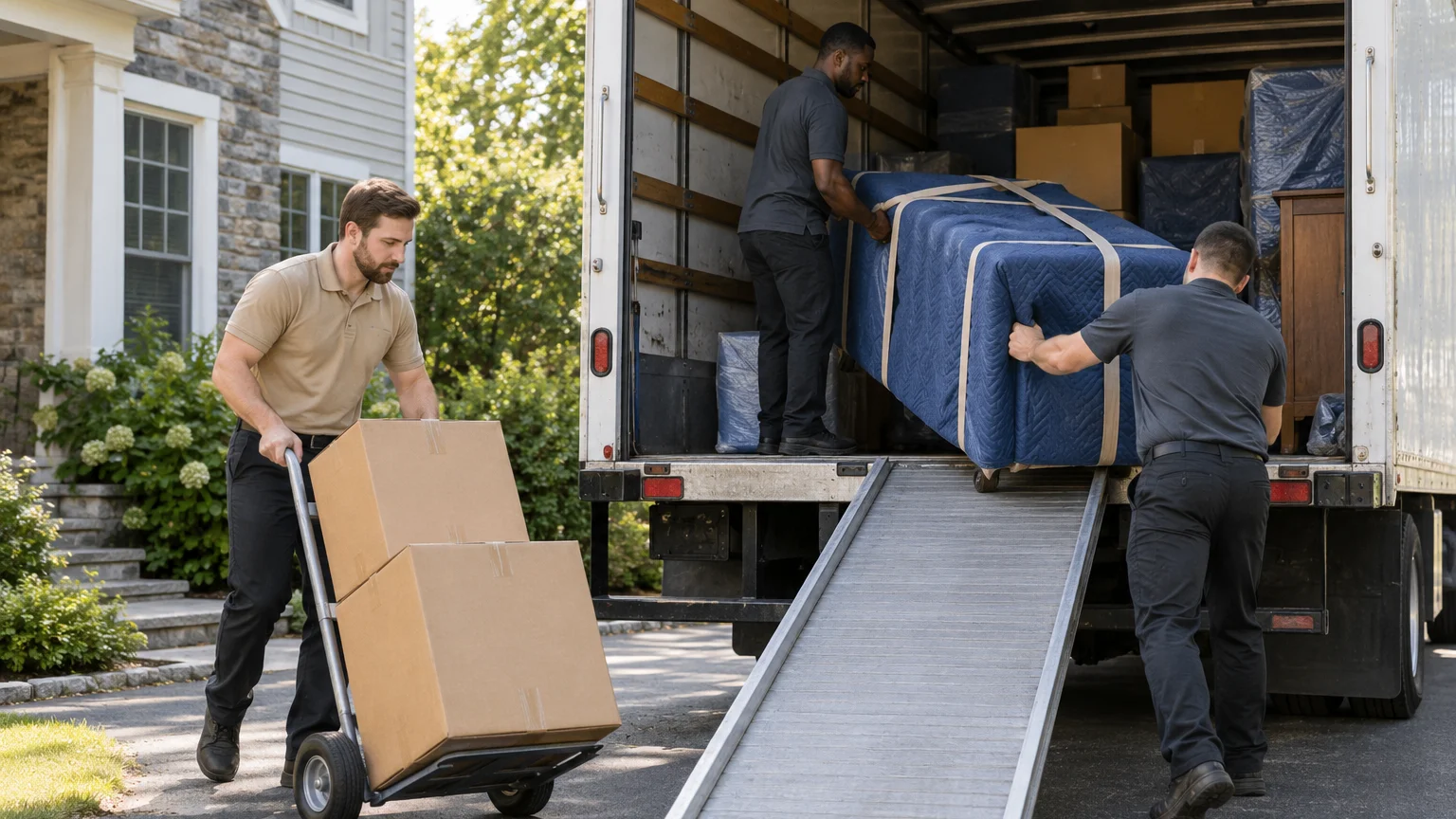
Define the Boston pickup and San Diego delivery scope
Start with both complete addresses, even if the San Diego address may change. A city name alone won’t show the mover what each property requires.
Describe the Boston pickup in practical terms. Note the property type, floor, stairs, elevator, loading area, and walking distance from the legal parking spot. Record anything that could limit access, including a narrow entrance or fixed elevator reservation.
No Boston curb permit, parking limit, or building rule was confirmed for this guide. Check the current requirements with the City of Boston and the property manager. Ask the mover to state which party handles any required curb arrangements.
Build the same access profile for San Diego. A downtown high-rise delivery differs from a house with a private driveway. A beach-area address may present different curb conditions from an inland property. Don’t infer access from the ZIP code. Ask the owner, manager, or HOA about the actual address.
Within the City of San Diego, double parking, sidewalk parking, and blocking a driveway are prohibited. That includes blocking your own driveway. Posted street-sweeping restrictions remain in effect for the full posted period. Private building permission also doesn’t reserve public curb space.
Define the service boundary before requesting estimates. Specify whether the mover will pack, transport, unload, place furniture, or hold the shipment in storage. If you’re arranging vehicle transport separately, treat it as a separate scope. Coordinate the two contracts without assuming either company manages the other.
Our long-distance moving service page explains how we help San Diego County customers connect with independent movers. The booked mover sets the price, schedule, and written terms.
Build an inventory before comparing interstate movers
An inventory gives each mover the same shipment to evaluate. Without it, two estimates may describe different amounts of work.
List furniture by room. Include beds, tables, seating, shelving, appliances, patio pieces, and garage contents. Record items that may need disassembly or special handling. Don’t use labels such as “normal bedroom” or “small garage.” They don’t identify what will enter the truck.
Count packed boxes by room and size. Mark boxes that you’ll pack yourself. Separate anything the mover may be asked to pack. If your plans change, update the inventory before signing revised documents.
Photograph the major items and their condition. Capture several sides of furniture, electronics, artwork, and other valuable property. Save serial numbers and receipts when available. Keep these records somewhere other than the moving truck.
Our interstate moving inventory guide provides a room-by-room documentation process. Use one master version when speaking with each company.
Create separate lists for four categories:
- Items moving to San Diego
- Items traveling with you
- Items going into storage
- Items being sold, donated, or discarded
Don’t place medication, identification, financial records, keys, or essential move documents in the shipment. Keep the signed estimate, mover contact information, and San Diego access notes available during travel.
Houseplants need their own decision. California doesn’t operate outbound agricultural inspection stations for household goods leaving the state, but that doesn’t answer what an interstate mover will accept. Ask the mover to confirm its plant policy in writing. For a move entering California, check current California requirements before packing plants.
Confirm access at both addresses
Access affects the physical plan at each end. Confirm it before choosing services or signing the mover’s documents.
At the Boston property, ask the owner or manager about loading access, elevator reservations, protective materials, and paperwork. Don’t assume submitting a certificate or reservation request means it was approved. Request written confirmation and give the mover the final instructions.
Walk the route from the expected parking position to the home. Note stairs, gates, door widths, corners, and elevator dimensions. Share photos when the mover requests them. Let the moving company decide what equipment and handling plan its crew needs.
Repeat that review at the San Diego address. If you’re moving into a condominium or apartment, ask about the approved loading location and move hours. Building policies weren’t verified for any specific property here, so the actual manager or owner must provide them.
Public curb rules and private building approval are separate. A manager can approve an elevator reservation without controlling the street. A legal curb position also doesn’t grant access to a private loading dock.
In the City of San Diego, yellow curb space serves commercial loading under posted conditions. It isn’t personal reserved parking. The verified city policy allows qualifying goods loading for up to 20 minutes between 6 a.m. and 6 p.m., except Sundays and holidays, unless signs state otherwise. Confirm the current signs at the delivery address.
If a storage container is part of the plan, placement matters. The City of San Diego requires a Traffic Control Permit when a container occupies the public right-of-way. A private driveway falls outside that specific bulletin. Ask the city about the current process before reserving a street placement.

Discuss the route without transit promises
A Boston to San Diego moving company should explain how it describes pickup, transportation, and delivery. Get those terms in writing instead of relying on an informal arrival prediction.
Ask whether your shipment travels alone or shares space with other shipments. Confirm whether another carrier may participate. If the company uses another party, ask for the legal business name and registration information before your belongings leave Boston.
Review the delivery language closely. Look for the written delivery period, the required notice process, and the person authorized to accept the shipment. Ask what happens if the San Diego home isn’t available when the mover is ready to deliver. Any storage, waiting, or redelivery terms should appear in the agreement.
Don’t schedule a lease handoff, flight, or building reservation around an unsupported verbal date. Use the mover’s written terms and keep some flexibility between leaving Boston and receiving the shipment in San Diego.
Plan your essentials separately. Carry clothing, medication, identification, chargers, work equipment, keys, and basic household needs. Include documents for the Boston property and the San Diego delivery address.
Vehicle transport also needs separate confirmation. Ask whether it’s included in the household move, subcontracted, or arranged through an independent vehicle carrier. Compare that contract on its own terms. Don’t assume a household-goods estimate includes a car because both are traveling between the same cities.
The exact interstate route, mileage, and transit period weren’t confirmed for this article. The carrier controls routing and states its delivery commitments in the actual agreement. Ask for written answers before booking.
Verify the mover and estimate before booking
A Boston to San Diego move crosses state lines, so it falls under federal interstate rules. Interstate household movers are regulated by the Federal Motor Carrier Safety Administration, or FMCSA. California’s BHGS system applies to moves that begin and end within California, not this Boston pickup.
Search the mover’s legal name and USDOT registration through FMCSA’s Protect Your Move program. Match the record to the company named on the estimate. Our guide to verifying an interstate moving company explains what to compare before paying or signing.
Read the estimate as a complete document. Confirm the inventory, services, pickup address, San Diego address, storage terms, and any vehicle arrangements. Ask the mover to explain unclear charges or conditions in writing. Don’t rely on a broad marketing description.
Published San Diego market observations place long-distance moves at $4,500-$9,000 for a two-bedroom shipment and $7,000-$14,000 for a three-bedroom shipment. These aren’t Boston-specific quotes or brand prices. Long-distance pricing is tied to weight and miles, while the mover’s written estimate controls the actual offer.
Federal rules require the interstate estimate to notify you about two liability options: Full Value Protection and Released Value. Released Value limits the mover’s liability to 60 cents per pound per article and has no charge. Full Value Protection uses a minimum shipment valuation of $6 per pound times the shipment’s weight, though a mover may use a higher minimum.
An article worth more than $100 per pound is considered an article of extraordinary value under the federal rule. Identify those items in writing on the shipping documents. Don’t assume a general inventory note provides the notice your mover requires.
These figures describe federal interstate valuation. They aren’t California-only valuation terms, and Master Movers San Diego doesn’t set coverage or decide claims. Review the mover’s election forms before choosing an option.
When to call us
Call when your Boston shipment needs a professional crew for its San Diego delivery, especially when access, storage, or building coordination affects the plan. Master Movers San Diego is a referral service and performs no physical moving work. Call us at (858) 400-4069 and we’ll connect you with a licensed local mover.