Hiring a piano mover starts with the access path, not the quote. Tight turns, stairs, gates, elevators, and parking can change the plan. A detailed checklist helps each mover evaluate the same San Diego job.
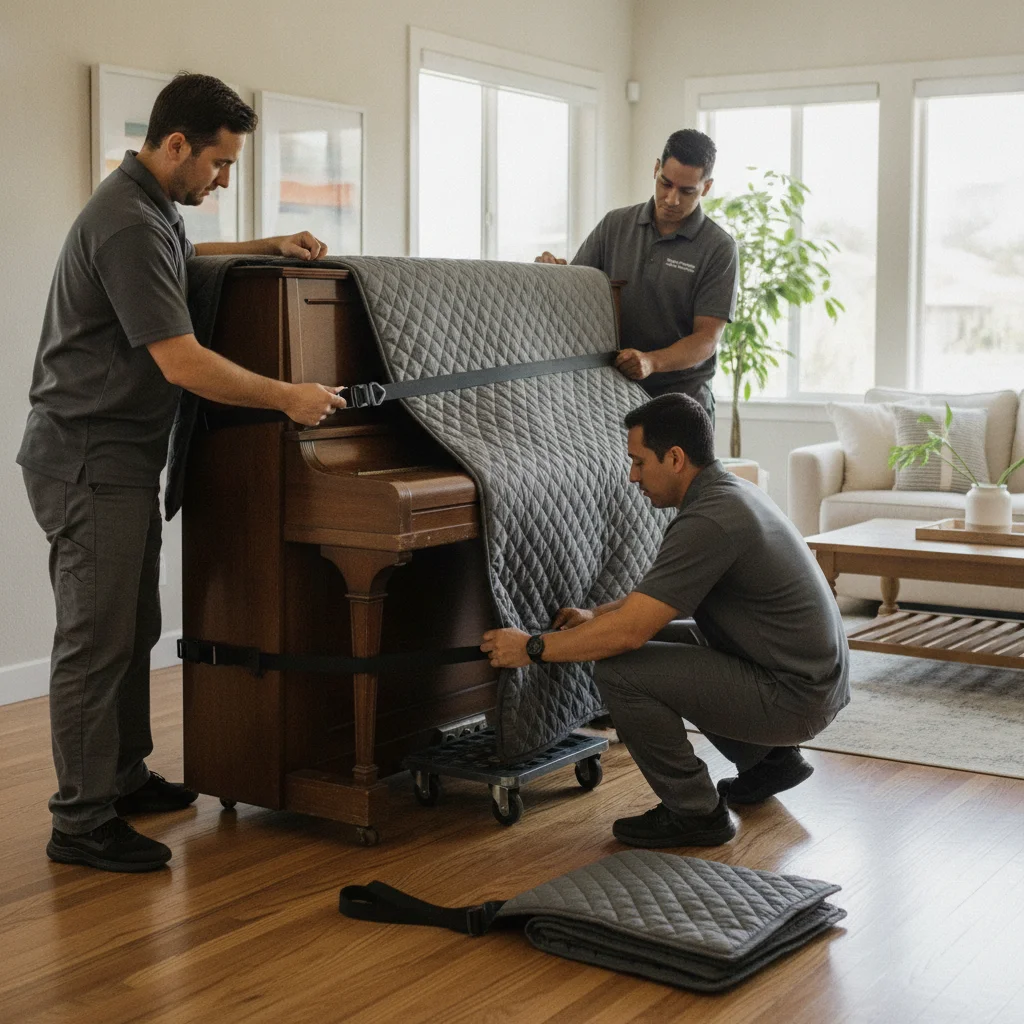
Identify the piano type and access path
Start with the piano’s exact type, make, and model. Include its serial number if you can find it. Don’t guess whether it’s a spinet, studio upright, baby grand, or another style. Send clear photos and let each mover classify it.
Photograph the full piano from several angles. Include the keyboard, pedals, legs, lid, back, and bench. Note any loose trim, existing scratches, or parts that concern you. These details give the mover a clearer starting point for its written plan.
Next, map the entire route from the piano to the moving vehicle. Do the same at the destination. Walk both routes and record:
- The piano’s current room and intended destination room
- Every doorway, hallway, landing, and turn
- Stairs inside and outside each property
- Elevators, gates, loading areas, and driveway access
- Street parking or loading restrictions you need to confirm
- Removable furniture or household items along the route
San Diego access varies by property. A Downtown condo may involve a loading dock and elevator reservation. A North Park home may have several interior turns. A La Mesa driveway may require a closer look at slope and vehicle placement. Treat these as job-specific conditions, not assumptions.
Share the complete route when comparing piano and specialty moving options. Ask each company to confirm which details it still needs before preparing an estimate.
Measure stairs, turns, doors, and landings
Measure the piano and the path separately. Record the piano’s height, width, and depth at its widest points. Don’t subtract removable pieces unless a mover confirms those pieces will be removed.
For doors, measure the clear opening rather than the door slab. Open the door fully and measure the usable width and height. Note the handle, hinges, screen door, security gate, threshold, and nearby wall. A wide doorway may still lead directly into a tight turn.
Measure hallway width at its narrowest point. At each turn, record the space on both sides. For stairs, count the steps and photograph the full flight. Measure the stair width, landing dimensions, ceiling clearance, and any low fixtures. Include railings, posts, gates, and walls that limit movement.
Elevator moves need their own notes. Record the clear elevator-door opening and the interior cab dimensions. Photograph any posted restrictions. Ask building management about reservations, loading access, and required documents. Don’t promise a schedule to the mover until the building confirms it.
Outside, follow the route to the street. Include porch steps, gravel, grass, sharp corners, narrow side yards, and locked gates. Show the driveway and legal loading area in the same photo when possible. Beach-area parking, Downtown loading docks, and hillside approaches can create different planning questions.
Send measurements with labeled photos or a slow video walkthrough. Ask the mover to identify any missing dimension. The mover should decide whether an in-person access review is needed. A photo alone shouldn’t be treated as a promise that every turn will work.
Ask who handles disassembly and setup
Disassembly and setup belong in the written scope. Don’t assume every piano moving company in San Diego includes the same tasks. Ask each mover to describe what its crew plans to handle at pickup and delivery.
For a grand piano, ask which components the mover expects to remove. Discuss the legs, pedal assembly, lid, music desk, and other relevant pieces. For an upright, ask whether any part needs removal for your route. Don’t remove piano components yourself unless the mover or a qualified piano technician gives you specific instructions.
Clarify responsibility for each step:
- Who removes and labels piano hardware
- Who supplies the wrapping and moving materials
- Who moves the bench and separate accessories
- Who reassembles the piano at the destination
- Who places it in the final room
- Who handles any task excluded from the estimate
Give the mover a photo of the planned placement area. Mark the piano’s intended orientation, but leave room for the mover to discuss access. If placement involves another narrow turn, raised platform, or interior step, it’s part of the route.
Our guide to how a piano move is planned around the instrument and floors explains the physical process. Use that background to ask better questions, but rely on the mover’s written plan for your property and piano.
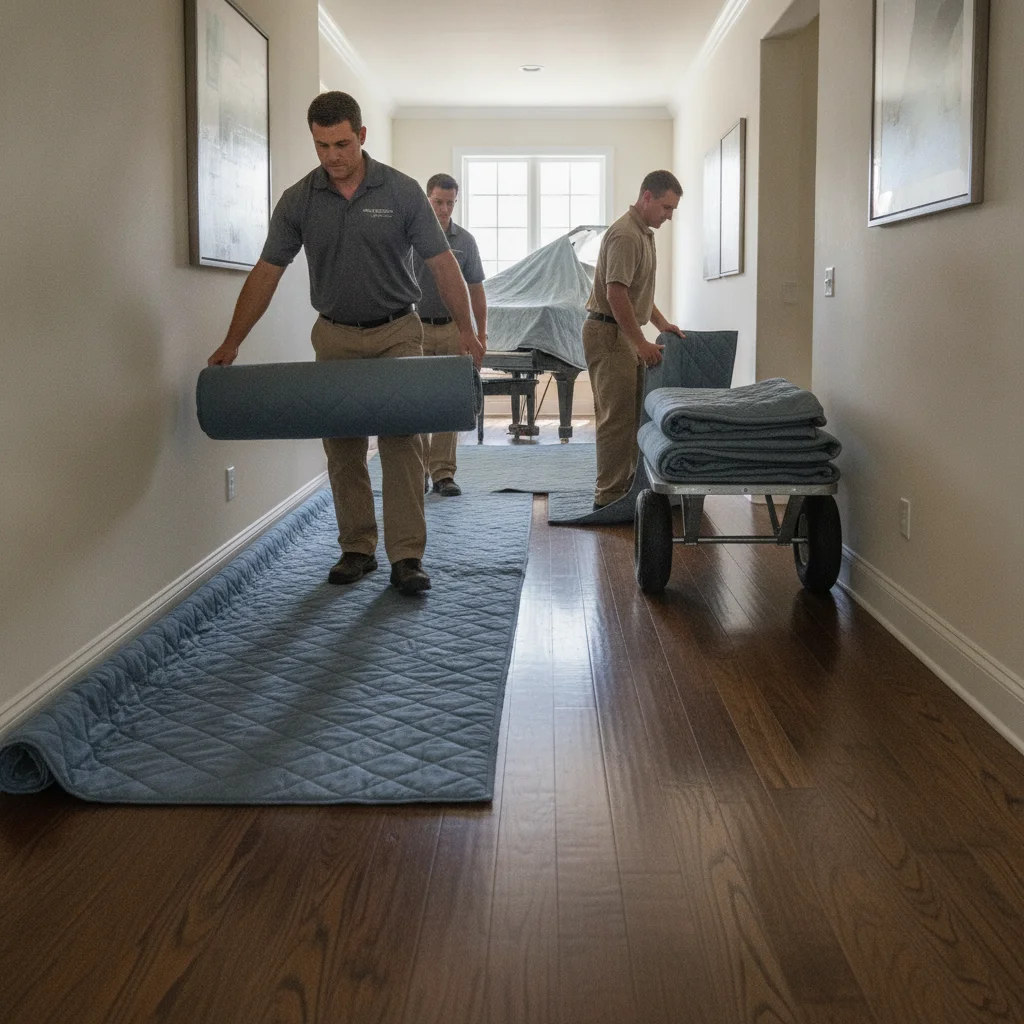
Compare written estimates and coverage terms
Give every mover the same piano details, access measurements, addresses, and requested scope. Otherwise, you aren’t comparing the same job. Check whether each written estimate identifies disassembly, reassembly, stairs, elevators, parking conditions, and final placement.
Ask what could change the quoted amount. Request written explanations for exclusions, additional charges, cancellation terms, and claim procedures. No verified market price for a San Diego piano move appears from a primary source, so ask each mover for its own figure. The mover you consider should explain its own price and terms in writing.
California intrastate household movers are regulated by the Bureau of Household Goods and Services, or BHGS. They aren’t licensed by the CSLB. Use the official BHGS household mover search to check the mover’s current record before booking. BHGS also publishes consumer information for household moves.
Ask which valuation or liability terms apply to your piano. We couldn’t confirm a California intrastate valuation figure from a primary source. Have the mover identify the governing terms and show you where they appear in the paperwork.
Federal rules differ when a shipment crosses state lines. For interstate moves, FMCSA requires estimates to present Full Value Protection and Released Value. Released Value limits mover liability to 60 cents per pound per article at no charge. The federal minimum valuation for Full Value Protection is $6.00 per pound times shipment weight, although a mover may use a higher minimum.
Under those federal rules, an article worth more than $100 per pound is an article of extraordinary value. Written notice matters because liability may otherwise be limited. These figures apply only to interstate moves under FMCSA, not moves beginning and ending in California. Review FMCSA’s Protect Your Move guidance when comparing interstate carriers.
Plan tuning with a qualified technician afterward
Keep moving and tuning as separate items in your plan. Ask the mover whether tuning, inspection, or other piano service is excluded from its scope. Don’t assume the crew will arrange those services unless the written estimate says so.
Before the move, save the piano technician’s contact information. If you don’t have a technician, ask the piano’s manufacturer, seller, or a local piano service provider how to find one. Confirm the technician’s qualifications and experience with your piano type directly.
We couldn’t confirm a universal waiting period for tuning. Avoid relying on a fixed number of hours or days from an unsourced checklist. Tell the technician when the piano moved, where it came from, and where it now sits. Let that technician recommend timing based on the instrument and conditions.
Take dated photos before pickup and after setup. Capture the keys, pedals, cabinet, legs, lid, and other areas you want documented. Keep those images with the estimate, inventory, valuation election, and mover communications. Documentation doesn’t guarantee a claim outcome, but it gives you an organized record of what you observed.
Confirm the final piano location before move day. If you later ask for another room or orientation, the access path may be different. Share any change with the mover first. Once the piano is placed, give the technician accurate details about the move and any concerns you noticed.
When to call us
A professional piano crew makes sense when the route includes stairs, narrow turns, controlled building access, or planned disassembly. Call us at (858) 400-4069 and we’ll connect you with a licensed local mover.