Last updated: April 25, 2026
TL;DR
- Uprights weigh 300 to 800 pounds. Baby grands weigh 500 to 800. Full grands weigh 700 to 1,200. Concert grands hit 1,400.
- Move a piano on a piano dolly (not a furniture dolly), strapped down with 2-inch ratchet straps, and pad-wrapped from the keyboard up.
- Grand pianos come off their legs and travel on a skid board. Uprights stay assembled.
- Four-mover crew minimum on any grand. Three movers minimum on an upright over a single step.
- Have the piano tuned 4 to 6 weeks after the move once it has acclimated to the new room’s humidity.
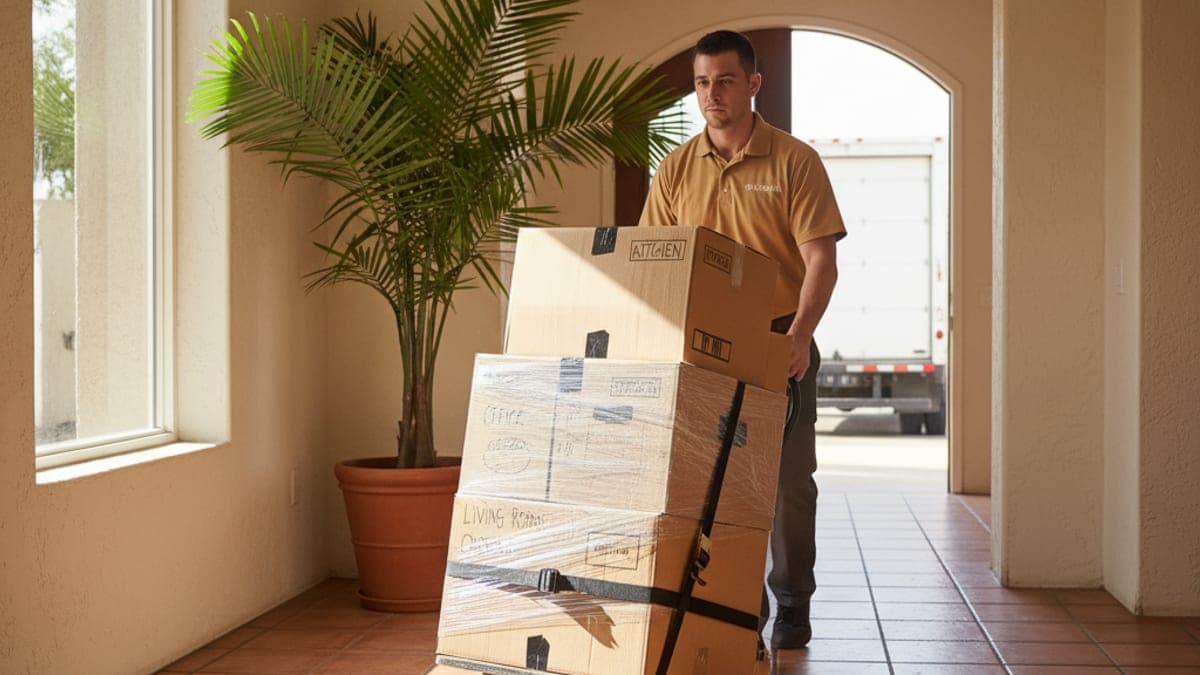
A piano moves correctly with a piano dolly, 2-inch ratchet straps, pad wrap from the keyboard up, and a 3- or 4-mover crew trained on skid-board technique for grands. Done right, the move adds zero damage to the instrument and zero scuffs to your floors.
Master Movers San Diego connects customers with licensed movers for piano specialty moves across San Diego County. The mover you book provides a written estimate before the move. Two data points: a typical upright piano weighs 400 to 600 pounds (heavier than a refrigerator), and the Piano Technicians Guild recommends a post-move tuning any time a piano changes rooms or homes.
How heavy is a piano really?
The number that surprises homeowners every time:
| Piano type | Weight range |
|---|---|
| Spinet (small upright) | 300 to 400 lb |
| Console upright | 350 to 450 lb |
| Studio upright | 400 to 600 lb |
| Full upright (professional) | 500 to 800 lb |
| Baby grand (under 5’7”) | 500 to 700 lb |
| Medium grand (5’8” to 6’2”) | 600 to 850 lb |
| Full grand (6’3” to 7’5”) | 700 to 1,000 lb |
| Concert grand (9’) | 1,000 to 1,400 lb |
A studio upright weighs more than a stocked refrigerator. A baby grand weighs more than two adult sumo wrestlers. The cast-iron plate inside the piano (the gold frame holding the strings under enormous tension) accounts for most of the weight by itself. The exact figures vary by maker and model; a qualified piano technician can confirm the specifications for your instrument.
This weight is also concentrated on three small contact points (two front casters and a back leg on uprights, three legs on grands). A piano sitting on a hardwood floor for 20 minutes can leave permanent dents if the casters are not on a piano dolly or pad.
What gear does a piano move actually need?
Five pieces of equipment, none of them optional.
Piano dolly (4-wheel). A 24-inch by 36-inch heavy-duty 4-wheel dolly rated for 1,500 pounds with locking casters. Furniture dollies (the cheap orange 18-inch square ones) flex under piano weight and tip. Piano dollies are flat steel-frame builds that absorb the load without flexing.
Piano skid board (for grands). A piano skid board is a 6-foot wood board with end caps, padding, and tie-down straps. Grand pianos travel on the side of the case with the legs and lyre removed, strapped to the skid board, then onto the dolly. A grand cannot move legs-on without breaking the legs.
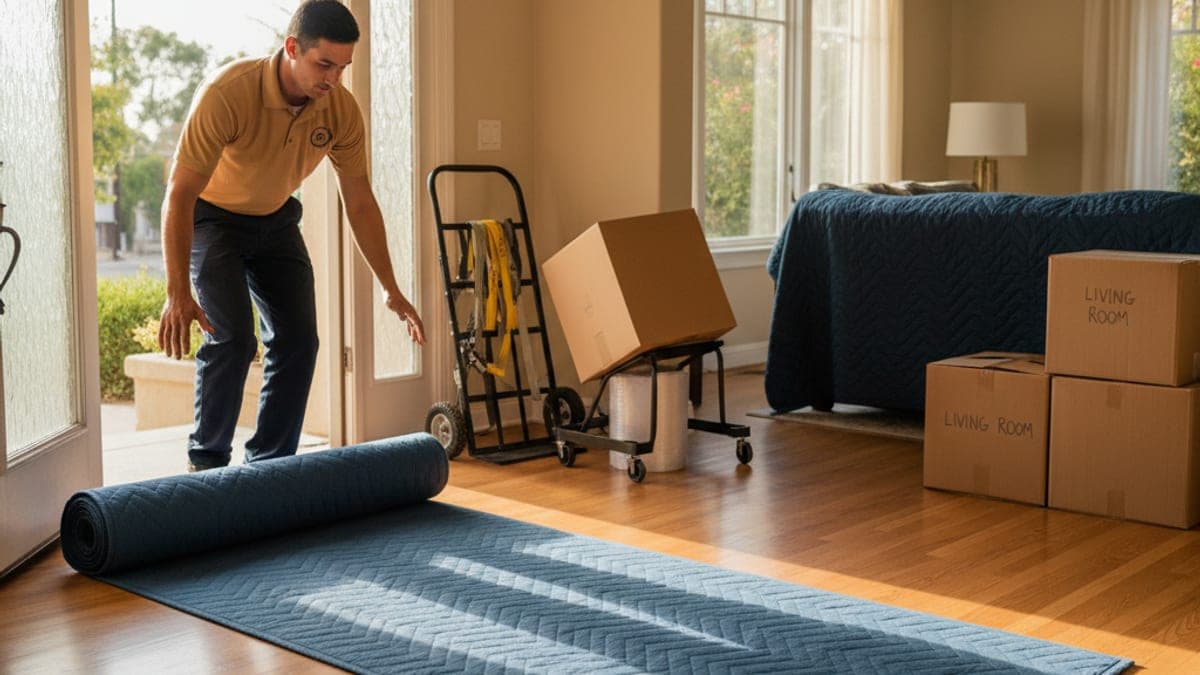
Pad wrap (4 to 6 furniture pads). Heavy moving blankets, not the thin felt pads. The keyboard cover gets wrapped first, then the case, then the legs (separately, after removal on grands). Tape is shrink-wrap over the pads, not adhesive on the wood.
2-inch ratchet straps. Two minimum, four for grands. Strapped over the pads to compress the wrap against the case, never directly on the wood.
Stair-climbing dolly or appliance dolly with stair tracks. For any move involving stairs, a regular piano dolly is not enough. A stair-climber has rear treads that walk down stair edges instead of bouncing.
How does the actual move work?
For an upright (most home pianos), the mover will clear and measure the path through every doorway, hallway, and step before touching the instrument. Uprights stay assembled. The crew pad-wraps the piano in place, starting at the keyboard and working around the case, then compresses the wrap with shrink-wrap. The piano goes onto a piano dolly, strapped with ratchet straps, and is walked to the truck. Inside the truck, the upright stands against the wall, strapped to the cargo rails. Understanding this sequence helps you ask the right questions when the mover surveys the access at your home.
For a grand, the qualified piano mover follows the maker’s service guidance for disassembly. The music stand, prop, and lid are secured first. The lyre (the pedal mechanism) and legs come off in a specific sequence that varies by maker and model. The piano is then pad-wrapped and strapped to a skid board on its bass side. The skid board goes onto the piano dolly, and the crew walks it to the truck. Inside the truck, the grand stays on the skid board, strapped to the wall, never lying flat. The exact leg-removal order and tilt technique belong to the mover’s training and the maker’s instructions; your role is to understand the scope so you can confirm the plan and ask informed questions.
A grand typically needs a four-mover crew and more loading time than an upright. The licensed mover you book will confirm the crew size and timeline after surveying the piano and both access points.
What about stairs?
Single threshold step is fine with a regular piano dolly and 3 movers. The crew tips the dolly, walks the wheels over the step, and resets.
Multiple stairs (a flight or more) require a stair-climber dolly and 4 movers. Two movers carry the back, two control the front. Speed matters: stop and start at every step, never momentum-roll a piano down a flight.
Spiral stairs and tight switchback stairs may require a piano hoist over the side of the building. This is rare in San Diego (most homes are single-story or have wide center stairs) but real on some North Park craftsman bungalows and downtown condos. Hoist work adds crew, equipment, and time to the move, which the mover factors into the written estimate.
For homes with truly tight access, see the furniture movers page for a discussion of long-carry and shuttle options that apply to piano moves too.
Will my piano go out of tune?
A move can change a piano’s tuning. The cast-iron plate, wood soundboard, and strings under high tension shift during transport, and the new room has different humidity than the old. Many owners schedule a tuning after the piano settles in its new environment. Plan to have the piano tuned by a registered piano technician 4 to 6 weeks after the move, once the piano has acclimated.
Tuning immediately after the move often does not hold. The piano continues to adjust as the wood absorbs the new room’s moisture. Waiting 4 to 6 weeks and tuning once is the common recommendation from piano technicians.
The Piano Technicians Guild at ptg.org lists registered piano technicians (RPTs) by zip code. RPT is a credential that requires passing the guild’s tuning and technical exams. Search by your zip code to find technicians working in your area, and ask for the current tuning rate when you schedule.
What does a professional piano move cost in San Diego?
Typical San Diego market ranges as observations tied to the mover’s written estimate:
- Upright piano: $400 to $700
- Grand piano (baby grand through full grand): $700 to $1,400
Stairs, tight access, long carries, and hillside approaches push the number toward the high end. A single-story origin and destination with no stairs lands near the low end. The licensed mover you book puts the actual figure in a written estimate after surveying the piano and access at both locations.
Long-distance piano moves out of San Diego (cross-state to Phoenix, Vegas, or the Bay Area) are priced separately as part of the long-distance estimate. See the long-distance movers page for cross-state piano transit.
For a written estimate on any piano move in San Diego County, call (858) 400-4069, or start on the piano and gun safe movers page.
Frequently asked questions
Can two strong friends move my upright piano?
For a slide across a flat hardwood floor in the same room, yes. For anything involving doorways, stairs, or a truck, no. Upright pianos tip easily and the weight is concentrated on the back panel; a tipped piano lands on its face and snaps the keyboard rail. A piano technician or restoration specialist can assess the repair cost.
Do I need to remove the casters before moving?
No. Modern upright casters stay on. The piano dolly does the work of moving; the casters just sit on the dolly platform. Removing casters can damage the leg mounting points.
Should I ship my piano cross-country or sell and rebuy?
It depends on what the instrument is worth and what transit costs. Get a current valuation from a qualified piano technician or appraiser, then compare it against the mover’s written estimate for the long-distance leg. Premium grands such as Steinways and Bosendorfers are usually worth appraising before you decide. The instrument’s value, condition, and sentimental weight all factor into the call.
Can my piano be stored during transit?
Yes, in climate-controlled storage only. Pianos stored without climate control are at risk of soundboard warping as humidity changes. Ask the mover you book about climate-controlled storage options.
About the author
Master Movers San Diego. A San Diego moving referral marketplace covering San Diego County, matching customers with licensed local movers for local, long-distance, and military PCS relocations. (858) 400-4069.