A heavy cabinet, table, or sectional can turn one pickup into a serious moving decision. The right furniture movers in San Diego need accurate details about the item, both properties, and every tight turn between them.
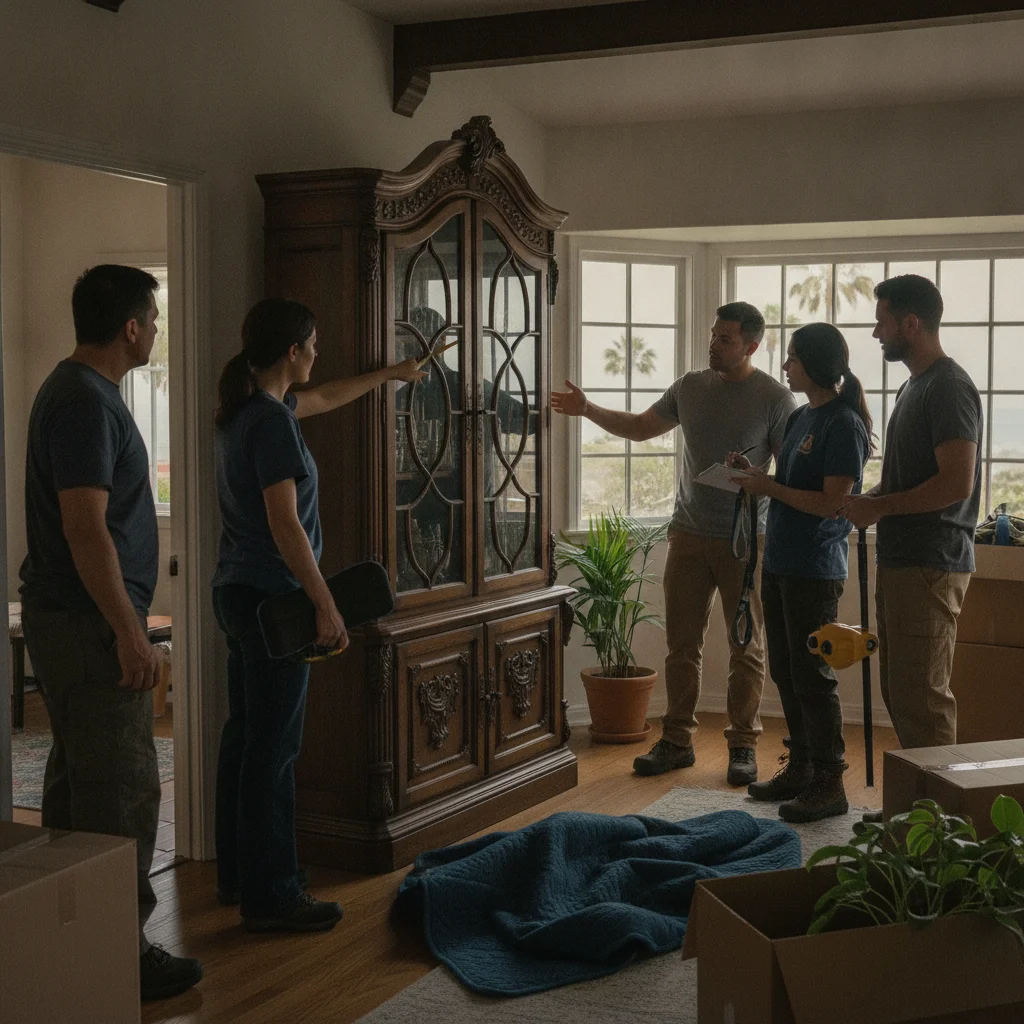
When one item needs more than muscle
A one-item move can involve much more than lifting. The mover may need to assess the furniture’s shape, balance, finish, removable parts, and travel path. A large piece can also require planning at both addresses.
Start with a precise description. Name the item and its material if you know it. Include its height, width, depth, and approximate weight only when that figure comes from a reliable source. Don’t guess. Send photos from every side, including the base, back, doors, drawers, legs, and hardware.
Explain why you’re hiring help. The item might need to leave a La Jolla condo, cross a North Park courtyard, or enter a Chula Vista townhouse. Tell the mover whether the job includes transportation, carrying within one property, disassembly, or placement in a specific room.
The furniture movers page can help you connect with an independent local company for this type of request. The mover you book determines the crew, equipment, route, and written price.
Tell the mover about damage, loose joints, cracked glass, weak legs, or missing hardware. Those details affect how the company evaluates the piece. If you don’t know whether a section comes apart, say that clearly. Let the mover inspect it or consult the manufacturer’s instructions.
An antique or delicate piece calls for a closer conversation about condition and handling. This guide to moving antique furniture in San Diego covers questions specific to older finishes, fragile joints, and documented condition.
Measure doors, stairs, and the carry path
Measure the furniture before requesting a quote. Record its height, width, and depth in its current form. If removable legs, shelves, cushions, or leaves change those dimensions, record both configurations. Don’t promise that a piece can be disassembled unless that has been confirmed.
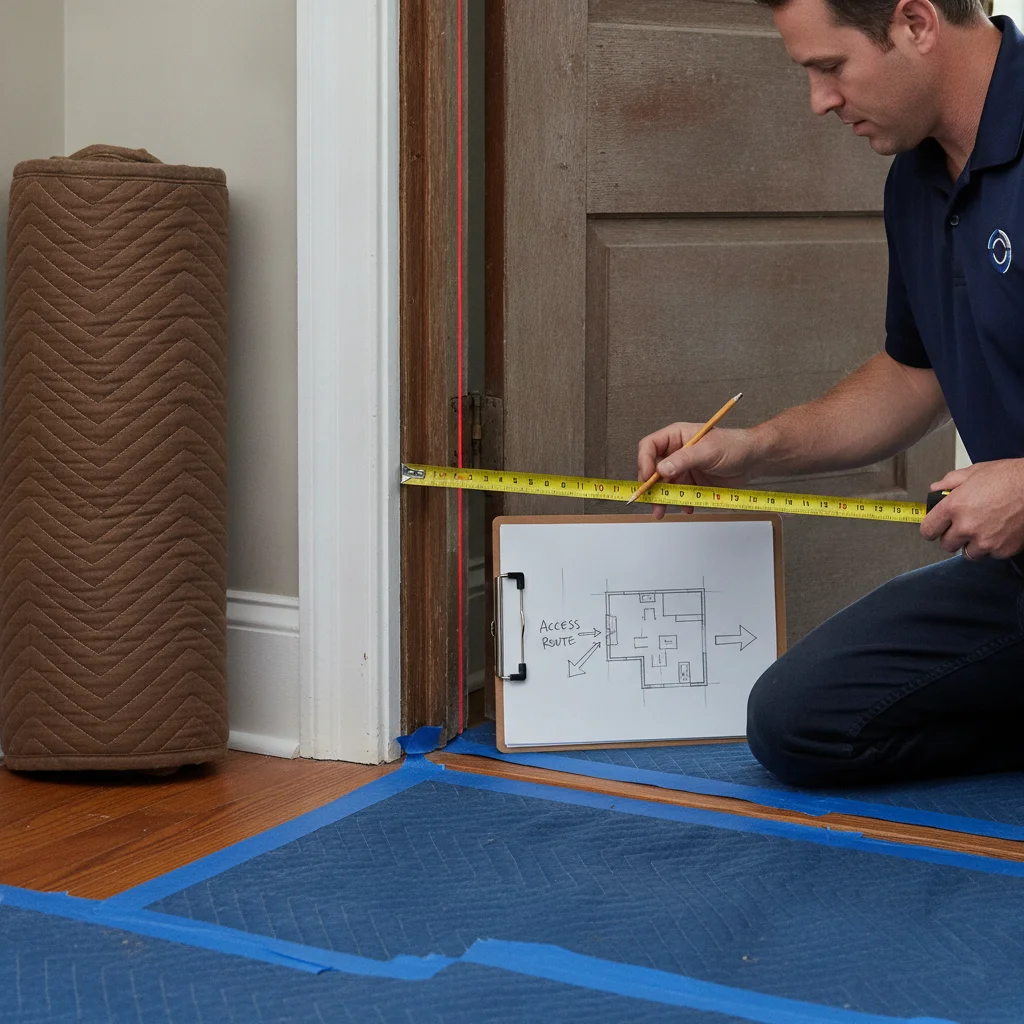
Then measure the complete carry path. Include exterior gates, entry doors, interior doors, hallways, stair width, landings, ceiling clearance, and sharp corners. Measure the narrowest point rather than the widest opening.
For an elevator move, send the mover the door dimensions and interior measurements. Ask the building manager about reservations, loading access, and any documents the building requests. Requirements can differ by property, so confirm them directly before choosing a moving date.
A downtown high-rise may involve a loading dock and a separate service entrance. A Pacific Beach apartment may require planning around a garage, alley, or curbside pickup point. In either setting, photos help the mover see conditions that basic measurements can miss.
Walk from the furniture to the expected vehicle location. Photograph stairs, slopes, gates, low ceilings, landscaping, and tight turns. Repeat the process at the delivery address. Mark anything that could restrict the route.
A simple access sketch can also help. Show door swings, hallway turns, stair direction, and the intended final room. Send the measurements, photos, and sketch together. The mover can then decide whether an on-site assessment is needed before providing the final plan.
Ask how the mover protects floors and furniture
Ask each company to describe its protection plan for your specific item. Avoid settling for a general statement that the furniture will be handled carefully. The answer should address the piece, the route, and both properties.
Ask what the mover plans to place around the furniture. Discuss doors, drawers, glass, mirrors, shelves, hardware, corners, legs, and finished surfaces. If anything will be removed, ask how those pieces will be labeled and kept with the item.
Next, discuss the property. Ask how the mover plans to address hardwood, tile, carpet, stairs, walls, railings, and door frames along the carry path. If a building has its own protection rules, send those requirements to the mover before accepting an estimate.
Take clear photos of the furniture before pickup. Include close views of existing scratches, chips, stains, loose joints, or damaged hardware. Keep the original files and the mover’s written documents together. Ask the mover how condition will be recorded at pickup and delivery.
Protection questions should also cover the destination. Tell the mover exactly where the item belongs and which direction it should face. If placement requires another narrow doorway or tight turn, include that route in the original photos and measurements.
Don’t assume the company will reassemble, level, anchor, or connect anything. Ask which tasks are included in the written scope. If a task isn’t listed, request clarification from the mover before booking.
Compare minimums, equipment, and written estimates
No verifiable market-wide minimum for single-item moves in San Diego could be confirmed from the available primary sources. Each mover sets its own quote and service terms. Confirm the current price directly with each company before paying or booking.
Ask whether the quote uses a flat amount, a time-based structure, or another method. Then ask what starts and ends the charge. The written estimate should identify both addresses, the furniture item, the requested work, and known access conditions.
Compare the full scope, not one figure in isolation. Confirm whether the quote accounts for stairs, elevators, long carries, disassembly, reassembly, pickup access, delivery placement, and requested protection. Ask the mover to revise the document if an important condition is missing.
Equipment also deserves a specific conversation. Describe the furniture and route, then ask what the mover expects to use. Don’t tell the company which equipment guarantees a safe move. The mover must select an approach based on the item and access.
Ask what happens if the crew arrives and finds a doorway, stair, or item dimension that differs from the information supplied. The company should explain how it handles a change in scope and how any revised price will be documented.
Keep estimates from different movers in the same format if possible. That makes missing tasks easier to spot. This guide to binding and non-binding estimates can help you organize questions before comparing documents.
Single item movers in San Diego may describe similar jobs differently. One company may treat the request as transport, while another may separate labor and travel. Ask for plain written terms so you know what each offer includes.
Confirm the mover’s BHGS license before booking
California intrastate household movers are regulated by the Bureau of Household Goods and Services, or BHGS. The agency is part of the Department of Consumer Affairs. It took over household mover regulation from the CPUC in 2018.
Ask the moving company for its BHGS household mover license number and exact legal business name. Use the official BHGS Household Mover License Search to compare that information with the agency’s record. Do not guess based on a similar company name or a logo.
A California household mover is not licensed as a contractor by the CSLB. It holds a household mover license under BHGS oversight. A CSLB contractor search is not a substitute for checking the mover through BHGS.
The agency also provides consumer information about household movers. Review the current guidance before signing documents or paying the mover. Agency information can change, so use the live pages rather than an old screenshot or copied summary.
Interstate moves follow a different system. If the furniture will cross a state line, check the company through FMCSA’s Protect Your Move resources and review its USDOT registration record. A company may have authority for one type of move and not another.
Make sure the business named in the estimate matches the company you checked. Ask the mover directly about any mismatch before booking. Keep the written estimate, company details, and your own item photos in one place.
Frequently asked questions
How much does it cost to move one heavy item in San Diego?
Single-piece jobs in this market typically run $150 to $450, which aligns with the standard 2-hour minimum for two movers at the going hourly rate. The spread depends on stairs, doorway clearance, and how far the carry is from the truck to the door. An item that needs a hoist or a crane is quoted separately because it is a different job. The mover you book puts the actual figure in a written estimate.
Can two movers handle one heavy item, or do I need more?
Two is standard for most single pieces. Weight is not the only trigger for a third mover: a long stair carry, an awkward shape that cannot be gripped safely, or a turn at the bottom of a stairwell can all mean three. Describe the path, not just the item, when you call, because the path is what sets the crew size.
Do movers move a single item, or is there a minimum?
Yes, single-item moves are a normal booking, and yes, there is an hourly minimum. That minimum is why moving one heavy piece and moving three sometimes cost close to the same, so if you have a second awkward item, mention it while you are booking rather than after.
What should I measure before booking a single-item move?
The item at its widest point, every doorway it has to pass, and the narrowest turn on the path. Measure the turn especially, because a piece that fits through a door can still fail at the landing. Photos of the path help a mover quote accurately the first time.
When to call us
A professional crew makes sense when the item, stairs, doorway, finish, or building access needs a mover’s assessment. Call Master Movers San Diego at (858) 400-4069 to get matched with a licensed local mover.