Moving with houseplants starts before anyone waters a pot. The destination state’s plant office and the mover’s written acceptance list decide what can travel. California’s inbound plant rules do not tell you what another state will let in.
Separate plants from the mover’s household inventory
Make a plant list that is not mixed into the sofa inventory. Note indoor versus outdoor, pot versus in-ground, and whether the plant sits in commercial potting mix or garden soil. Photograph each plant in place.
A living-room ficus in North Park and a patio citrus in Fallbrook are not the same planning problem. Indoor houseplants and outdoor plants belong on separate lines. Don’t hide a yard tree inside “a few plants.”
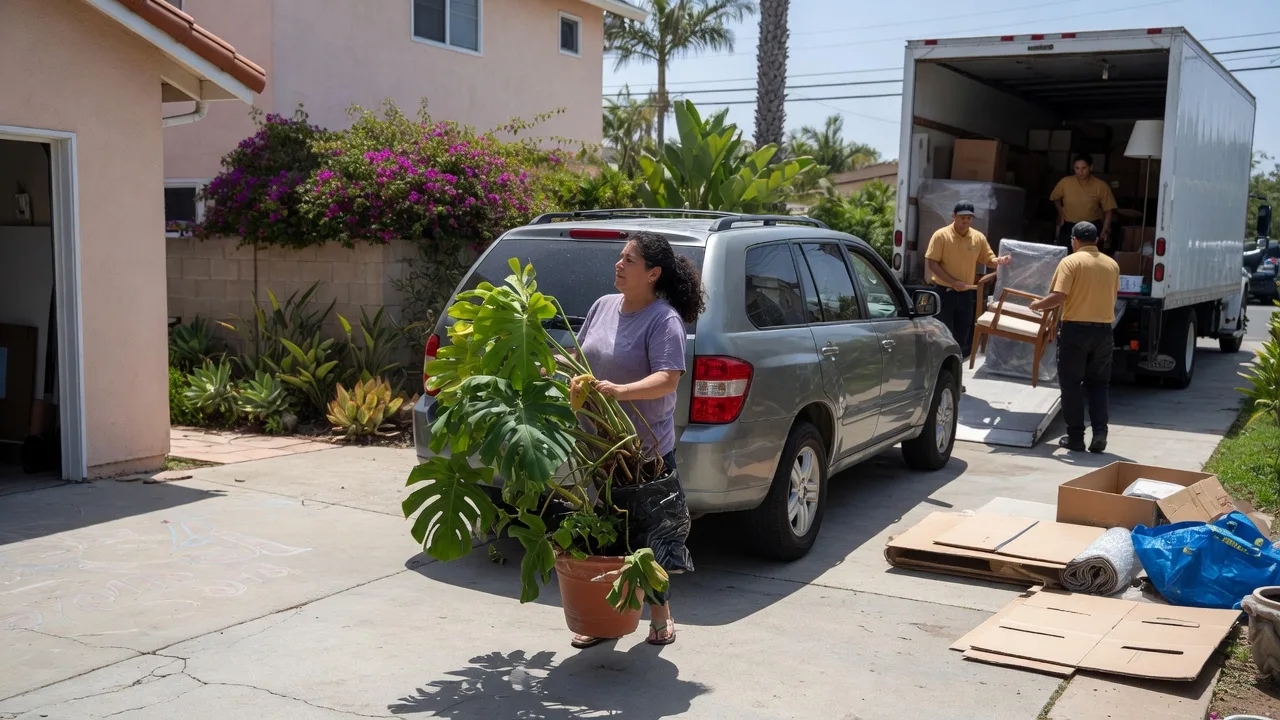
If you are driving plants yourself on I-5 or I-8, that is still an owner custody plan, not a mover task. The truck inventory should match what the company accepted. A plant riding in a Honda on the same day as the household goods should not appear as if it were on the trailer.
Keep plants out of the mover’s household-goods list until that company says yes in writing. If the answer is no, the plant stays with you, a friend, a sale, or a donation. That is a complete plan.
The do-not-pack list covers prohibited categories, including live plants on many long-distance trucks. Use it as the starting filter. Then come back here for destination-authority and handoff planning.
Ask what the mover will and won’t accept
Ask a direct question: will you load these plants, in this condition, for this pair of addresses. Get the answer on the estimate. “People usually take plants in the car” is useful advice. It is not the mover’s acceptance.
If the mover will take empty pots only, write that. If the mover will take plants in sealed boxes only, write that. If the mover will take nothing living, write that. Master Movers San Diego does not transport plants and does not promise that a matched mover will.
Local San Diego moves and long-distance moves can produce different answers from the same company. Ask about the actual route.
Pets are a different living inventory. Use the moving with pets guide for animals. Don’t combine a crate and a ficus on one line.
Check current destination rules through official sources
If the plants will leave California, confirm current rules with the destination state’s plant protection office or department of agriculture. California does not operate outbound agricultural inspection stations for household goods leaving the state. The receiving state sets what it will accept.
CDFA’s published houseplant material is about plants entering California. Do not treat it as a packing list for a San Diego outbound move. A named destination state’s exact soil or citrus rule is not in this ledger, so no destination-by-destination table appears here. Call the destination office. Ask about indoor houseplants, commercial potting mix, and outdoor plants separately.
If the move stays inside California, still ask the mover. County and property rules can still affect outdoor plants. This page does not restate quarantine maps. Check the destination property and the mover.
Bring the destination office’s current instruction to the estimate conversation. The mover still decides whether it will carry the plant.
Plan plant care without making survival guarantees
Watering, light, and heat in a closed car are owner problems. This page does not guarantee that a plant will survive a move. Manufacturer care tags, if you have them, beat a generic blog schedule.
If you keep plants in the family car, plan for San Diego heat the same way you would for a pet: don’t leave them in a parked vehicle. That is owner logistics, not a mover promise.
If a plant cannot go, decide early. Gift, sell, or leave it. Don’t discover the no on load morning while the crew is in the driveway.
Put handoff responsibilities in writing
The estimate should say who packs the plants, who carries them, and who receives them. If the owner keeps custody the whole way, the mover’s inventory should not list those plants as if they were on the truck.
For a California-only household move, verify the carrier in the BHGS Household Mover License Search. Read BHGS consumer information before you sign. Interstate jobs sit under FMCSA. Ask which regime covers the two addresses.
Master Movers San Diego matches customers with independent licensed movers. The brand does not inspect plants and does not perform the move.
When to call us
Call when the household goods still need a licensed crew after you decide what happens to the plants. Call (858) 400-4069 and we’ll connect you with a permitted local mover.