Choosing among Coronado movers takes more than comparing bottom-line prices. Each company needs the same inventory, access details, and route assumptions before its estimate can tell you anything useful.

Define the household scope before requesting estimates
Start with the move itself, not a list of company names. Write one household inventory and send that same version to every mover. Otherwise, you may compare a partial quote with one covering the complete job.
List furniture by room. Include patio pieces, garage storage, wall art, rugs, plants, and packed boxes. Note items that need special handling, such as a piano, safe, antique, oversized table, or fragile artwork. Add dimensions when an item may not clear a doorway or gate.
Decide which tasks belong in the estimate. These may include packing, unpacking, furniture disassembly, reassembly, appliance preparation, or moving items into storage. Don’t assume a service is included because it sounds standard. Ask each company to identify its exact scope in writing.
Separate the items moving to the new home from anything staying, being donated, or going elsewhere. If that decision changes, update every mover. Mark the new inventory with a date so you can track which version each company priced.
Photos can make the scope clearer. Capture crowded storage areas, large furniture, stairs, gates, and the path between the home and expected truck position. The independent mover can then identify questions before preparing its estimate.
If you’re still deciding between a full crew and limited help, review the available local moving options. Master Movers San Diego is the referral source. The licensed, insured, independent moving company you select provides the labor and transportation.
Map Coronado pickup and delivery access
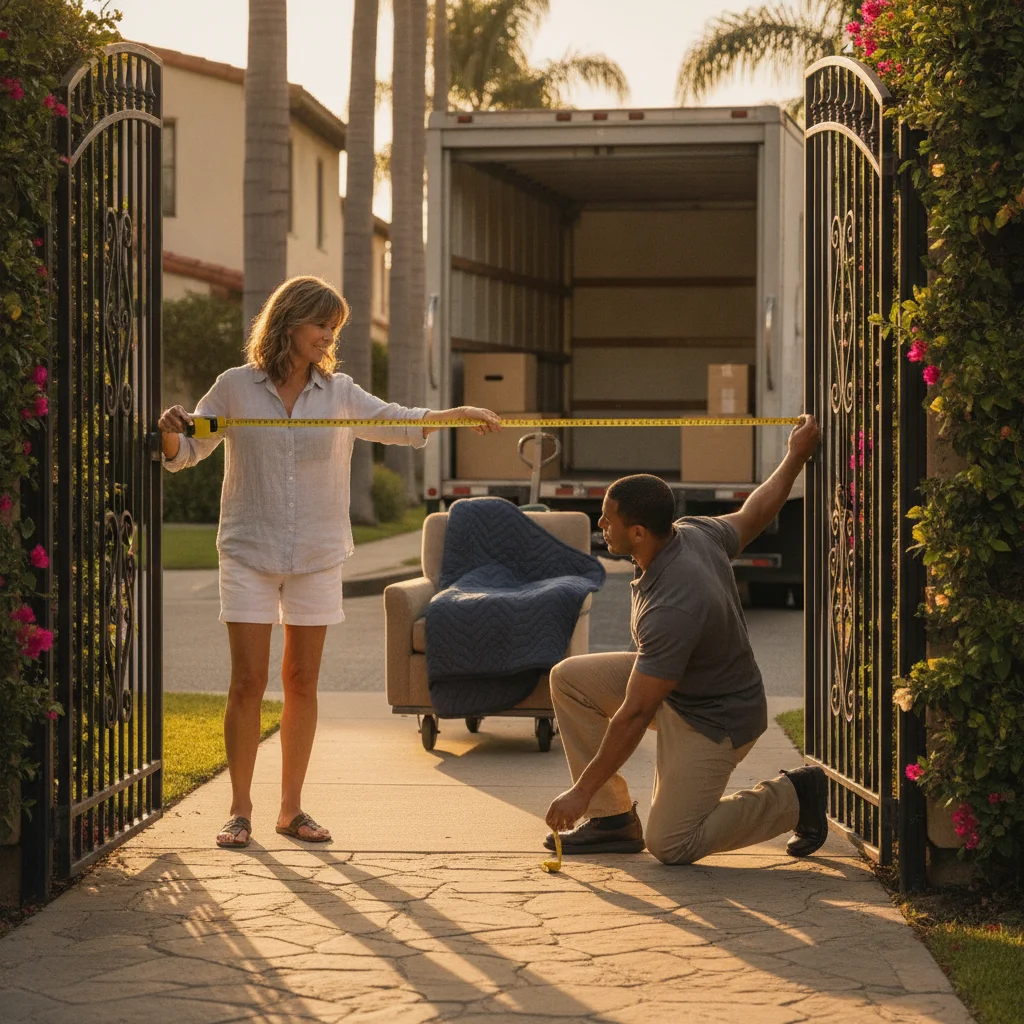
Access belongs in the estimate conversation. Walk from each room to the likely loading point. Record every doorway, turn, stair, gate, elevator, and narrow passage along that path.
Measure openings that look tight. Compare those measurements with your largest furniture. Tell the mover about removable doors, low branches, uneven surfaces, or landscaping that narrows the carry path. If one entrance looks easier, confirm that the property owner or manager allows it.
For a condo or managed property, ask the building contact about move procedures. Confirm whether the property requires reservations, an insurance certificate, protected surfaces, or a specific loading area. Get those instructions in writing, then share them with every company quoting the move.
Street access needs the same care. Identify who controls the proposed truck space and who can approve its use. A curb, private drive, shared lane, and managed loading area may involve different decision-makers. Don’t treat permission from one party as approval from everyone involved.
No Coronado-specific curb permit, reservation rule, parking fee, or loading limit was confirmed in the approved research for this page. Check Coronado’s official local-government information and ask the office responsible for the space. Confirm the current rule before reserving equipment or accepting a route plan.
Ask each mover to state where it expects the truck to stand. The estimate should also reflect any long carry, stairs, elevator use, or alternate loading point the company expects. If that information remains verbal, send a written recap and request confirmation.
Discuss bridge and Silver Strand routing without fixed times
A Coronado estimate may involve a route discussion about the bridge or Silver Strand. That conversation should focus on assumptions, not a promised travel time. Traffic conditions and road access can change, so a fixed prediction may become useless before move day.
No current universal route rule, restriction schedule, closure pattern, or travel-time figure was confirmed in the approved sources for this page. Ask the mover to check official road information near the move date. If a restriction matters to the proposed vehicle or route, request the supporting authority rather than relying on an informal claim.
Give each mover the complete pickup and delivery addresses. Include any additional stop, storage facility, or key handoff location. Then ask the company to document:
- Which route it expects to use
- What access assumptions support that route
- How drive time appears in the estimate
- How a necessary route change could affect the quoted scope
- Who will check official conditions before departure
Don’t choose a mover because it promises the fastest crossing. Compare how clearly each company explains the route, its backup approach, and the estimate terms tied to transportation. A careful written answer is more useful than a confident guess.
If your date or destination changes, send the revision to every mover. Ask for an updated written estimate when the change affects routing, access, stops, or household scope.
Check the mover’s BHGS license before booking
Use the current California licensing checkpoint, not an old industry label. Intrastate household movers are regulated by the Bureau of Household Goods and Services, known as BHGS. The agency took over household-mover regulation from the CPUC in 2018.
BHGS calls the authorization a household mover license. It doesn’t use the legacy Cal-T wording on its current consumer page or license search. A household mover also isn’t licensed through the Contractors State License Board.
Search the company’s legal name in the official BHGS household mover license search. Compare that name with the company identified on the estimate and moving agreement. If the names don’t match, treat the issue as unresolved until the company explains it and the official record confirms who will transport your belongings.
Review the agency’s household mover consumer information as part of your comparison. Save the company name and record you checked with your move documents. Don’t rely only on a logo, website name, advertisement, or salesperson’s statement.
Ask the mover for current insurance documentation as well. If an HOA or building manager requests a certificate, send the exact property requirements to the mover. Confirm acceptance with the property contact rather than assuming any document will work.
Master Movers San Diego doesn’t hold the mover’s license or perform the move. We connect customers with independent local moving companies. The company you book remains the service provider named in your paperwork.
If the move will cross state lines, the regulatory framework changes. Interstate movers are regulated federally, and FMCSA provides its Protect Your Move consumer resources and registration information.
Compare the same scope across written estimates
Place the estimates beside the inventory and access notes you sent. First confirm that every company priced the same job. A lower total isn’t comparable when it leaves out packing, a storage stop, large furniture, or the actual carry path.
Check each estimate for these points:
- The mover’s legal business name
- Complete pickup and delivery addresses
- The dated household inventory
- Packing and unpacking responsibilities
- Furniture disassembly and reassembly
- Specialty or unusually heavy items
- Expected truck position and carry path
- Stairs, gates, elevators, and loading areas
- Additional stops or storage handoffs
- Route and drive-time assumptions
- Valuation or liability choices
- Exclusions and customer-supplied materials
- The process for approving a changed scope
Ask questions wherever the wording differs. One company may describe a task broadly while another breaks it into several items. Make each mover explain what its language includes before comparing the totals.
Don’t fill blank spaces with assumptions. Ask who supplies boxes, protects surfaces, prepares appliances, handles wall-mounted items, and confirms building access. If something isn’t part of the mover’s service, decide who will complete it and when.
Read the company’s cancellation, rescheduling, payment, and claims terms before signing. These are the independent mover’s policies, not policies set by Master Movers San Diego. Ask the company to explain unclear terms in writing. Don’t rely on a verbal exception that doesn’t appear in the final documents.
Look for consistency across the estimate, license record, and payment instructions. Confirm who will arrive, who will transport the shipment, and which company will handle a claim. Keep the completed comparison with your inventory, access photos, and property instructions.
Our guide to choosing a San Diego mover provides a broader hiring checklist. For a Coronado home, give extra attention to property access and route assumptions. Those details make written estimates easier to compare fairly.
When to call us
Consider a professional crew when the move involves heavy furniture, difficult access, managed-property rules, or several household services. Call us at (858) 400-4069 and we’ll connect you with a licensed local mover.