Move day gets harder when packing is finished but access details remain unsettled. Your final preparation pass should align the home, your belongings, and the mover’s written scope. Use this guide after selecting a mover and before its crew reaches the address.

Confirm the mover’s written scope before packing ends
The best way to prepare for movers is to start with the agreement. Pull together the estimate, service list, inventory, and any later written changes. Read each document beside the items that still need attention.
Mark anything that could create confusion on move day. That includes unfinished boxes, furniture that needs disassembly, appliances awaiting preparation, and belongings going to storage instead of the new home. Confirm who handles each task with the company you booked. Don’t assume a conversation changed the written scope.
Send the mover a concise update if the shipment has changed. Mention added furniture, removed items, or a room that wasn’t included earlier. Ask whether those changes affect the written estimate or service plan. Keep the reply with your move documents.
For a move that begins and ends in California, confirm the company through the BHGS Household Mover License Search. Search the mover’s legal name and review the official record. California household movers are regulated by the Bureau of Household Goods and Services, not the CSLB.
If you’re still comparing responsibilities, review our guide to choosing a San Diego mover. Our local moving service can also connect you with an independent local company.
Keep this final review separate from your broader schedule. The San Diego moving timeline covers earlier planning. This step is about resolving remaining questions before loading starts.
Map stairs, gates, elevators, and carry paths
Walk from every packed room to the expected loading point. Follow the same route while carrying an empty box. Look for tight turns, low fixtures, loose rugs, cords, planters, and doors that won’t stay open.
Measure the narrowest doorway if large furniture must pass through it. Note exterior stairs, interior landings, gate widths, and sharp corners. Share those details with the booked mover. Let that company decide how its crew will handle the route and whether the written plan needs adjustment.
San Diego homes create different access problems across the county. A beach-area property may have a narrow side gate, an alley entrance, or limited curb space. A central high-rise may route moves through a loading area and service elevator. An inland home may offer a driveway but still have a steep grade, gate, or low branch near the entrance.
Treat each feature as something to confirm, not a universal rule. Ask a building manager about elevator reservations, loading locations, door access, and any required documents. Ask the mover what access information it needs. If an HOA controls the entrance, get its instructions in writing.
Clear the route without creating a new obstacle elsewhere. Move shoes, floor lamps, pet bowls, and lightweight furniture away from the path. Keep children and pets in a separate, secured area with a responsible adult.
Don’t plan furniture disassembly on the crew’s behalf. Instead, identify pieces that appear too large for the route. Confirm whether disassembly is included and who will complete it. That keeps your preparation aligned with the mover’s actual scope.
Check curb and building access for the exact address
Prepare the house for movers by checking the precise loading address. Don’t rely on how parking looked during a weekend visit. Review the curb, driveway, gate, loading entrance, and posted restrictions for the planned date.
Confirm public curb requirements with the city responsible for that address. Beach cities, the City of San Diego, and inland municipalities may use different processes. No single parking or access rule covers every San Diego County address. If you can’t confirm a requirement online, contact the city or building manager rather than guessing.
Ask the booked mover where its vehicle can legally and safely stop. Share gate instructions and the location of any approved loading area. Don’t place cones or reserve public curb space unless the responsible authority allows it.
High-rise preparation should include the building’s instructions. Confirm which entrance serves moves and whether elevator access must be scheduled. Ask who opens secured doors and where the crew should check in. If the building requests insurance documentation, send that request to the mover you hired.
A portable storage container needs a separate check. Within the City of San Diego, a container placed in the public right-of-way requires a Traffic Control Permit. The city’s Information Bulletin 718 says the permit runs up to 7 days. It lists an $87.68 weekly fee, an $87.68 processing fee, and at least 3 working days’ notice. The bulletin covers streets and sidewalks, not private driveway placement.
For addresses outside the City of San Diego, confirm container rules with that city’s planning or code enforcement office. A nearby city’s requirements shouldn’t be applied to your address.
Separate private records and family-held essentials
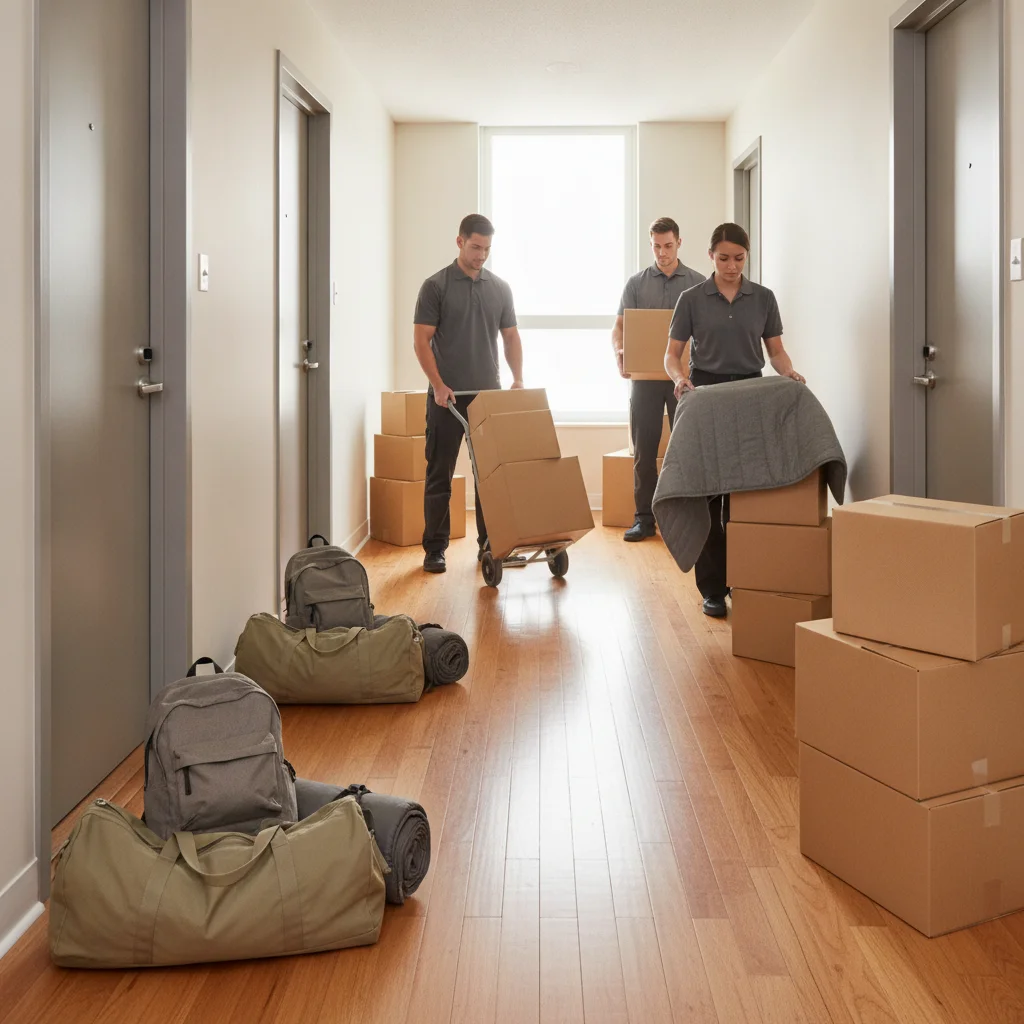
Anything your household needs during the move should stay outside the shipment. Choose a bag, locked cabinet, or vehicle area that movers won’t handle. Tell the mover’s lead which space is excluded before work begins.
Keep identification, medications, keys, wallets, and essential chargers with you. Do the same with lease documents, closing papers, mover paperwork, and building instructions. Small valuables and irreplaceable personal items should remain under your control.
Plan for each person in the household. Set aside clothing, basic toiletries, food permitted by your travel plan, and necessary accessibility items. Pack children’s immediate supplies separately. Keep pet food, carriers, medication, and destination records together.
Use one clear system for items that shouldn’t be loaded. A closed room may work if every household member and the mover know its purpose. A personal vehicle may be better when people need continuing access. Don’t leave private bags beside packed boxes or along the carry path.
Digital preparation matters too. Save copies of the estimate, mover correspondence, and access instructions somewhere you can reach without opening a packed computer. Keep account passwords and financial records away from labels that identify their contents.
The goal isn’t to create another packing project. It’s to preserve control over items the household can’t comfortably lose access to. Our guide to the moving essentials box offers a fuller starting list.
Before loading starts, check the excluded area once more. Confirm that every driver, adult family member, or caregiver knows what stays behind. Then tell the mover exactly where the shipment begins and where the private area ends.
Document condition before the mover’s handoff
Create a condition record after packing and before loading. Take clear photos of furniture, appliances, artwork, electronics, and other significant belongings. Capture the full item first, then photograph existing marks or damage at closer range.
Document the home as well. Photograph floors, walls, doorways, stair rails, and other parts of the carry path. Take wider images that establish location. Add closer images where an existing scrape, crack, or stain could later cause confusion.
Keep the original files and their dates. Store a backup where it won’t be packed with the shipment. If another household member takes some photos, collect everything in one folder before the handoff.
Compare your record with the inventory and condition documents supplied by the mover. Read entries before signing them. If a description appears incomplete or inaccurate, ask the mover to review it. Don’t sign a blank or unreadable form.
Photograph specialty items from several angles. Include removable parts and accessories that travel separately. Note which box holds each accessory, but avoid writing sensitive details on the outside of that box.
At the destination, use the same record during your first review. Compare accessible items with their earlier condition. Note missing pieces or visible damage accurately on the mover’s paperwork when appropriate. Keep copies of every document provided during loading and delivery.
Photos don’t guarantee a particular claim result. The booked mover controls its paperwork and claim process. Master Movers San Diego doesn’t set carrier terms or decide claims. The record simply gives you and the mover a clearer account of the shipment’s condition at handoff.
When to call us
A professional crew makes sense when stairs, elevator controls, heavy furniture, or a long carry complicate the route. Master Movers San Diego can match you with an independent company for a local move. Call us at (858) 400-4069 and we’ll connect you with a licensed local mover.