Some belongings shouldn’t enter the moving flow at all. Your moving day essentials box keeps documents, medicine, keys, chargers, and first-night basics under household control. Pack it separately, mark it discreetly, and choose one adult to keep it close.

Decide what must remain with the household
Start with the consequences of losing access to an item. If its absence would create a medical, financial, identity, or property-access problem, keep it with your household. Don’t base the list only on an item’s size or price.
A useful starting list includes:
- Identification, wallets, payment cards, and necessary cash
- Prescription medicine and medical devices used during the day
- Phones, charging cables, power banks, and hearing-aid supplies
- House keys, vehicle keys, gate remotes, and building fobs
- Lease, closing, travel, school, or medical documents
- Eyeglasses, contact supplies, and essential personal-care items
- Immediate supplies for children, older adults, or pets
Adapt that list to each person. One family may need a child’s comfort item. Another may need mobility equipment or feeding supplies. If medicine has storage instructions, follow its label and guidance from the pharmacy or medical provider.
Your route also shapes the list. For a Downtown San Diego high-rise, keep lobby contacts, elevator confirmations, and parking instructions accessible. For a gated home in Poway, keep the gate remote and property keys nearby. Don’t bury either set inside a packed carton.
If someone is flying to the new home, check the airline’s current baggage rules. The household-controlled kit may need to fit inside approved luggage. A personal vehicle, rental vehicle, or flight also changes how much each person can reasonably carry.
Write one household list before packing begins. Give each item an owner, then check it again before leaving.
Separate first-night needs from the mover’s inventory
An essentials box and an “open first” carton serve different purposes. The essentials box stays with your household. An open-first carton may travel with the mover, then get placed where you can find it quickly.
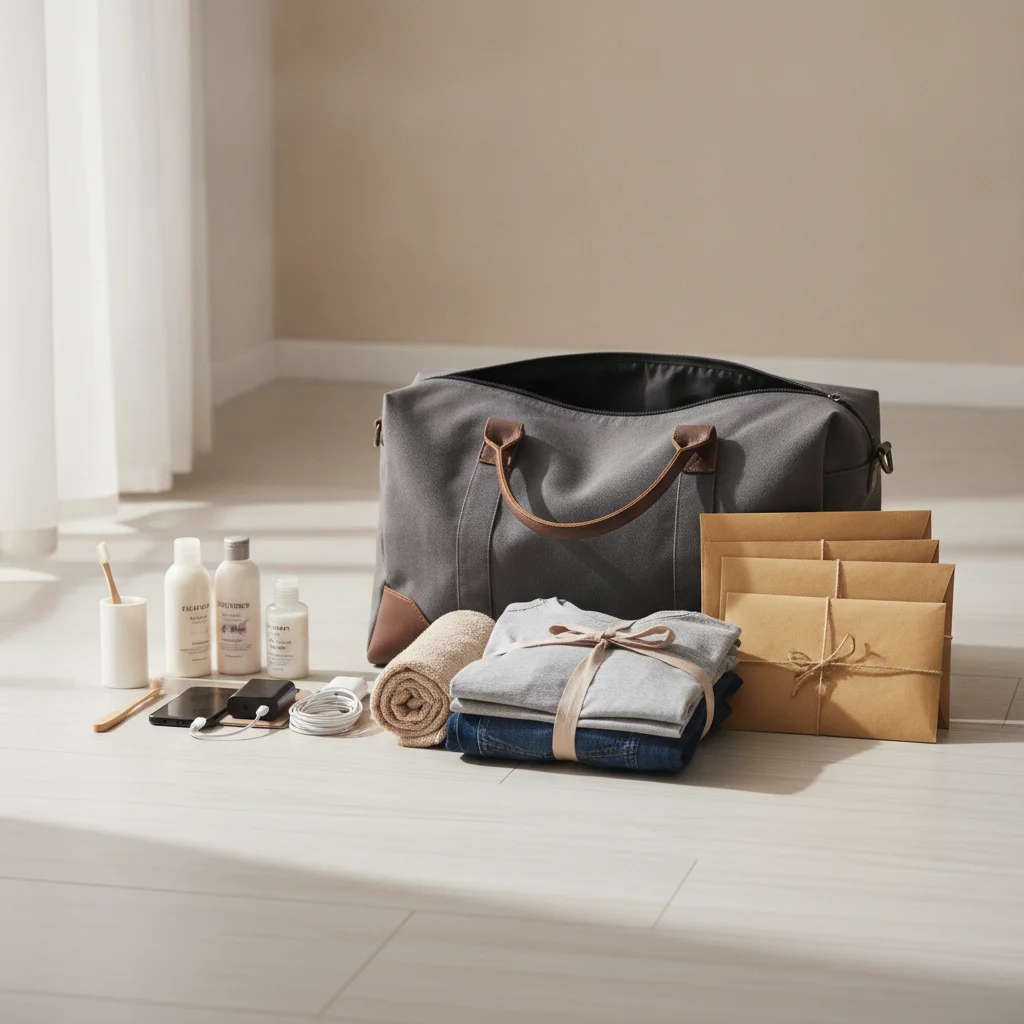
Use the household-controlled bag for anything needed during transit or before unloading finishes. That can include medicine, documents, chargers, keys, a change of clothes, basic toiletries, snacks, and child or pet supplies. A backpack, overnight bag, or small tote often works better than a standard moving carton because it looks different from the shipment.
Open-first cartons can hold lower-risk arrival items. Consider bedding, towels, toilet paper, basic kitchen pieces, cleaning cloths, and clothes for the following morning. These cartons can be marked by room without revealing private contents.
Ask the mover how cartons will be identified and recorded. Don’t assume a colored sticker or handwritten note will automatically control where an item goes. Explain which pieces belong with the shipment and which remain with you.
If you’re hiring packing services, establish that boundary before packing starts. Place household-controlled belongings in a closed room, personal vehicle, or another agreed location. Tell the packing company that those items aren’t part of its assigned work.
Add this separation step to your San Diego moving checklist. It’s easier to divide the two groups before rooms fill with sealed boxes.
Pack private records without exposing box contents
Private records need a discreet container and a clear owner. Gather identification, financial papers, medical information, school records, housing documents, and travel paperwork before general packing begins. Place them in sealed folders inside an ordinary-looking bag.
Avoid labels such as “passports,” “cash,” or “financial records.” Use a neutral color, symbol, or family code instead. The person responsible for the bag should know the code and its contents. Other household members only need to know that it shouldn’t be loaded.
Keep a private checklist without copying sensitive account details. A simple entry such as “housing folder” is enough. Check off the folder when it enters the bag, when the household leaves, and after arrival.
Digital copies may help with reference, but they don’t automatically replace originals. Confirm what each school, bank, landlord, government office, or medical provider will accept. Protect digital files with the security settings already used by your household.
Jewelry, irreplaceable photos, small keepsakes, and personal electronics may also belong in this group. That’s a household decision, not a universal custody rule. Ask the mover for its written acceptance and exclusion policies before choosing what enters the shipment.
Don’t spread private items across several cartons. One document pouch inside one controlled bag creates a simpler check. If two adults must share responsibility, agree on the transfer point and say the transfer aloud.
Plan one handoff point at pickup and delivery
The essentials bag needs one location and one responsible adult. Without that plan, it can drift from a kitchen counter to a vehicle seat, then disappear beneath coats or ordinary cartons.
At pickup, place the bag in the household vehicle before loading begins when practical. If that isn’t possible, assign one person to carry it. Don’t leave it beside stacked shipment boxes, even briefly. Its different appearance helps, but physical separation matters more than its label.
Use a short departure check:
- Essentials bag
- Private document pouch
- Medicine and necessary medical items
- Phones, chargers, wallets, and keys
- Child or pet travel supplies
- Destination access details
At delivery, keep the same person responsible until the home is accessible. Then place the bag in one closed room or cabinet away from incoming cartons. Tell other household members where it is. Don’t transfer responsibility during an elevator trip, curbside conversation, or room-direction discussion.
That routine is especially useful at San Diego properties with several access points. A Chula Vista apartment may involve a garage, lobby, and unit door. A North County house may have a driveway, side gate, and detached garage. Choose the final location before unloading starts.
If you’re arriving separately, name the adult who keeps the bag during the gap. Write down where the transfer happens. The handoff should be direct between household members, never an assumption that someone else picked it up.
Keep the essentials box outside the moving scope
Tell the mover in writing that the essentials bag isn’t part of the shipment. Use plain wording: “This bag stays with the household and shouldn’t be packed or loaded.” Repeat that direction at pickup and keep the bag physically separate.
Review the mover’s paperwork using the same distinction. Ask how shipment pieces are identified and confirm that household-carried items aren’t being treated as packed goods. If anything is unclear, ask the mover to explain its current written policy before signing.
Mover policies can differ by company, route, and item. Don’t rely on a universal online list. Our guide to items movers may not accept can help frame the conversation, but the mover’s written terms control what it will handle. Ask specifically about medicine, food, plants, personal records, valuables, batteries, and any unusual household item.
For a move that begins and ends in California, the Bureau of Household Goods and Services regulates household movers. Search the company’s legal name through the BHGS Household Mover License Search before booking. Don’t look for a CSLB contractor license, since that isn’t the licensing system for household movers.
Keep quotes, valuation discussions, and packing instructions focused on items entering the shipment. The essentials bag remains a separate household responsibility. Before departure, check the pickup rooms, vehicle, and designated holding point. At delivery, confirm the bag’s location before turning your attention to unpacking.
When to call us
A professional crew may help when packing, stairs, elevator coordination, or bulky furniture exceeds what your household can manage. Keep the essentials bag with you and describe the remaining moving scope before booking. Call us at (858) 400-4069 and we’ll connect you with a licensed local mover.