Choosing aquarium movers starts with separating the tank move from animal care. Compare providers by their assigned tasks, access plan, exclusions, and written placement responsibilities.

Decide which tasks need an aquarium specialist
Start by dividing the project into separate areas. These include the empty tank, stand, equipment, water decisions, and livestock. Don’t assume one company handles every part.
A household mover may agree to move the empty aquarium and stand. An aquarium specialist may handle disconnection, preparation, or system setup. The owner or another qualified provider may remain responsible for livestock. The exact split depends on what each provider accepts.
Ask every candidate what “aquarium moving service” means in their quote. Does it cover only carrying and transportation? Does it include packing the tank, moving the stand, or placing both at the destination? Who disconnects pumps, lighting, controllers, plumbing, or other equipment? Get direct answers before comparing offers.
Large aquariums belong in the same planning category as other difficult household items. The piano and specialty moving service can connect customers with licensed independent movers for moves requiring added access planning. You can also review the provider questions in the guide to moving one heavy item in San Diego.
For a California-only household move, confirm the mover’s authorization through the BHGS Household Mover License Search. BHGS regulates intrastate household movers in California. It isn’t the CSLB, and a moving company doesn’t need a contractor license for household moving.
A valid license record doesn’t show whether a mover accepts aquariums. Ask about that experience separately. Request a written description of the accepted work, excluded tasks, and people responsible for each handoff.
Record tank, stand, and equipment dimensions
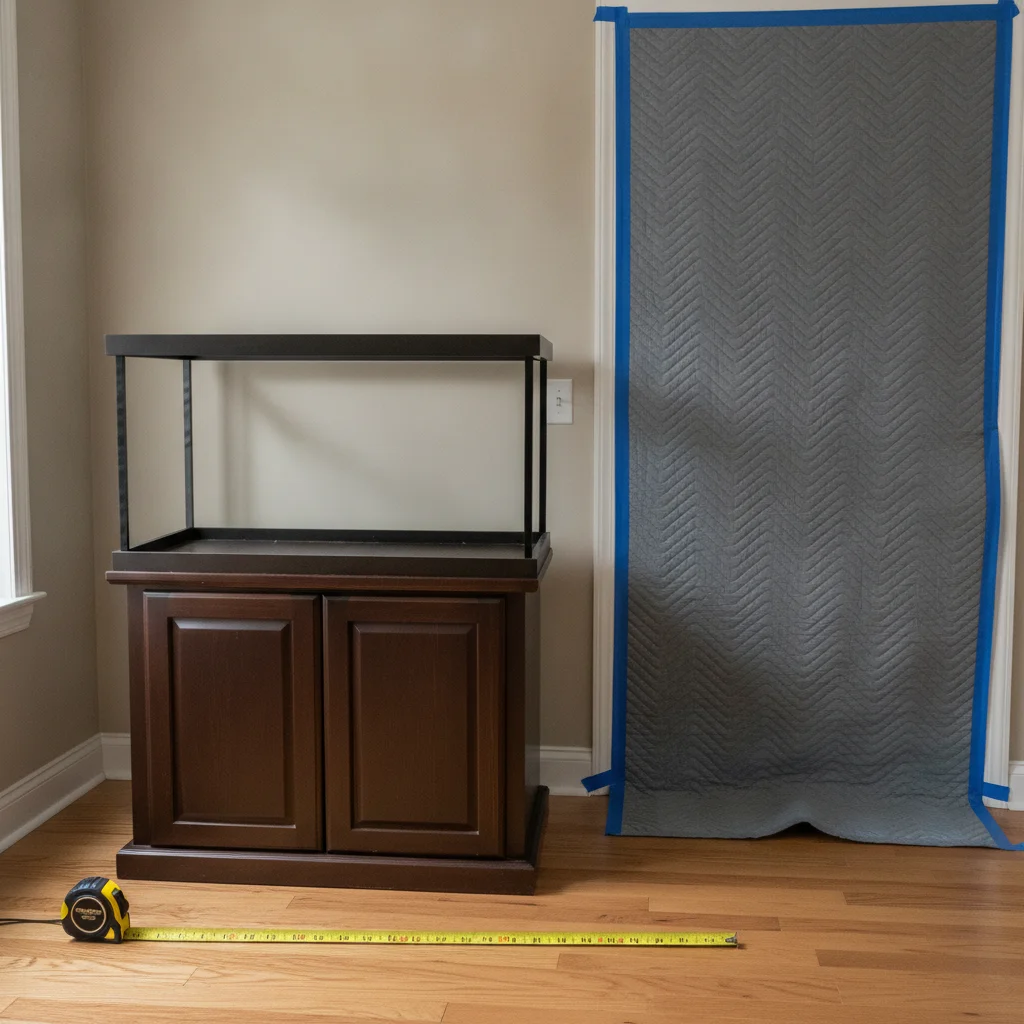
Give each provider the same written inventory. Record the aquarium’s outside length, width, and height. Measure the stand separately, including trim, feet, doors, and any removable sections.
Identify the tank material and construction details from manufacturer records when available. Don’t guess its empty weight. Share a documented figure from the manufacturer or mark the weight as unknown. The provider can then explain whether more information is needed before accepting the job.
Photograph the aquarium from every side. Include the stand, canopy, plumbing connections, wall clearance, and nearby flooring. Add close photographs of existing chips, scratches, swelling, loose trim, or stand damage. These records help everyone discuss the same condition without relying on memory.
Create a separate equipment list. It might include pumps, filters, lights, heaters, controllers, reservoirs, hoses, lids, and detachable plumbing. Record which pieces stay together and which person will prepare each one. Don’t place livestock, wet equipment, and household goods under one vague inventory line.
Tell the mover whether the aquarium can be separated from the stand. Note whether a canopy, sump, or cabinet doors affect the overall dimensions. If you don’t know what can be disconnected, ask the aquarium specialist or manufacturer before move day.
Use the final inventory when requesting written scopes. A provider quoting an empty tank and stand isn’t offering the same service as one asked to handle connected equipment. Clear measurements also let the mover review vehicle space and handling needs without relying on photos alone.
Map doors, stairs, turns, and placement access
Measure the full path at both homes. Start at the aquarium’s current position and end at its final stand location. Record the narrowest clear width and height, not the nominal size printed on a door.
Include door hardware, railings, wall projections, ceiling changes, landings, and tight corners. Measure elevator doors and interiors where applicable. Count steps, identify exterior slopes, and note whether gates or removable doors affect the path. Ask the provider which measurements need onsite confirmation.
San Diego access varies by property. A Downtown condo may involve a loading dock and reserved service elevator. An Encinitas beach-area home may have limited curb space or a narrow side gate. La Mesa and El Cajon properties can present slopes, exterior stairs, or turning limits. Describe the actual address instead of assuming a neighborhood pattern applies.
Building approval is separate from the mover’s scope. Confirm loading rules, elevator reservations, parking instructions, and protection requirements with the property manager or HOA. If public curb space may be needed, check the current requirements with the responsible city. Don’t rely on another customer’s experience from a different San Diego jurisdiction.
At the destination, mark the exact aquarium position. Confirm that the selected location and stand have been reviewed by the appropriate aquarium or property professional. The mover shouldn’t have to choose a final placement while holding the tank.
Photos and a simple path video can support the measurements. They don’t replace direct questions or an onsite review when the provider requests one. The heavy-item access guide explains more details worth documenting before booking.
Confirm who prepares livestock, water, and equipment
Livestock planning needs a named responsible person. Don’t assume fish tank movers will catch, hold, transport, monitor, or reintroduce animals. Ask each provider what they accept, then assign any remaining work to the owner or a qualified aquarium professional.
Species-specific care requirements couldn’t be confirmed for this general guide. They vary with the animals and system involved. Get instructions from the aquarium professional, veterinarian, supplier, or another appropriate source familiar with the livestock.
Write down who handles each preparation task. That includes livestock containers, labeling, water decisions, equipment shutdown, equipment transport, and restarting the system. If the owner keeps custody of the animals, state that clearly. If another provider takes custody, record where and when that handoff occurs.
Ask who will prepare wet filters, hoses, pumps, reservoirs, and loose media. Confirm whether the household mover accepts those items in their expected condition. A component that remains wet or contains residue may be treated differently from a clean, dry household item. The provider should explain its own acceptance policy.
Timing also needs coordination without turning it into an arrival promise. Establish the required order of livestock preparation, tank access, transportation, stand placement, and system work. Make sure every participant has the same sequence and contact details.
Review the guide to items movers may not accept before finalizing the inventory. Then ask the booked mover about the actual aquarium, containers, liquids, equipment, and livestock involved. A general list can prepare the conversation, but the mover’s written terms control what that company accepts.
Put handling and placement responsibilities in writing
The final agreement should describe more than “move aquarium.” Attach the tank and stand dimensions, condition photos, origin path, destination path, equipment list, and final room location. Name the person responsible for every task outside the household mover’s scope.
Ask the mover to state whether its work includes packing, crating, lifting, transportation, unloading, or placement. Confirm who provides any specified packing materials or handling equipment. If stand disassembly is proposed, record who authorizes it and who handles reassembly.
Placement language should be exact. Identify the room, wall, orientation, and prepared stand. Note any elevator, loading dock, gate, parking, or property-management conditions shared with the mover. If access changes, tell the provider and request an updated written plan.
Don’t treat a desired result as a provider promise. Ask what happens if the measured path doesn’t work, the stand isn’t ready, or an unlisted component appears. Record how scope changes are approved before additional work begins. Any price change must come from the independent mover, not Master Movers San Diego.
For a California-only move, ask the mover to explain the written valuation and claim terms that apply. The specific California Max 4 tariff figures couldn’t be confirmed for this guide, so no figure is stated here. Confirm current terms directly with the mover and review BHGS consumer information.
Keep the mover’s documents, aquarium inventory, condition photographs, and specialist instructions together. Before signing, compare the legal company name with the BHGS record. Also confirm that every provider knows where its responsibility begins and ends.
When to call us
A large aquarium move needs professional coordination when weight, fragile components, stairs, elevators, or restricted access complicate the path. Call (858) 400-4069 to request a match with a licensed local mover.