Delivery is over, but open cartons, furniture setup, and packing debris may remain. Before unpacking after a move begins, confirm what the booked mover will handle, which rooms come first, and what stays your responsibility. Put those decisions in writing before the work starts.

Confirm what the mover’s scope includes
Unpacking help after moving can describe several different tasks. Don’t assume that opening cartons also includes putting items away. Furniture setup, shelf placement, appliance connections, and material removal may each have separate terms.
Ask the mover to describe every included task in writing. The scope should say whether the team will open cartons, remove wrapping, place contents on clear surfaces, or put items inside cabinets and closets. It should also identify anything the mover won’t handle.
Furniture needs similar detail. Confirm which pieces will be reassembled and where they’ll go. Ask whether the approved work covers bed frames, dining tables, shelving, or other items that were taken apart. Don’t add a task during delivery and assume it fits the original agreement. Ask the mover to document any change before work continues.
Keep packing and unpacking scopes separate. If you need help preparing the old home too, compare available packing services and ask how each stage appears in the written estimate. Master Movers San Diego doesn’t pack, unpack, or assemble furniture. The independent mover you book controls its work, pricing, and terms.
Licensing also belongs on the checklist. BHGS regulates household movers for moves that begin and end in California. Check the company’s license through the BHGS Household Mover License Search before booking. Interstate household moves are regulated federally by FMCSA, which offers its own Protect Your Move resources.
A license check won’t define the unpacking scope. You still need a written list from the mover. Keep that list available during delivery, not buried inside a packed office box.
Choose which rooms need help first
Unpacking every room at once creates too many open decisions. Choose an order based on what your household needs after delivery. Share that order with the mover before cartons start opening.
Start with rooms that must function right away. That may include bedrooms, a bathroom, and part of the kitchen. A home office may come first when someone works remotely. A child’s room may take priority when familiar bedding and belongings will make the first evening easier.
Keep personal essentials outside the unpacking scope. Medicines, identification, keys, financial papers, and valuables should stay under your control. Tell the mover which bags, bins, or cartons aren’t to be opened.
Define what “finished” means for each priority room. In a bedroom, it might mean an assembled bed and labeled cartons placed nearby. In the kitchen, it could mean opening selected boxes and placing contents on clean counters. Don’t assume the mover will decide where food, cookware, linens, or clothing belongs.
San Diego access can shape the room order. If a downtown building assigns a loading-dock or elevator window, identify the most important delivery and setup tasks before that window ends. In an apartment near the coast, confirm where opened cartons and empty material can wait without blocking doors or shared paths. Ask the property manager about building-specific requirements.
Give the mover one person for placement decisions. Conflicting directions slow the handoff and make the written scope harder to follow. Other household members can focus on pets, children, personal bags, or checking room labels.
Track boxes before opening them
Box tracking shouldn’t stop when cartons enter the new home. Before unpacking begins, compare what arrived with the records you have. Use the mover’s inventory if your paperwork includes one. Otherwise, use your own carton labels or room list.
Create a holding area for anything that needs attention. This includes a carton with no readable label, a box delivered to the wrong room, or packaging with visible damage. Keeping exceptions together makes them easier to discuss before the handoff ends.
Match each carton to its destination before opening it. A simple room name and short contents note can prevent kitchen items from spreading across several rooms. If you’re still packing the old home, this room-by-room packing guide explains a labeling structure that also helps during unpacking.
Open priority cartons in a controlled sequence. Mark each one as opened, checked, and placed. Don’t throw away its packaging immediately. If an item appears missing or damaged, photograph the carton, packing material, label, and item. Keep the related materials until the mover explains what documentation its process requires.
Avoid mixing unopened cartons with empty ones. A flattened box can look finished even when a smaller wrapped item remains inside. Check packing paper, dividers, and carton bottoms before moving materials to the discard area.
At the end of each room, compare the remaining sealed boxes with your list. Record anything that went to another room or stayed unopened. Don’t confirm that the unpacking scope is complete until you’ve checked the agreed rooms and noted unresolved items.
Decide what happens to empty materials
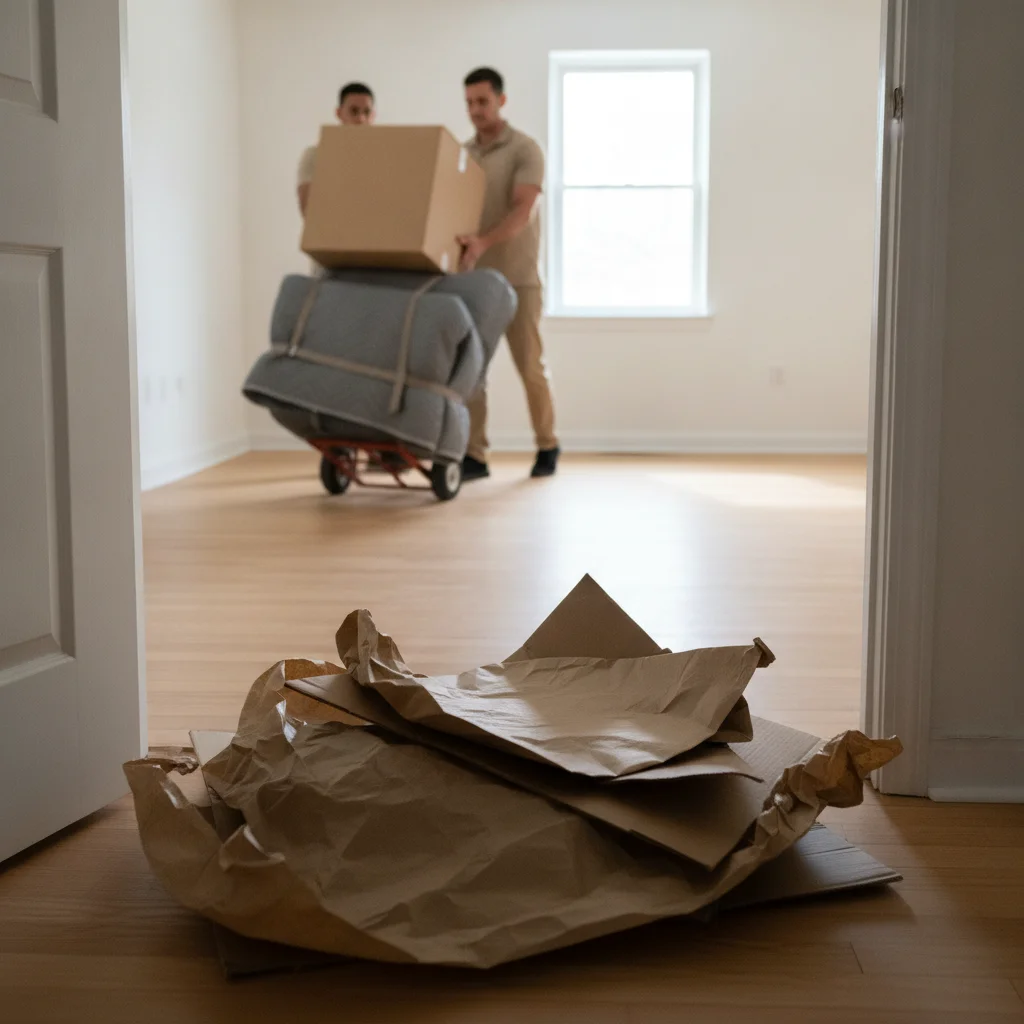
Empty boxes can take over a room quickly. Treat material handling as its own scope item, even when unpacking help is included. Ask the mover what happens to cardboard, packing paper, plastic wrap, tape, padding, and reusable containers.
Get the answer in writing. The mover may agree to gather materials without carrying them away. Another scope may include flattening cartons or moving approved materials to a designated location. Provider policies vary, so a general promise to “clean up” isn’t specific enough.
Identify who owns reusable materials. Wardrobe cartons, protective pads, crates, or containers may be handled differently from boxes you purchased. Ask before cutting, flattening, discarding, or storing anything that might need to be returned to the mover.
Create separate areas for unopened cartons, reusable supplies, and confirmed waste. Keep every area clear of doors, stairs, and walking paths. If the mover will carry materials somewhere on the property, name the exact destination in the scope.
Building access matters here too. A downtown San Diego condo may have specific directions for elevators, loading areas, or waste rooms. A rental property may limit where loose cardboard can sit. Confirm the current instructions with the property manager or waste provider instead of guessing.
Don’t assume material removal includes household trash, donation items, old furniture, or packaging that existed before the move. List each category you want addressed. The mover can then state what it accepts and how that work affects the agreement.
Before anything leaves, inspect the paper and cartons once more. Small hardware, cords, remotes, and wrapped parts can blend into packing material. Set uncertain pieces aside until you can match them to an item.
Review the completed scope before the handoff ends
Review the work while the written scope and unpacking area are still together. Walk through each priority room in the same order you approved. Focus on agreed tasks, not whether the entire home looks decorated.
Check furniture placement and assembly against the written list. Confirm which cartons were opened, which stayed sealed, and which moved to another room. Review the designated areas for empty materials. If an item or task remains unresolved, write it down.
Photograph visible damage or incomplete work before moving the affected item again. Include the carton label and packaging when they’re relevant. Tell the mover directly and ask how to submit the concern under that company’s process. Don’t rely only on a spoken conversation.
Review any changes made during the job. A request to open more boxes, move furniture again, or handle additional materials should appear in the final paperwork if the mover accepted it. Ask about anything you don’t recognize before acknowledging completion.
Keep copies of the estimate, approved scope, inventory, photographs, and final paperwork together. For an interstate move, keep the valuation choice and any written notice about high-value articles with those records. For a California-only move, ask the licensed mover to explain the terms that apply to its work. Master Movers San Diego doesn’t set carrier terms or decide the outcome of a claim.
The final walk-through is also the time to recover personal essentials. Check that keys, documents, medicines, and bags kept outside the scope are still accounted for. Once those items and the written task list match your expectations, you can end the handoff with a clear record.
When to call us
A move may need professional unpacking help when furniture setup, many cartons, mobility limits, or building access make the remaining work impractical. Call us at (858) 400-4069 and we’ll connect you with a licensed local mover.