Choosing movers in La Mesa, CA starts with the curb, driveway, and carry path. A company may look suitable until a steep approach or uncertain parking changes the plan. Share those details before accepting a moving estimate.
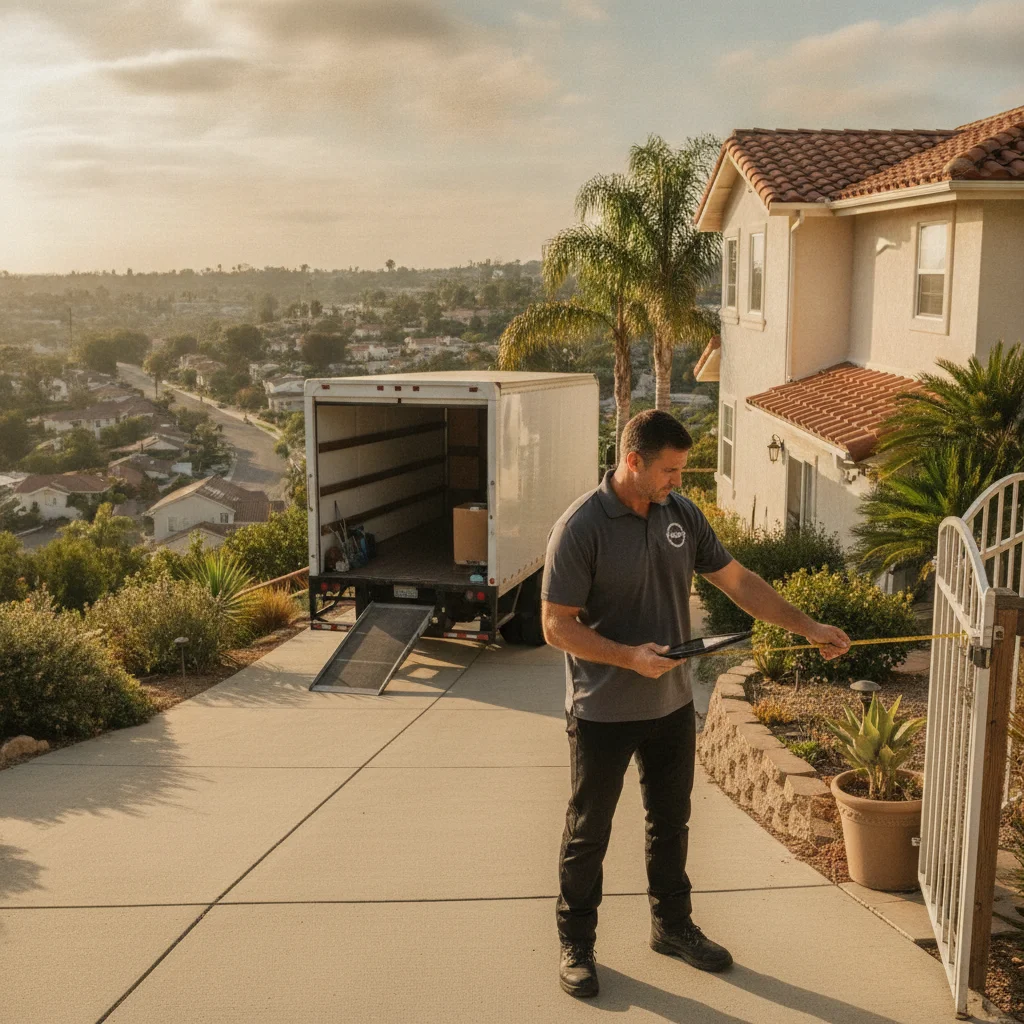
Match the mover to the home’s access
The right mover needs to understand both addresses, not just the number of rooms. Access affects where the moving vehicle can stop and how belongings reach it. Start by describing the path from each room to the closest usable parking position.
Tell the mover about stairs, gates, elevators, narrow halls, sharp corners, and sloped driveways. Mention low branches, covered parking, or garage clearances if they affect the approach. If a vehicle can’t enter the driveway, ask where the mover expects to park instead.
Photos can make this discussion clearer. Take wide views of the street, curb, driveway, entrance, and interior stairs. Avoid showing access codes, house keys, or other private information. A short video can also show turns that individual photos miss.
Ask the mover to include its access assumptions in the written estimate. Those notes should identify the expected parking location and carry path. They should also address stairs, large furniture, and any equipment the mover plans to use. If the written plan doesn’t match the property, request a correction before booking.
Search results for moving services in La Mesa often focus on company names. Property fit deserves equal attention. A mover prepared for open curb access may propose a different plan for a constrained approach.
Master Movers San Diego is a referral service. It can connect you with a permitted independent mover after you describe the move. The local movers page explains how that matching process supports moves within the San Diego area.
Map slopes, stairs, and long carries
Walk the full carry path at the origin and destination. Begin at the nearest position the relevant authority allows the vehicle to use. Continue through the entrance and into every room containing furniture or packed boxes.
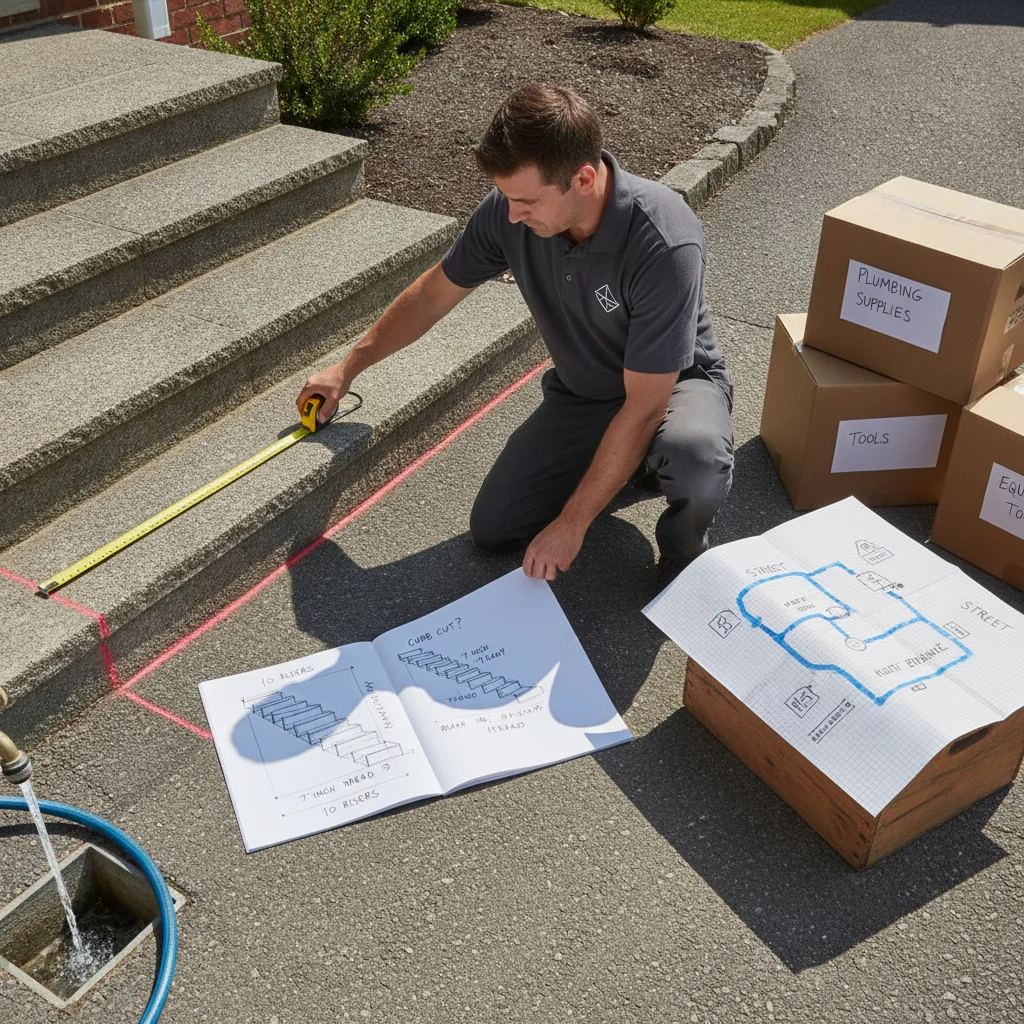
Mark every staircase, landing, tight turn, gate, and uneven surface. Note whether exterior steps have railings or limited clearance. For a sloped driveway, photograph the grade from the street and from the entrance. Let the mover decide how that condition affects its work plan.
Don’t describe a carry as short without checking it. A nearby curb may still require a winding path through a complex. A direct-looking entrance may have stairs hidden behind a gate. Give the mover the actual route rather than a guess based on the map.
Large items need their own access review. Measure the item and the narrowest relevant doorway, hall, or turn. Tell the mover about removable doors or furniture parts, but don’t dismantle anything unless the mover agrees with that plan. A photograph of the item beside its exit path provides useful context.
Put these details into one access sheet for each address. Use simple labels such as street, driveway, entry, stairs, and destination room. Share the same information with every mover you compare. That makes written proposals easier to review because each company received the same conditions.
If part of the route can’t be inspected, say so plainly. Ask the property manager, owner, or resident for current photos. Unknown access shouldn’t be presented to the mover as confirmed access.
Check curb space for the exact address
Parking conditions must be checked at the property level. This guide doesn’t have your street address, move date, or building rules. A specific curb restriction, permit requirement, or approved loading position therefore couldn’t be confirmed here.
Start with the signs and markings at the exact curb. Record what they say without interpreting or covering them. Then ask the City of La Mesa which office can confirm current rules for that location. Describe the address, intended date, vehicle type, and proposed stopping area. Don’t assume a temporary curb permit exists or is required until the city confirms it.
Private property adds another layer. A property owner, manager, or HOA may control a driveway, gate, parking lot, or assigned space. Request the current instructions in writing. Ask which areas may be used and whether advance coordination is needed. If the property provides a loading plan, give it to the mover.
Street conditions can also differ between the two addresses. Complete the same check at the destination, even if the origin has easy access. Note any parked vehicles or containers that could change the usable space, but don’t treat a temporary observation as a reservation.
Send the confirmed information to the mover before signing. Ask where the vehicle will be positioned if the preferred curb area isn’t available. The alternative should account for the actual carry path rather than an assumed open space.
Keep the authority’s response with your moving documents. If the rule remains unclear, state that it wasn’t confirmed. The city or property controller, not a blog or referral service, sets the applicable access terms.
Discuss I-8 and SR-125 routing without fixed times
A move involving La Mesa may prompt a route discussion about I-8, SR-125, or local streets. The correct route depends on the exact origin, destination, vehicle, and current road conditions. No fixed route or travel time can be confirmed without those details.
Ask the mover which route it expects to consider. Then ask how the plan handles the final approach to each property. The highway portion and the curb approach are separate access questions. A simple main route doesn’t guarantee a simple driveway, gate, or parking position.
Avoid treating a navigation estimate as an arrival promise. Conditions can change after the estimate is prepared. Before the move, check current notices through the authority responsible for the roadway. The mover should make its own operational routing decision for the vehicle it sends.
Share any property instructions that affect the approach. These might identify a particular gate or a vehicle entrance different from the resident entrance. Don’t assume the route shown for a passenger car is suitable for a moving vehicle. Let the moving company evaluate that distinction.
When comparing La Mesa movers, ask each company to explain how routing connects with its access plan. A proposal should make clear whether the quoted work assumes close vehicle placement or a longer carry. It should also state what happens if the planned access isn’t available. Request that explanation in writing rather than relying on a brief phone conversation.
Don’t add a guessed delay to your planning notes. Record the route as unconfirmed until the mover discusses it. That keeps a changing traffic condition from becoming a false promise about timing.
Check the mover’s California household mover license before booking
California intrastate household movers are regulated by the Bureau of Household Goods and Services (BHGS), a division of the Department of Consumer Affairs. BHGS took over household-mover regulation from the CPUC in 2018. Moving companies aren’t licensed as contractors by the CSLB.
Before booking, ask the moving company for its California household mover license number. Check that information through the official BHGS Household Mover License Search. Compare the current agency result with the legal name shown on the mover’s estimate and other paperwork.
Don’t rely on a logo, advertisement, or referral page as proof of permit status. This article doesn’t confirm the status of any individual company. Use the agency record when you’re deciding whether to book. If names or details don’t match, ask the mover to explain before you sign.
The BHGS consumer information page is the appropriate starting point for current California guidance. It can also help you separate agency information from claims made in company advertising. Specific BHGS tariff terms are not quoted here because no tariff rule or figure was verified for this page.
For an interstate move, the regulatory check is different. Interstate movers are regulated federally by FMCSA and require federal registration. Use FMCSA’s Protect Your Move for current consumer information and registration checks.
Permit research is only part of the hiring decision. Review the written estimate, access assumptions, company identity, and requested paperwork together. The guide to choosing a San Diego mover provides more questions for comparing companies without relying on unsupported claims.
Frequently asked questions
Do movers need a parking permit in La Mesa?
Not on private property such as your own driveway. A permit question arises when the truck has to occupy the public street or block a metered space, which is a city right-of-way matter rather than a moving matter. Confirm the requirement with the City of La Mesa for your exact address before move day, because the rule depends on the street, not on the mover.
How do steep La Mesa driveways change a move?
They usually mean the truck parks at the curb and the crew works a longer carry, which can affect the mover’s time estimate. A grade steep enough that a loaded dolly is difficult to manage safely may require smaller loads and more trips. Tell the mover about the slope on the phone rather than letting them discover it, because that is the detail that turns an accurate quote into a surprise.
What should I tell a mover about access before they quote?
The slope, the stair count at both ends, how far the truck can realistically park from the door, and any turn that is tighter than a standard doorway. Access is what separates two La Mesa homes of identical size into two different prices, and it is the thing most phone quotes leave out.
How do I check that a La Mesa mover is legitimate?
Ask for the California household mover license number and the exact legal business name, then look it up yourself on the BHGS consumer site. California moved household mover oversight from the CPUC to the Bureau of Household Goods and Services in 2018, so BHGS is the record that matters for a move inside California. If the business name on the record does not match the name on your estimate, stop and ask why before you book.
When to call us
Professional moving help is useful when slopes, stairs, long carries, or uncertain curb access complicate the property plan. Master Movers San Diego doesn’t perform moves, but it matches customers with independent local moving companies.
Call (858) 400-4069 to be connected with a permitted local mover.
If you already know which part of the job you need, start with local movers for a full household, labor-only movers when you have the truck, or furniture movers for a single heavy piece down a sloped driveway.