People searching for movers Del Mar need more than a company name. The right plan accounts for the curb, driveway, gates, stairs, and path to each door. Confirm those details before choosing the mover and truck setup.
Match the moving plan to the property
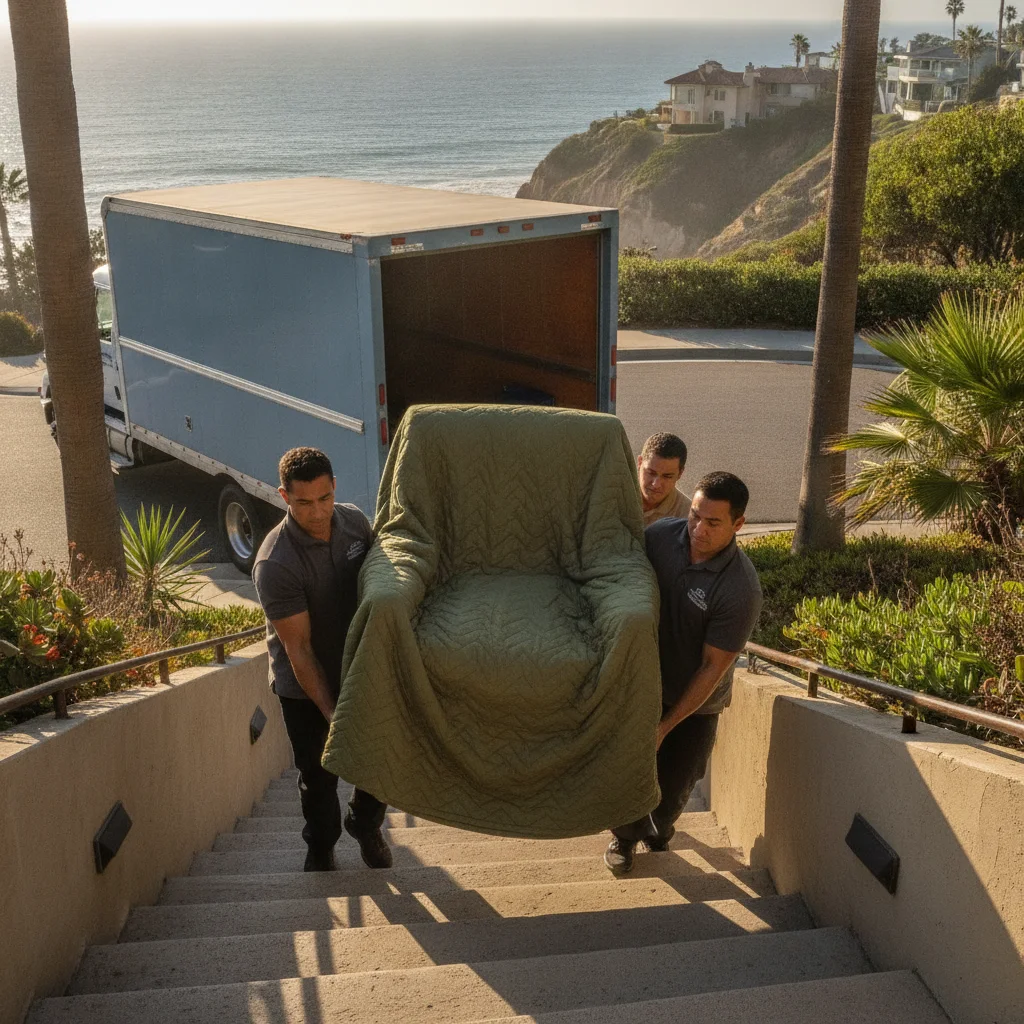
Start with the property, not the number of bedrooms. Two homes with similar inventories can present very different access needs. One may have a clear driveway and level entrance. Another may require exterior stairs, a gate, and a longer carrying path.
Write down the property type at both addresses. Note whether it’s a detached home, condo, apartment, or managed community. If there’s a property manager or association, ask for its moving instructions. Building requirements aren’t confirmed by a Del Mar mailing address alone.
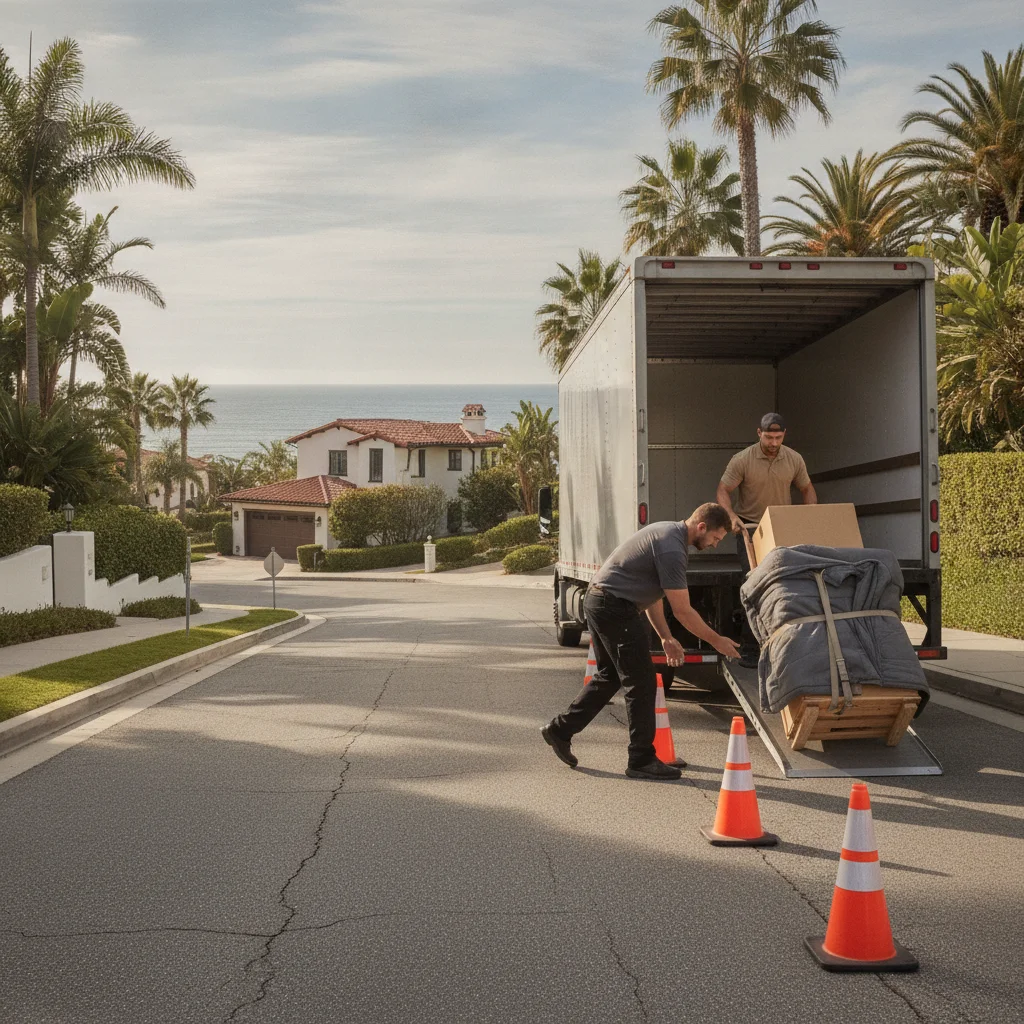
Next, identify where the mover could position its vehicle. A driveway may look open in a listing photo but still have a narrow entrance, low clearance, sharp turn, or restricted area. Don’t assume a passenger car proves that a moving truck will fit.
Match the inventory to that access. Large sofas, bed frames, appliances, safes, pianos, and patio furniture deserve separate notes. Record which floor holds each heavy or bulky item. Tell the mover about anything that may not pass through the most direct doorway.
Share these details when requesting local moving help. Master Movers San Diego can connect you with an independent, licensed local mover. The mover you book determines the crew, vehicle, equipment, and written terms.
Give the same information to every company you compare. That makes each conversation more useful. It also reduces the chance that an important stairway, gate, or carrying distance gets overlooked.
Confirm curb and driveway access for the address
An open curb doesn’t confirm that you may reserve or occupy it. Public-space rules can depend on the exact location and planned use. No verified Del Mar curb reservation fee, permit amount, or universal parking rule was available from a primary source.
Ask the City of Del Mar whether your plan needs approval, a reservation, posted notice, or another step. Give the city the exact address and describe the intended vehicle placement. Don’t apply City of San Diego container or right-of-way figures to a Del Mar address.
Private access needs separate confirmation. Ask the property owner, manager, or association whether the driveway has restrictions. Confirm any shared-driveway rules with the people who control that space. If a garage entrance must remain open, include that detail in the mover’s notes.
Photograph the curb and driveway from both directions. Include parked vehicles, gates, branches, overhead features, slopes, and tight turns. Take another photo from the proposed vehicle position toward the entrance. Current photos are more useful than cropped real estate images.
Measure the carrying path from the proposed parking position to the door. Note every surface change, turn, stair, and gate along that path. The mover can then decide what equipment and vehicle arrangement fit its work plan.
Keep a backup position in mind, but don’t assume it’s legal or available. Ask the correct property contact or city authority before treating it as an option. Also ask the mover how a different parking position could change its written estimate or service terms.
Measure stairs, gates, and long carries
Access measurements should describe the narrowest point, not the widest opening. Measure doorways between the usable edges. Measure gate openings at their tightest point. Record low clearances and any fixed hardware that reduces space.
For stairs, count the steps and note each turn or landing. Include the stair width, overhead clearance, and landing depth. Exterior stairs need the same review as interior stairs. A photo taken from the bottom can miss a tight turn near the top.
Map the full carrying route for each large item. The shortest path isn’t always the usable path. A side entrance may avoid an interior turn but introduce a narrow gate. A garage route may look wider yet contain shelving or a raised threshold.
Don’t promise that a door, railing, or gate can be removed. Ask the owner or manager what may be altered. Then let the mover decide whether disassembly or another handling plan is appropriate.
If the property has an elevator, ask the building contact about reservations, access hours, protective materials, and certificate requirements. No single citywide elevator or association rule could be confirmed for Del Mar. Treat each property’s written instructions as address-specific.
Create a short access sheet for the mover. Include measurements, photos, floor locations, and the proposed carrying path. Flag specialty items instead of burying them in a general inventory.
Photos and measurements improve planning, but they don’t guarantee fit. Ask the mover to review uncertain spaces before finalizing its vehicle and handling plan.
Discuss Camino del Mar and I-5 routing
Divide the route discussion into three parts. Start with the regional connection, such as I-5. Then identify the confirmed city approach, which may involve Camino del Mar. Finish with the last turns into the property.
The exact route depends on both addresses and the mover’s vehicle. Don’t prescribe a commercial-vehicle route from a passenger-car map. Send the address to the mover and ask it to confirm the planned approach.
The final property approach deserves the most detail. Note the direction that gives the clearest driveway entry. Mark any turn that appears too tight for the proposed vehicle. Tell the mover whether the road ends, continues through, or requires a turnaround at the property.
Don’t assume the curb shown online will be open. Parked cars, temporary work, local events, and changing road conditions can affect access. Check the route near the move date and pass any observed change to the mover.
No single travel-time estimate can be verified for every Del Mar move. The mover should base its schedule on the actual origin, destination, vehicle, and current conditions. Avoid building the plan around an unconfirmed arrival window.
Use the same three-part review at the destination. A simple I-5 trip can still end at a property with a gate, shared driveway, loading area, or stair carry. The route isn’t complete until the mover can trace the path from the regional road to the final door.
Send the route notes in writing. Include map pins, property photos, parking instructions, and the contact who controls the destination. That gives the mover one clear access record to review.
Check the mover’s BHGS license before booking
California intrastate household movers are regulated by the Bureau of Household Goods and Services, or BHGS. The agency took over mover regulation from the CPUC in 2018. Household movers aren’t licensed by the CSLB.
Before booking, use the official BHGS household mover search. Check the company name and license number supplied by the mover. Review the current agency record rather than relying only on an advertisement, vehicle marking, or screenshot.
We couldn’t confirm a license number format, permit fee, or Max 4 tariff figure, so confirm those directly with BHGS. Those details weren’t verified from a primary source. Confirm the mover’s exact record and current rules directly through BHGS.
An interstate move falls under a different regulatory system. If the shipment crosses a state line, check the company through FMCSA’s Protect Your Move resources. A company may have authority for one type of move and not another.
Master Movers San Diego is a referral service. We don’t own trucks, employ moving crews, perform moves, or hold a BHGS household mover license. We connect customers with independent, licensed local movers.
Ask the mover to put the agreed access assumptions in writing. Those notes should identify the planned parking position, stairs, gates, long carries, and specialty items. Ask that company directly about its charges, valuation terms, insurance, and procedures for access changes.
For more selection steps, read our guide on how to choose a San Diego mover. Verify the agency record before signing, then keep a copy with the mover’s written terms.
When to call us
A Del Mar move needs a professional crew when access involves tight parking, stairs, gates, long carries, or bulky items. Share the property details so the matched mover can review the job accurately. Call us at (858) 400-4069 and we’ll connect you with a licensed local mover.