Hiring a moving company in Carlsbad starts with comparing the same job. A low estimate means little when another mover included packing, stairs, or a longer carry. Define the move first, then compare licenses, scope, access, and written terms.

Define the household scope before requesting estimates
Start with an inventory that every mover can review. Count bedrooms, garages, storage areas, patios, and outdoor items. List furniture that may need disassembly. Identify pianos, safes, artwork, large appliances, and other items needing special handling.
Separate the work into clear categories:
- Packing boxes
- Packing fragile items
- Furniture disassembly and reassembly
- Loading and transportation
- Unloading
- Unpacking
- Storage between addresses
- Disposal or donation handling
Don’t assume those tasks are included. Ask each mover to state its responsibility in writing. If you’re packing yourself, note what must be ready before the crew arrives. Our local moving service can connect you with an independent mover for a household move, but that mover sets the scope, price, and terms.
Home size alone doesn’t define the job. No verified price exists for every 1,000-square-foot Carlsbad home. Two homes with the same floor area may have different inventories, stairs, gates, and parking conditions. Ask for an estimate based on the actual shipment and both properties.
For market context, San Diego local moves commonly run $450-800 for a studio, $600-1,200 for a one-bedroom home, $950-2,000 for a two-bedroom home, and $1,500-3,200 for a three-bedroom home. These are broad market observations, not Carlsbad quotes or brand prices. The licensed mover’s written estimate controls the actual offer.
Before contacting companies, create one scope document. Send the same version to everyone. That simple step makes later comparisons far more useful.
Share access details for both addresses
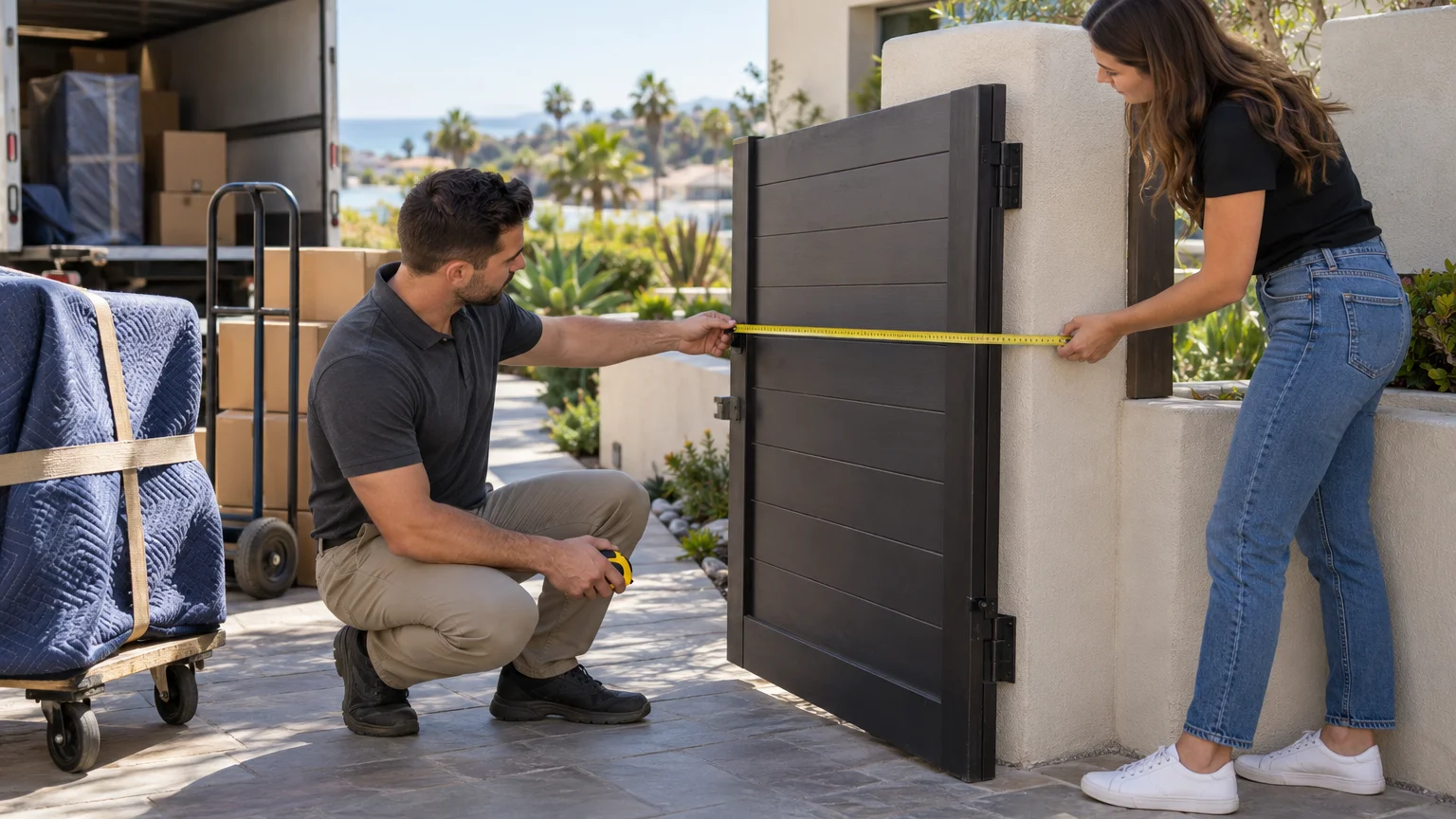
A mover needs more than two street addresses. Describe the complete path from the parking position to each room. Include stairs, elevators, gates, narrow hallways, long walks, and detached storage spaces. Measure openings when a large item may be close to the available clearance.
Share photos or video when the mover requests them. Show the driveway, curb, entrance, stairs, gate, and any tight interior turns. Don’t describe access as “easy” or “normal.” Those words hide details that can change the planned crew, equipment, or vehicle.
Ask the owner, landlord, HOA, or building manager about private property rules. Confirm parking instructions, elevator reservations, move hours, gate access, and any required insurance documents. No single Carlsbad rule applies to every apartment, condominium, or managed community. Building permission also doesn’t create legal curb access.
Give each company the same access information for both locations. Ask these points in writing:
- Where can the moving vehicle legally stop?
- Who confirms the planned vehicle fits the available space?
- Does the quoted scope include stairs or long carries?
- What happens if the actual access differs from the estimate?
- Which building approvals must the customer arrange?
- Are heavy or oversized items accepted under the written scope?
Don’t rely on a company’s general claim that it “knows Carlsbad.” A useful answer addresses your actual addresses. It should explain assumptions without inventing access conditions that haven’t been inspected.
Discuss I-5 routing without fixed travel times
I-5 may be part of a Carlsbad move, but a road name isn’t a schedule. Traffic, incidents, construction, vehicle access, and the final approach can change the route. Don’t accept an unsupported promise that a company always avoids delays or knows a guaranteed shortcut.
Give the mover the complete origin and destination addresses. Ask how travel time enters the estimate and when billable time begins. The answer should appear in the written documents. Compare the wording, not just the projected total.
Useful questions include:
- Is travel listed separately or included in another line?
- What route and access assumptions support the estimate?
- How are delays treated under the written agreement?
- Does the vehicle plan work at both properties?
- Could parking or gate access require a different approach?
Don’t ask companies to predict an exact I-5 arrival time weeks ahead. Ask them to explain how routing affects billing and what happens when conditions change. That distinction gives you something meaningful to compare.
There’s also no verified “cheapest day” that applies across Carlsbad moving companies. Availability and pricing belong to each mover. Request written estimates for the dates you can accept, then compare the same scope. A different date isn’t cheaper unless the mover’s actual written offer says so.
Hourly market observations provide context, not a quote. San Diego rates commonly run $120-180 per hour with two movers, $180-240 with three, and $240-300 with four. A two-hour minimum is common across the market. Confirm the mover’s crew size, minimum, travel treatment, and other charges in its own documents.
Check the mover’s household mover license before booking
California household movers are regulated by the Bureau of Household Goods and Services, or BHGS. They aren’t licensed by the Contractors State License Board. The CPUC also isn’t the current household-mover regulator.
Search the company’s legal name in the official BHGS household mover license search. Don’t rely only on a logo, advertisement, vehicle name, or screenshot supplied by the company. Confirm that the record matches the business named in your estimate and service agreement.
The exact format of a mover’s license number couldn’t be confirmed from the approved source material for this page. Don’t judge legitimacy by whether a number looks familiar. Search the legal name directly and review the official result. BHGS also publishes consumer information for household moves.
For a move that begins and ends in California, BHGS is the relevant regulator. An interstate move follows a different federal system. Interstate companies also fall under FMCSA registration, which can be checked through FMCSA’s Protect Your Move.
License verification is one part of the comparison. Also confirm the mover’s identity across the estimate, agreement, and official record. Pause if names change without explanation, the company resists providing written documents, or payment instructions arrive from an unrelated party.
For a broader screening process, use our guide on how to choose a San Diego mover. Master Movers San Diego is a referral service. It doesn’t hold a household mover license, own trucks, employ moving crews, or perform the physical move.
Compare the same scope across written estimates
Place every estimate beside your original scope document. Check that each company priced the same inventory, packing work, access conditions, crew size, and transportation. A lower total may reflect missing work rather than a better offer.
For a within-California household move, BHGS says written estimates follow a visual inspection. A not-to-exceed amount may change when the customer requests added services and those services are documented through a change order. The mover can’t use a change order merely because it underestimated the original work.
Review these items before choosing:
- Legal business name and license record
- Inventory and excluded items
- Packing responsibilities
- Crew size and vehicle assumptions
- Parking, stairs, elevators, gates, and carry distance
- Travel and billing terms
- Storage or delivery conditions, when relevant
- Payment schedule and accepted methods
- Cancellation and rescheduling terms
- Added-service and change-order process
- Claims and valuation documents
Our guide to binding and non-binding moving estimates explains why the estimate type matters. Read the actual document before signing. Don’t treat a verbal total or text message as a substitute for the mover’s formal paperwork.
Common warning signs include pressure to decide immediately, unclear company identity, missing scope details, or refusal to explain charges in writing. Another warning sign is a price comparison built on different assumptions. Ask the company to correct the document before you compare it.
Keep copies of the inventory, estimate, agreement, change orders, and payment records. Take photos of important items before the move. If the scope changes, get the revised terms in writing before added work begins.
When to call us
A whole-home move needs a professional crew when the shipment, access, or timing exceeds what friends and a rental vehicle can reasonably handle. Call us at (858) 400-4069 and we’ll connect you with a licensed local mover.