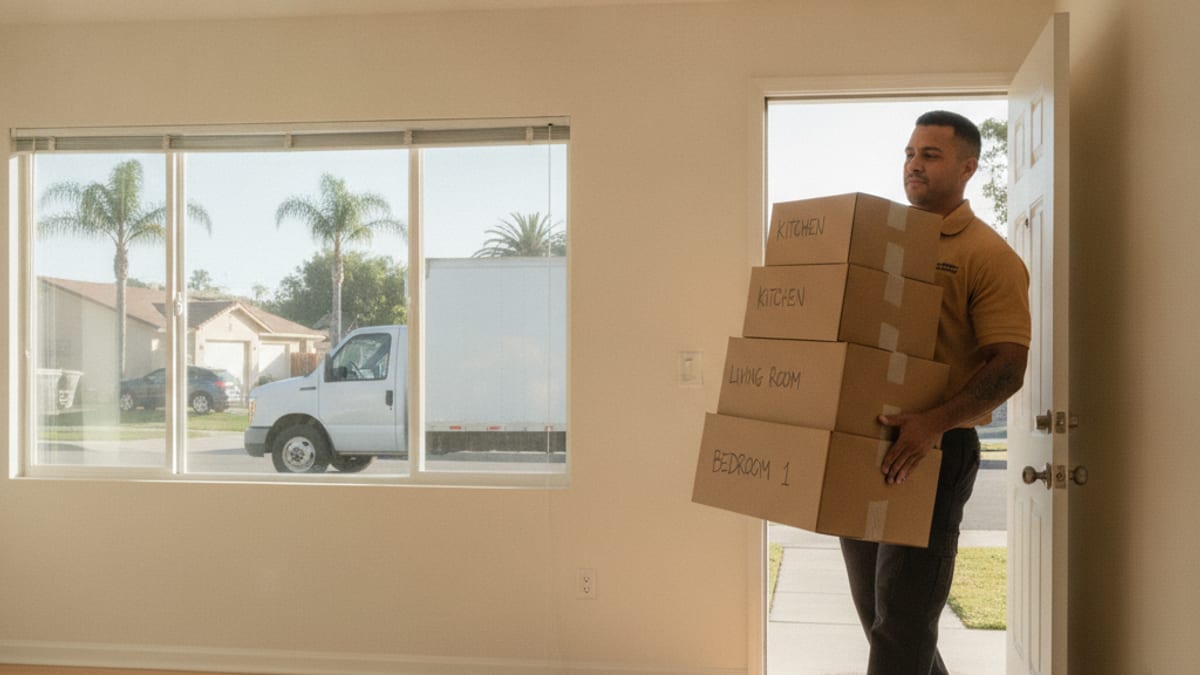
A San Diego move-out checklist has one job: hand the unit back in move-in condition so your landlord has nothing to deduct. In California, the landlord has 21 days after you leave to return your deposit or send an itemized statement of what they kept, and since July 2024 the deposit itself is capped at one month’s rent. Given San Diego rents, that cap can be a meaningful amount, so a clean, documented move-out is worth a real day’s pay. Work the list below in order, keep your own photos, and you take the guesswork out of getting the full amount back.
What California’s deposit law means for San Diego renters
California deposit law changed twice in the last two years, and both changes favor the tenant. Know these before you hand over the keys.
The deposit is capped at one month’s rent. Assembly Bill 12 took effect July 1, 2024, and it limits most residential deposits to a single month’s rent, down from the old two-month ceiling. A small landlord who owns two or fewer rental properties, four or fewer units total, may still charge up to two months. If your San Diego landlord is holding more than one month and doesn’t fit that exception, the amount over the cap is yours to ask back.
Your landlord has 21 days. Under California Civil Code section 1950.5, the landlord must mail your deposit, or an itemized list of deductions plus whatever is left, within 21 days of you moving out. If a deduction for repairs or cleaning tops $125, they have to include copies of receipts or invoices. No itemized statement inside 21 days means they generally lose the right to keep any of it.
Photos now cut both ways. Assembly Bill 2801 phased in through 2025. Since April 1, 2025, landlords must photograph the unit after you leave and again after any cleaning or repairs, and they have to send those photos with any deduction they claim. For leases starting on or after July 1, 2025, they also photograph the unit before you move in. That means the condition is on the record, so your own timestamped photos on move-out day are the counterweight that keeps a deduction honest.
The San Diego move-out checklist, week by week
This San Diego move-out checklist runs from two weeks out to the final key handoff. Do the paperwork early and save the cleaning for the end, once the unit is empty.
Two weeks before
- Give written notice if you haven’t. Most California month-to-month tenancies need 30 days; check your lease for a longer term.
- Request an initial inspection (see the section below). This is the single most useful right most renters skip.
- Book your movers or a labor-only crew for the heavy lifting, and lock in your date before the end-of-month rush.
- Line up your change-of-address steps so mail, utilities, and deliveries follow you.
One week before
- Pack everything but the daily essentials. If packing is eating your evenings, packing services can compress it into a single day.
- Schedule utility shutoff for the day after you leave, not the day of, so you have lights and water for the final clean.
- Confirm your building’s elevator reservation and any move-out window. Many San Diego complexes and HOAs require both.
- Photograph anything already damaged or worn so it can’t get pinned on you later.
Move-out day
- Let the crew clear the unit first. An empty room is the only way to clean baseboards, closets, and behind appliances.
- Wipe down every surface: counters, cabinets inside and out, appliances, sinks, tubs, and toilets.
- Patch small nail holes, and clean scuffs off the walls. Normal wear is not deductible, but a wall of grime reads as neglect.
- Have carpets cleaned if your lease requires it. A professional carpet clean often costs less than the deduction your landlord would charge. Get a quote before deciding.
- Haul off anything you’re not taking. A crew or junk removal run clears the garage and closets so nothing left behind becomes a charge.
Final walkthrough
- Walk the unit with your landlord or manager if they’ll meet you. Bring your move-in inspection sheet.
- Take dated photos and a slow video of every empty, clean room, including inside cabinets and the oven.
- Return every key, remote, and fob, and get written confirmation you handed them back.
- Give your landlord your forwarding address in writing so the deposit and statement have somewhere to land.
What California landlords can and can’t deduct
The line California draws is simple: you pay for damage, not for age. A landlord can deduct for unpaid rent, cleaning to bring the unit back to its move-in condition, and repair of damage beyond normal wear and tear. They cannot bill you for normal wear that comes from living there.
| Usually deductible (damage) | Not deductible (normal wear) |
|---|---|
| Broken tiles, cracked counters, holes in doors | Faded paint and minor scuffs |
| Large or numerous wall holes from anchors | A few small nail holes |
| Pet stains, burns, or tears in carpet | Carpet worn thin in walkways |
| Missing fixtures, blinds, or appliances | Loose hinges and worn seals |
| Trash or belongings left behind | Lightly soiled grout after years of use |
When a charge shows up that belongs in the right-hand column, you have the paperwork to push back, because you photographed the unit clean and empty on the way out.
Request an initial inspection before you move out
The most overlooked tenant right in California is the initial inspection. Under Civil Code 1950.5, you can ask your landlord to inspect the unit up to two weeks before you move out, while you still live there. They then give you an itemized list of what they’d deduct, and you get the chance to fix each item before the final accounting.
This flips the whole process in your favor. Instead of finding out about a cleaning deduction three weeks later, you learn about it early enough to clean the oven yourself or patch the wall. Ask for it in writing when you give notice. Landlords have to honor the request unless you waive it.
How San Diego movers help protect your deposit
Most deposit deductions come from two things: damage during the move and stuff left behind. Both are avoidable. A licensed mover pads doorways and corners, wraps furniture, and carries heavy items with the right dollies and straps, so the walls and floors you’re being judged on don’t pick up fresh dings on the way out. Ask the mover you book what their move-out process includes in writing.
A full clear-out matters just as much. When the mover takes everything, including the odd couch or box headed for donation, the unit reads as empty and cared for at the walkthrough. Pair a local move or an apartment move with a quick junk-haul, and there’s nothing left for a landlord to charge you for. For the bigger planning picture around dates, notice, and packing, the San Diego moving checklist and timeline and apartment moving guide walk through the rest.
For a written estimate on a move-out anywhere in the county, call (858) 400-4069 to connect with a licensed mover. Master Movers San Diego connects renters with movers across San Diego, Chula Vista, Oceanside, El Cajon, and every city in between. If you’re weighing the cost of the move itself, the local moving cost guide lays out 2026 market bands.
Frequently asked questions
How long does a landlord have to return a deposit in San Diego?
A California landlord has 21 days after you move out to return your deposit or send an itemized statement of deductions with the balance. This applies statewide, including San Diego. If a deduction for repairs or cleaning is over $125, they must include copies of receipts. Miss the 21-day window and the landlord generally forfeits the right to keep any of it.
How much can a San Diego landlord charge for a security deposit?
Since July 1, 2024, most California landlords can charge no more than one month’s rent as a deposit. In San Diego’s rental market, that cap is a meaningful amount. A landlord who owns two or fewer rental properties totaling four or fewer units may charge up to two months, unless the tenant is a service member.
What can be deducted from my deposit in California?
A landlord can deduct unpaid rent, the cost of cleaning the unit back to its move-in condition, and repairs for damage beyond normal wear and tear. They cannot charge you for normal wear, like faded paint, minor scuffs, or carpet worn thin in walkways. Damage such as pet stains, large holes, or broken fixtures is fair game.
Do I have to professionally clean the apartment before moving out?
Only if your lease requires it, and even then the standard is move-in condition, not spotless. California limits cleaning charges to what it takes to return the unit to how you received it. A thorough clean of counters, appliances, floors, and bathrooms usually satisfies it. Keep photos so any cleaning deduction has to match the actual condition you left.
What is an initial inspection and should I request one?
An initial inspection is a walkthrough you can request up to two weeks before you move out, while you still live in the unit. The landlord gives you an itemized list of proposed deductions, and you get to fix each item before you leave. It’s the best tool renters have to avoid surprise charges, and California landlords must honor the request. Ask for it in writing.
Should I take photos when I move out of my San Diego rental?
Yes. Take dated photos and a video of every empty, clean room, including inside cabinets, the oven, and closets. California now requires landlords to document the unit with their own photos, so your set is the check on any deduction they claim. Photos are what turn a disputed charge into a refund.
About the author
Master Movers San Diego. A referral marketplace connecting people with licensed movers across San Diego County for local, long-distance, labor-only, apartment, and military PCS relocations. (858) 400-4069.