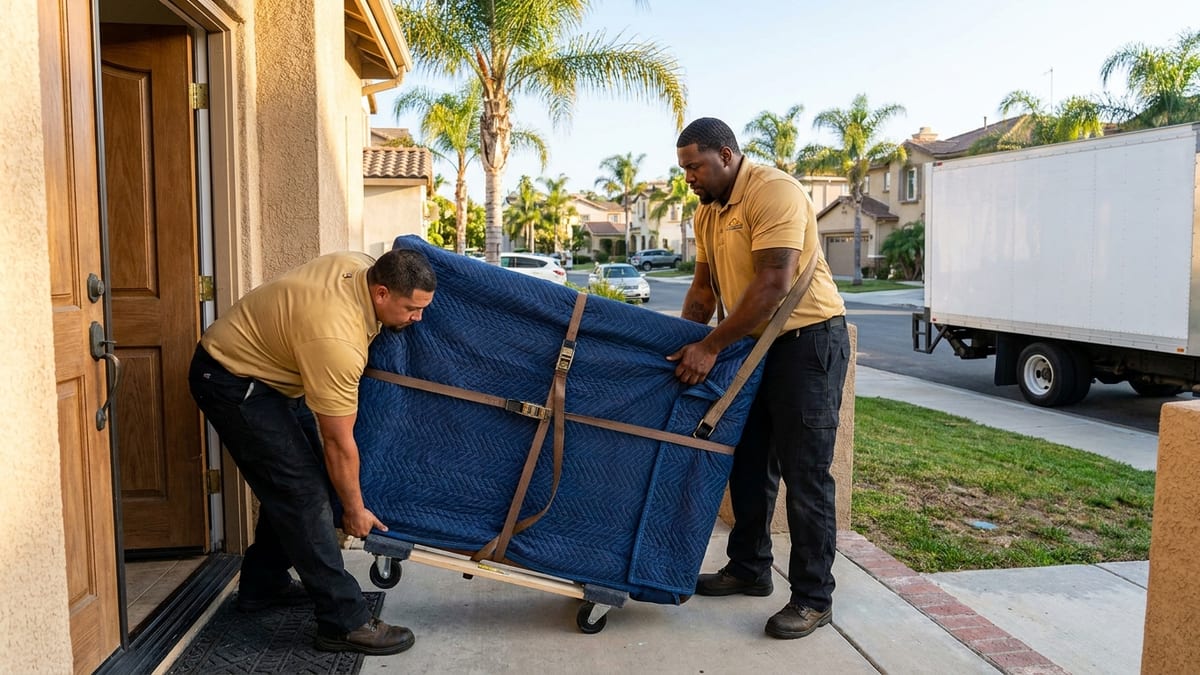
Professional pool table moves in San Diego vary based on table size, access conditions, and whether re-felting is needed. Stairs, long carries, and HOA elevator logistics all add scope and time. The single most important thing to know: a slate pool table is disassembled by the specialist for the move. A licensed mover surveys the table and access before putting a written estimate together.
Why a slate pool table is disassembled for a move
A regulation pool table looks like furniture, but it is closer to a small piece of industrial equipment. Slate tables are heavy. The frame, rails, legs, and slate together add up fast, and the slate panels, usually three pieces on a standard table, can crack from their own weight if the table shifts on its side or takes a bump in transit. The specialist you book confirms the actual weights for your specific table before the move.
The frame is typically medium-density fiberboard or solid wood glued and stapled together. It’s built to sit level and still on a floor, not to handle the lateral stress of being carried through a doorway or bounced in a truck. Attempt to move it assembled and you’re gambling on cracked slate, a warped frame, or a leg that pulls out of its socket mid-carry.
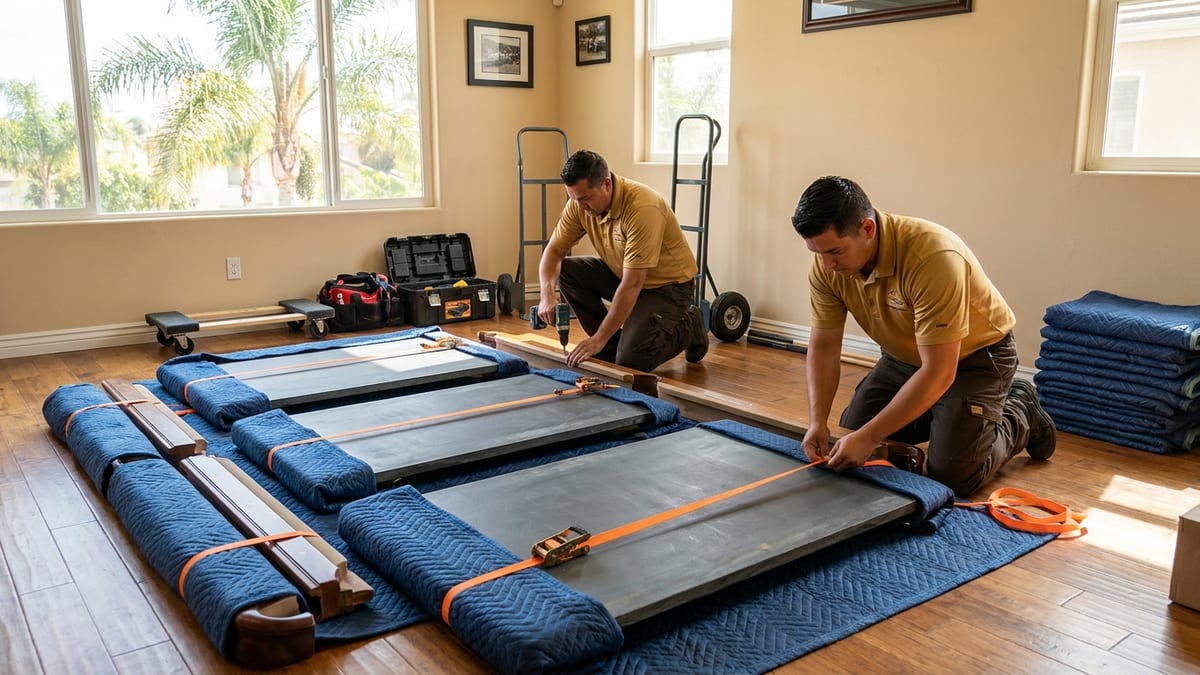
Proper disassembly means removing the pockets, rails, felt, and slate panels as separate pieces. Each slate panel gets wrapped in moving blankets and loaded flat. The frame and legs travel separately. Nothing is rushed, and nothing gets stacked wrong.
The full process: disassembly, move, reassembly, re-level
Here’s what a professional pool table move looks like from start to finish.
Disassembly at the origin depends on table age, condition, and construction. The specialist removes stapled or glued felt, lifts the slate panels (a two-person lift minimum per panel is standard), disassembles the rails and pockets, and breaks down the frame and legs. Older tables sometimes have bolts that are corroded or stripped, which adds time. The mover you book confirms the expected timeline after surveying the table.
Transit is straightforward once the table is broken down. Slate travels flat. Everything gets pad-wrapped. A proper moving truck with tie-downs keeps pieces from shifting.
Reassembly at the destination follows the reverse sequence. The frame goes back together, legs attach, slate panels are set and shimmed level, and the rails are reattached. Then comes leveling. The specialist confirms the expected timeline as part of the written estimate.
Re-leveling matters more than most people expect. A pool table that is even slightly off level will roll balls to one side. The technician uses a precision level and dials in the adjustable leg levelers until the table plays true.
Re-felting is optional but worth considering when the table is already disassembled. If the felt is worn or you want a different color, this is the time to do it. Ask the mover for the re-felt cost upfront as part of the written estimate.
A licensed mover with specialty experience handles the same careful process for pianos. If you are also moving a piano, the guide on how to move a piano without damaging it or your floors covers how specialty moves work. The piano and gun safe movers page covers that end of things.
Why DIY pool table moves go wrong
The appeal is obvious: rent a truck, call four friends, skip the professional fee. The reality is that most DIY pool table moves end in at least one of three ways.
Cracked slate is the most common outcome. Even a hairline crack means the table won’t play level and the slate has to be replaced, which costs more than a professional move would have.
Warped or broken frames are the second problem. MDF frames aren’t designed to flex. One wrong angle carrying through a door and the frame splits at a joint. Solid wood frames handle stress better, but they’re still not meant to be carried assembled.
Injury is the third risk. A slate panel that slips during a carry is extremely heavy and has no good grip points. Dropped panels and strained backs are common outcomes when untrained people attempt this work.
The math usually works against DIY once you factor in slate replacement, a rental truck, and the reality that most friend groups don’t include anyone who’s done this before.
What drives cost in San Diego
San Diego’s geography makes pool table moves more variable than in a flat-terrain city. Here’s what pushes prices up or down.
Stairs are the biggest cost driver. Each flight of stairs adds significant time and often requires an extra mover. Carrying heavy slate panels up a staircase is a different job than a ground-floor transfer, and the mover you book will factor stair access into the written estimate.
Hillside homes are common in La Jolla, Mt. Helix, Rancho Bernardo, and Coronado. Long carries from a steep driveway to a garage game room add time and crew. So do homes with multiple level changes inside.
HOA elevators in condo buildings add coordination time. Movers need to pad the elevator, schedule the freight elevator if there is one, and work around building-access rules. Some buildings require certificates of insurance before any move begins.
Distance within the county matters less than you’d think for the actual pool table move, but if you’re relocating from Chula Vista to Escondido or from downtown to Rancho Santa Fe, the total drive time adds to the job cost.
Re-felt and re-level as an add-on is the most predictable upgrade, a fixed cost you can plan for upfront.
| Scenario | What changes |
|---|---|
| Ground-floor move, same building or short carry | Simplest access, fewest variables |
| Standard local move, no stairs | Distance within the county adds transit time |
| Move with one flight of stairs | Extra crew and time needed per slate panel |
| Move with two or more flights of stairs | Most labor-intensive scenario |
| Re-felt added to any move | Table is already apart, so ask the mover for a combined price |
| Long carry or hillside home | Added time and crew for the approach |
The licensed mover you book puts the actual figure in a written estimate after surveying the table and both access points. Nine-foot tables and antique tables with unusual construction may cost more than a standard eight-foot three-piece slate.
Moving across San Diego County vs. a local move
Most pool table moves in San Diego are local, across a neighborhood, across a city, or from one part of the county to another. The process is identical whether you’re going from North Park to Mission Hills or from El Cajon to Oceanside. Distance is a minor factor compared to stairs and access.
If you’re moving out of San Diego County entirely, to Los Angeles, the Inland Empire, or out of state, that’s a different conversation involving long-haul licensing and a different pricing structure. For anything within San Diego County, a local mover with specialty experience is the right call.
The furniture movers booked through the marketplace handle the rest of the household alongside the pool table when you are doing a full move. And if you want to coordinate the whole household move at once, the local movers cover the complete job.
How to choose a pool table mover in San Diego
Not every moving company moves pool tables, and not every company that claims to should be trusted with one.
Ask whether they have specific pool table experience, not just “we move heavy things.” Ask how they handle the slate panels and whether they re-level after reassembly. Ask if they carry cargo liability coverage that covers specialty items.
A company that quotes you over the phone with no questions about stairs, access, or table size is guessing. A company that asks the right questions before quoting is doing the job properly.
California household mover license (BHGS) and USDOT registered movers have met the state and federal baseline requirements. That is a floor, not a guarantee of quality, but it is a filter worth using.
Call (858) 400-4069 to request a match with a licensed pool table mover. The mover you book will ask the right questions upfront and put the actual price in a written estimate.
Frequently asked questions
How much does it cost to move a pool table in San Diego?
Pool table moving costs in San Diego depend on table size, number of slate panels, stairs, carry distance, and whether re-felting is added. The licensed mover you book puts the actual price in a written estimate after surveying the table and both access points. Get that estimate before committing.
Can a pool table be moved without disassembling it?
Slate pool tables are disassembled by the specialist for any move. The slate panels are too heavy and fragile to transport intact, and the frame is not built to handle movement stress. Confirm the scope of disassembly in writing with the mover you book. A mover who suggests moving a slate table whole is either uninformed or cutting corners.
How long does it take to move a pool table?
Disassembly and reassembly are each sized to the table and the access conditions. Add transit time and the job often runs as a half-day commitment, sometimes less for a simple ground-floor move. The licensed mover you book puts the actual timeline in a written estimate after surveying the table and both access points.
Will my pool table need re-leveling after a move?
Yes, always. Even if the table was perfectly level before, it has to be re-leveled at the new location. Floor conditions vary. Leg levelers get adjusted at the new site using a precision level. Don’t skip this step, a table that plays off means every game is compromised.
Do pool table movers re-felt the table?
Not automatically, but many specialty movers offer it as an add-on. If your felt is worn or torn, a move is the best time to re-felt since the table is already disassembled. Ask the mover for the cost upfront.
What size truck is needed to move a pool table?
A standard 16- or 20-foot moving truck works for most pool table moves. The slate panels travel flat, so vertical clearance matters less than floor space. If it’s part of a full household move, the table gets loaded with the rest of your furniture using the same truck.