Choosing a moving company in Encinitas takes more than comparing two totals. Each mover needs the same inventory, access details, and service scope. Otherwise, the estimates describe different jobs.
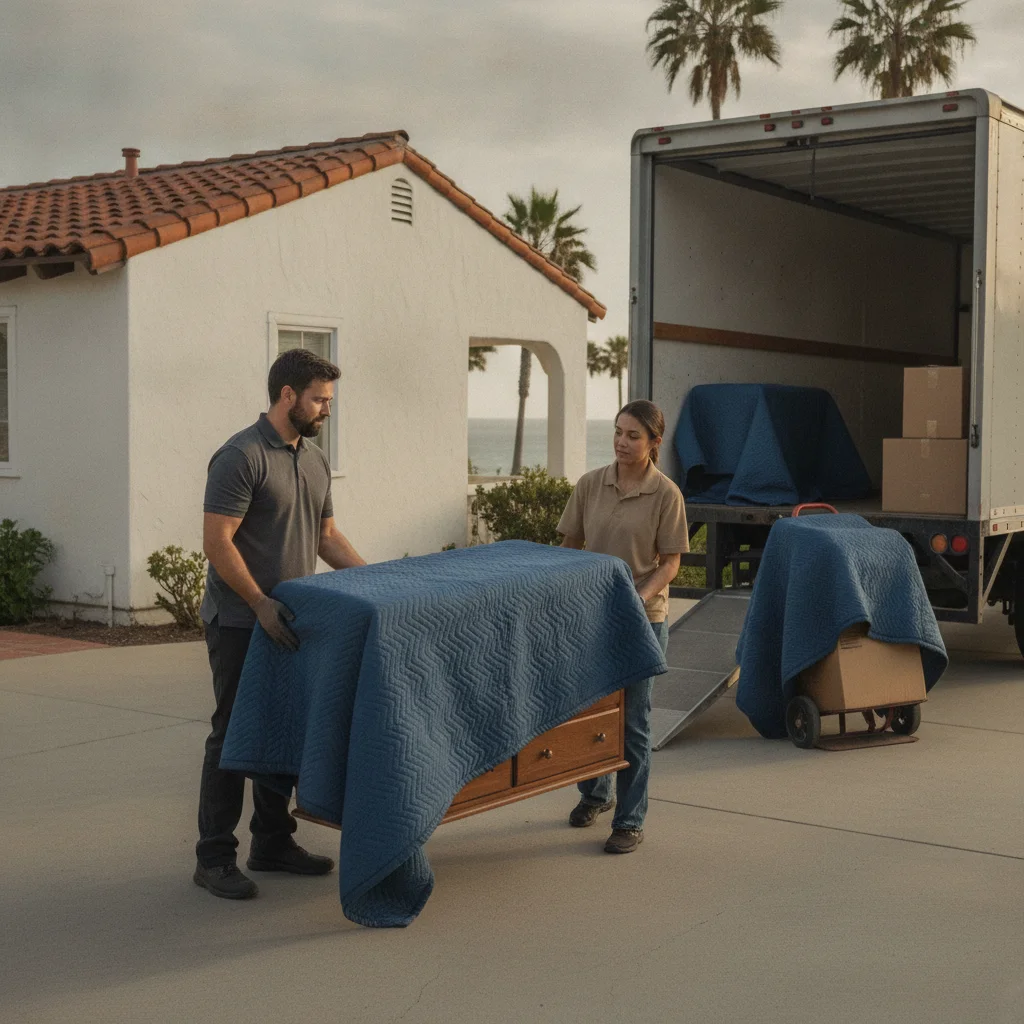
Define the whole-home scope before requesting estimates
Start with a written inventory for every room. Include the garage, patio, attic, storage areas, and outdoor spaces. A whole-home move can involve belongings that never appear in bedroom counts.
List the larger pieces individually. Note beds, dressers, tables, sectionals, appliances, workbenches, grills, planters, and outdoor furniture. Identify anything unusually heavy, fragile, or difficult to replace. Pianos, safes, antiques, artwork, and exercise equipment may need separate planning.
Next, define which services belong in the estimate. Decide whether the mover will pack anything or only transport sealed boxes. State which furniture needs disassembly and reassembly. Explain whether belongings are going directly to the new home or stopping at storage.
Don’t describe the move as simply “three bedrooms.” Two homes with that label can contain very different inventories. One may have a furnished garage and large patio. Another may have several nearly empty rooms. Written detail gives each company a clearer basis for its estimate.
Include both complete addresses when requesting estimates. Share the preferred move date, but ask each company to confirm its own availability. Master Movers San Diego doesn’t promise arrival windows or set a mover’s schedule.
Our local moving service can connect you with independent companies serving Encinitas. The company you book performs the move and sets its own terms. Your comparison should still begin with one shared scope document. Send that same document to every mover under consideration.
Before accepting an estimate, review the inventory again. Add anything that was missed. A final walkthrough can catch items stored behind doors, above cabinets, or beside the house.
Separate household volume from coastal access details
Inventory explains what must move. Access explains how the mover reaches it. Keep those two parts separate when comparing Encinitas movers.
Walk the complete path from each room to the expected truck position. Note interior stairs, exterior steps, narrow halls, tight turns, gates, and sloped driveways. Measure openings when a large item looks close. A sectional that fits inside the house may still be difficult to carry through a side gate.
Show each mover where a truck could stand at both addresses. Don’t assume a curb, driveway, or private road can accept the vehicle a company plans to send. Ask the mover to assess the location and explain any access requirement in writing. If an HOA, landlord, or property manager controls the area, confirm its current rules directly.
Whole-home access also includes detached spaces. Tell the mover about sheds, garages, guest rooms, and outdoor storage. Identify furniture on decks or patios. If belongings are spread across multiple structures, mark each location on the inventory.
Weather exposure can affect the carry plan, so mention uncovered paths. Don’t ask a company to infer property conditions from the Encinitas address alone. Photos and measurements give the estimator better information.
Apartment-specific questions belong in our Encinitas apartment parking and access guide. A detached home comparison needs a different focus. Prioritize driveway geometry, gates, exterior stairs, and the distance between the home and truck position.
Ask each company to describe any property concern it noticed. Then compare whether all bidders priced the same carry path and furniture handling. A lower estimate isn’t directly comparable when it leaves out a difficult gate or detached garage.
Discuss I-5 and Coast Highway 101 without fixed times
Route planning belongs in the estimate conversation, but fixed travel promises don’t. Give each mover the exact pickup and delivery addresses. Ask how the planned route affects billing, truck access, and the working schedule.
I-5 and Coast Highway 101 may enter that discussion, depending on the two addresses. Don’t tell a mover which road it must use. Instead, ask the company to explain its route assumptions and how it handles a change on move day.
Avoid comparing companies through a single predicted drive time. Road conditions can change, and the mover controls its routing decisions. Focus on the estimate terms that matter if travel takes longer than expected.
Ask when billable time starts and ends. Confirm whether travel appears separately or inside another line item. If the mover mentions a travel charge, request the exact calculation in writing. Master Movers San Diego doesn’t set that charge or waive it.
The truck position can matter as much as the highway route. A mover may reach the street easily but still face a long carry to the front door. Make sure the written scope connects route planning with the property access notes.
The destination deserves equal attention. Share gate instructions and the intended unloading location before booking. If access depends on another person, confirm who will be present. Don’t leave those details for the driver to discover after arrival.
Use the same route questions with every company. You’re comparing how clearly each mover plans the trip, not asking anyone to guarantee traffic conditions. Clear assumptions make later estimate differences easier to understand.

Check the mover’s BHGS household mover license
California intrastate household movers are regulated by the Bureau of Household Goods and Services, or BHGS. It’s part of the Department of Consumer Affairs. BHGS took over household mover regulation from the CPUC in 2018.
Use the official BHGS household mover license search before booking. Search the company’s legal name and review the record returned by the state. Don’t rely only on a company name shown in an advertisement, estimate header, or truck photograph.
BHGS calls this authorization a household mover license. The agency doesn’t direct consumers to verify movers through the CSLB. Household moving companies aren’t licensed construction contractors.
Ask the company to identify the legal business that will transport your belongings. Compare that name with the estimate, contract, and BHGS search result. If names differ, ask for a written explanation before signing anything.
The BHGS consumer information page provides the state’s current household-moving guidance. Use that page when you need to confirm what the agency presently requires. Don’t accept an invented license format, fee, or tariff rule from an unofficial checklist.
An interstate move follows a different system. If your Encinitas move crosses state lines, check the mover through FMCSA’s Protect Your Move resources and review its USDOT registration. A company may have authority for one type of move but not another.
Master Movers San Diego is a referral service. We don’t transport household goods or hold the mover’s license. The independent company you hire performs the work and provides its own contract. Our broader guide on how to choose a San Diego mover covers more questions to ask before booking.
Compare the same scope across written estimates
Put the estimates side by side only after confirming their scopes match. Start with the inventory. Every company should be pricing the same furniture, boxes, specialty items, and outdoor belongings.
Then compare labor assumptions. Check whether packing, unpacking, furniture disassembly, furniture reassembly, and materials appear in each document. If one estimate excludes a requested task, ask the mover to revise it before comparing totals.
Review access details next. Look for the agreed truck position, stairs, gates, long carry paths, and detached storage areas. The estimate should reflect what the company knows about both homes. Correct missing information in writing.
Read every line that affects the final amount. Ask how the mover calculates labor and travel. Request written explanations for charges tied to stairs, carrying distance, materials, equipment, storage, or schedule changes. Don’t assume two companies use the same definitions.
Also ask what can change the estimate. A written figure is more useful when you understand its assumptions. Keep the mover’s response with the estimate and contract.
Compare responsibility for packing. If you’re packing, confirm the condition boxes must meet. If the mover is packing selected rooms, name those rooms and their contents. Avoid vague language such as “some kitchen items.” Specific wording helps both sides recognize the agreed job.
Discuss valuable items directly with the mover. For a California-only move, ask the licensed company to explain its current valuation options and documents. The specific California valuation figures weren’t confirmed in the approved research for this guide, so don’t rely on an unsourced number. Get the applicable terms from the mover in writing.
Interstate valuation follows federal rules, not California’s intrastate system. FMCSA requires interstate estimates to present Full Value Protection and Released Value options. Released Value limits the mover’s liability to 60 cents per pound per article at no charge. The mover, not Master Movers San Diego, provides the valuation terms and handles any claim.
Finally, compare clarity. A useful estimate identifies the company, shipment, addresses, services, and assumptions. Don’t sign while blanks, conflicting names, or unexplained items remain. Keep the final estimate and related messages together through the move.
When to call us
A whole-home move needs a professional crew when the inventory, access path, or furniture handling exceeds what friends and a rental truck can reasonably cover. Call us at (858) 400-4069 and we’ll connect you with a permitted local mover.