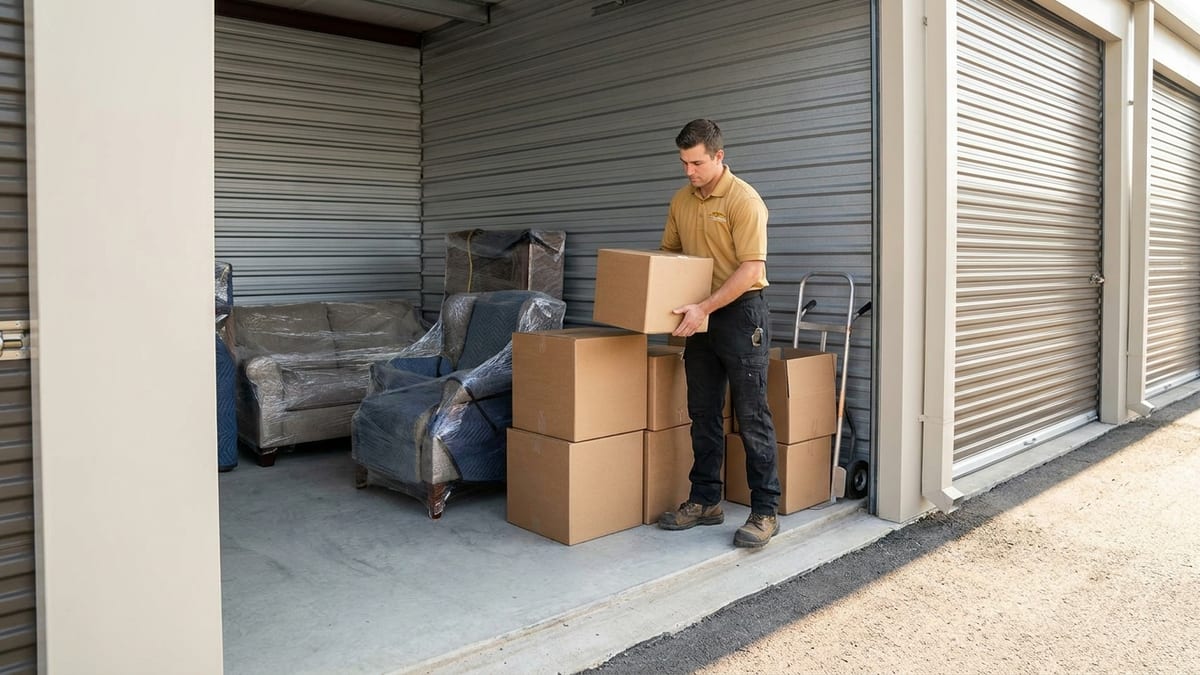
Standard self-storage runs from 5x5 up to 10x30. A quick rule: a 5x10 holds a studio, a 10x10 holds a one-bedroom, a 10x15 holds a two-bedroom, and a 10x20 holds a three-bedroom home. San Diego facilities price climate-controlled units higher than drive-up, and coastal humidity makes climate control worth considering for anything you’re keeping longer than a month or two.
What fits in each storage unit size
Getting the size right saves you money and a second trip. Here’s a plain breakdown of every common unit you’ll find at San Diego facilities.
5x5 (25 sq ft), Think of this as a large closet. It works for seasonal items, a few boxes, a small dresser, or a bicycle. It won’t hold furniture from a full room. People use these for documents, off-season gear, and overflow from a garage.
5x10 (50 sq ft), This is the sweet spot for a studio apartment or a one-room cleanout. You can fit a queen mattress set, a small couch, a couple of end tables, and 10 to 15 boxes. Stack efficiently and you’ve got room to spare.
10x10 (100 sq ft), A one-bedroom apartment fits comfortably here. That means a full bedroom set, a living room couch and coffee table, a small dining set, and 20 to 25 medium boxes. This is the most common size renters choose when they’re between apartments.
10x15 (150 sq ft), Built for a two-bedroom home. You can fit two full bedroom sets, a living room, small appliances, and 30 to 40 boxes. If you’re staging a home sale and need to clear out multiple rooms, this is your size.
10x20 (200 sq ft), Equivalent to a one-car garage. A three-bedroom house fits here, including full furniture from every room, a washer and dryer, and 40 to 50 boxes. You can also park a small vehicle in a 10x20 at facilities that allow it.
10x30 (300 sq ft), The largest size at most San Diego facilities. It handles a four- to five-bedroom home, a full two-car garage worth of contents, or a small business inventory. Most people never need this, but it exists and it’s useful for major estate cleanouts or extended construction projects.
Matching unit size to bedroom count
The bedroom-count method is the fastest way to size a unit when you don’t want to inventory every item. Here’s how it maps in practice:
| Unit size | What it fits |
|---|---|
| 5x5 | Seasonal items, small boxes, one piece of furniture |
| 5x10 | Studio or small one-bedroom |
| 10x10 | One-bedroom apartment |
| 10x15 | Two-bedroom apartment or small house |
| 10x20 | Three-bedroom home |
| 10x30 | Four to five bedrooms or full garage |
As a market observation in San Diego, third-party storage runs roughly $150-$350 per month for a one-bedroom’s worth of belongings and $300-$700 per month for a three-bedroom home, with a 30-day minimum common at most facilities. Climate-controlled units cost more than drive-up. Miramar and El Cajon tend to run lower than Hillcrest or La Jolla. The facility you choose puts the actual monthly rate in writing.
Climate-controlled vs. drive-up in San Diego
San Diego’s weather is mild, but coastal humidity still does damage over time. If you’re storing wood furniture, electronics, musical instruments, artwork, clothing, or anything with sentimental value, climate-controlled is worth the extra cost.
Drive-up units work fine for most people storing items for 30 days or less during a move. They’re also the right call for tools, outdoor gear, plastic bins, and anything that isn’t sensitive to moisture or temperature swings.
The inland zip codes, like El Cajon, Santee, and Poway, see bigger temperature swings than the coast. If your unit is at an inland facility and you’re storing heat-sensitive items, climate control matters more there than in, say, Pacific Beach or Chula Vista.
Portable container vs. facility unit
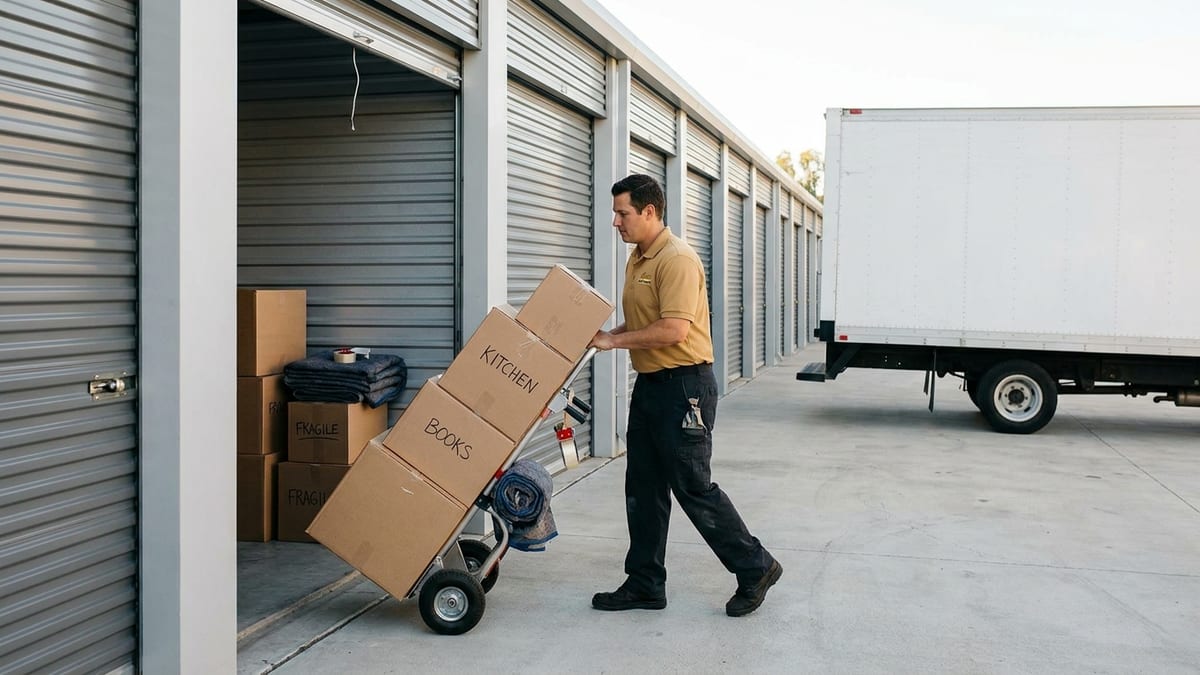
Portable containers, like the kind delivered to your driveway, are a different category than self-storage facilities. They’re worth comparing when you’re mid-move.
A portable container sits outside your home, you load it at your own pace, and the company picks it up and stores it or delivers it to your new address. For a San Diego move where your closing dates don’t line up, this can eliminate a double-move. The tradeoff is cost. Portable containers typically cost more per month than a comparable facility unit once delivery and pickup fees are included; get the actual rate from the container company.
Facility units give you 24/7 access at most San Diego locations, which matters if your new home isn’t ready and you need to retrieve items on a flexible schedule. They’re also the better option if you don’t know your end date.
If you want more context on both options, our moving and storage options guide for San Diego walks through the full comparison.
How to pack a unit so everything actually fits
The right size unit goes to waste if you don’t load it well. A few things that make a real difference:
Stack boxes floor to ceiling along the walls and leave a walkway down the center. You’ll want access to things in the back without unloading half the unit.
Put heavy items on the bottom, lighter boxes on top. Dressers and bookshelves can stand upright. Mattresses should lean vertically against a wall or lay flat on top of other furniture with a mattress bag.
Label every box on the side, not just the top. When boxes are stacked, you can only read the sides.
If you’re storing a couch, stand it on its end to save floor space. Wrap upholstered pieces in moving blankets or plastic wrap to protect against dust and scuffs.
If you’re moving items directly from your home to storage, licensed movers can pack and load in a single visit through packing services, which saves time and reduces the chance of damage in transit.
Getting the most out of your storage during a San Diego move
Storage works best when it’s planned alongside the move itself, not added as an afterthought. When a licensed mover coordinates a local move with a storage stop, the truck loading is sequenced so storage items come off first and go into the unit before the mover continues to the new address.
Storage services are also available as a standalone option for customers who’ve already moved and need somewhere to keep overflow while they settle in. If you’re not sure which size makes sense for your situation, call (858) 400-4069 and the marketplace can help you figure it out before you book anything.
Frequently asked questions
What size storage unit do I need for a 2-bedroom apartment?
A 10x15 is the standard recommendation for a two-bedroom apartment. It holds two full bedroom sets, a living room, and 30 to 40 boxes. If one of your bedrooms is small or you’re leaving large furniture behind, a 10x10 might be enough, but most people find they need the extra 50 square feet once everything is packed.
Is a 10x10 storage unit big enough for a 1-bedroom apartment?
Yes, for most one-bedroom apartments a 10x10 is the right fit. It holds a full bedroom set, a couch, coffee table, small dining set, and 20 to 25 boxes. If you have an especially large sectional or a lot of garage overflow, bump up to a 10x15 to avoid cramming.
Do I need climate control for storage in San Diego?
It depends on what you’re storing and for how long. San Diego’s coastal humidity can damage wood furniture, electronics, clothing, and anything with fabric or paper over time. If you’re storing for more than a month, or if you’re keeping anything valuable or sentimental, climate control is worth the premium the facility charges. Drive-up is fine for tools, plastic bins, and short-term storage during a move.
How much does a storage unit cost in San Diego?
As a market observation, third-party storage in San Diego runs roughly $150-$350 per month for a one-bedroom’s worth of belongings and $300-$700 per month for a three-bedroom home, with a 30-day minimum common. Climate-controlled units cost more than drive-up. Prices vary by neighborhood and facility; the storage provider gives the actual monthly rate.
What fits in a 5x10 storage unit?
A 5x10 holds a studio apartment comfortably. That’s a queen mattress set, a small sofa, a couple of end tables, and 10 to 15 boxes. It’s the most common size for people in between apartments who need somewhere to park their belongings for a few weeks.
Can a moving company load my storage unit for me?
Yes. Licensed movers coordinate local moves with storage stops regularly. If you need items packed as well, packing services can handle that in the same visit. Call (858) 400-4069 to talk through the logistics before you book your unit.