To move framed art, start with an item list, condition record, and measured carry path. Then ask the mover to describe packing, crating, transport, and placement in writing. That preparation matters more than choosing wrapping materials on your own.
Identify pieces that need a specialist’s review
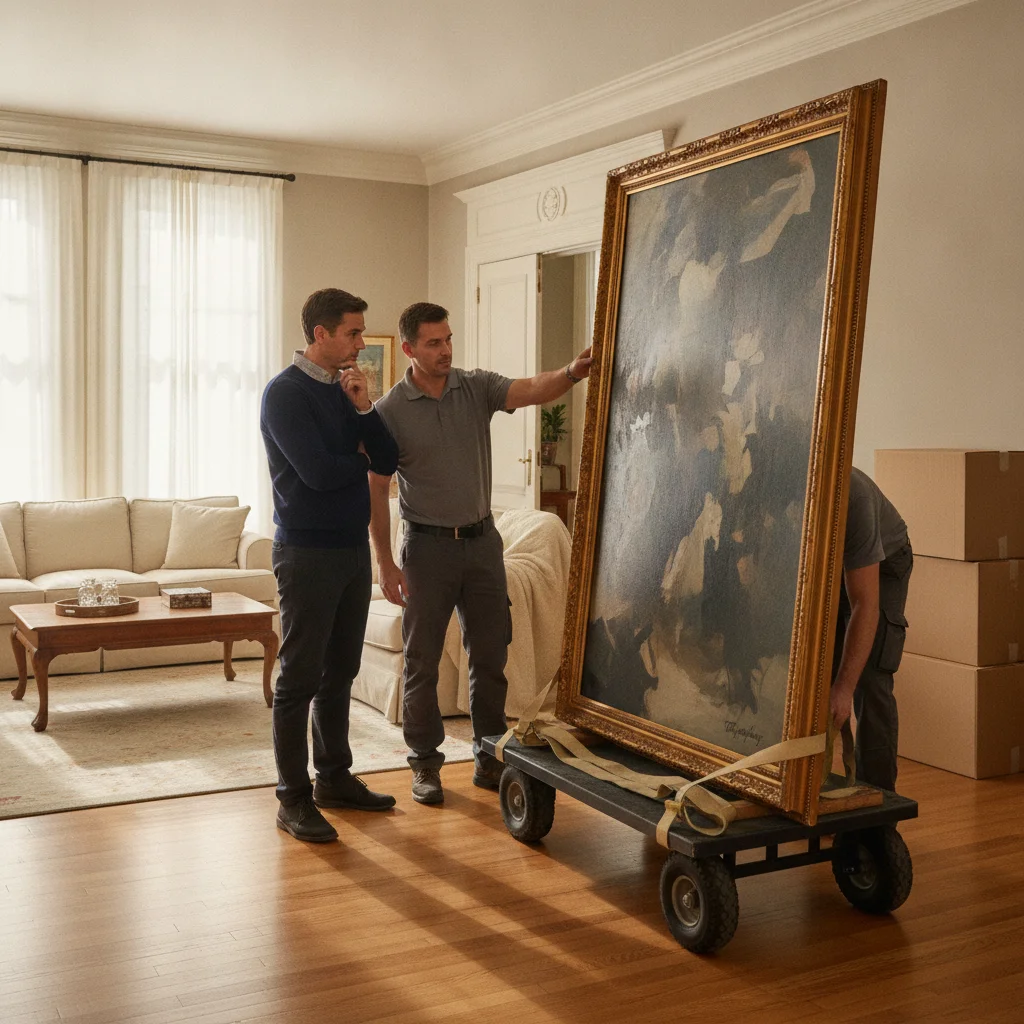
Begin by separating ordinary wall decor from pieces needing individual review. Don’t make the decision using size alone. Record unusual frames, glazing, textured surfaces, projecting details, loose components, and existing damage.
Flag pieces with financial, historic, or strong personal value. Include works with delicate frames, unusual shapes, or unknown construction. A large mirror, shadow box, stretched canvas, and framed photograph can require different planning. Your list should make those differences visible before anyone quotes the job.
Ask each mover which items they can assess and pack themselves. If they recommend an art handler, conservator, or custom crating provider, ask who hires that specialist. Also confirm who coordinates the handoff and transport schedule. Don’t assume every specialty service comes from the same company.
When comparing fine art movers in San Diego, describe the complete collection. One difficult piece can affect the proposed packing scope and carry plan. Share clear photographs instead of relying on labels such as “large painting” or “valuable art.”
The same approach applies when artwork moves alongside carved cabinets, fragile tables, or older furnishings. Our guide to moving antique furniture in San Diego explains how to separate item condition from access concerns.
For a California-only move, check the mover’s legal name through the BHGS household mover license search. California household movers are licensed by the Bureau of Household Goods and Services, not the CSLB. Master Movers San Diego is a referral service and doesn’t perform the move.
Record condition and dimensions before quoting
Create one entry for every framed piece. Give each item a simple identifier, such as “living room landscape” or “hallway mirror.” Use that same identifier in photographs, written estimates, and placement notes.
Measure the full outside dimensions of each frame. Include depth and any parts extending beyond the frame. Record the item’s current room, destination room, and intended wall or floor location. If you don’t know the weight, say that it hasn’t been confirmed.
Photograph the front, back, corners, edges, hanging hardware, and visible surface marks. Take close views of existing chips, gaps, scratches, loose joints, or damaged backing. Keep the original files together, and don’t edit over them. These images establish what you observed before the mover handles the piece.
A useful item record includes:
- Item identifier and short description
- Outer height, width, and depth
- Origin and destination rooms
- Frame, surface, and glazing notes
- Existing condition concerns
- Known value or appraisal information
- Packing or crating questions
- Requested final placement
Send this record before accepting a quote. Ask the mover to confirm which pieces they reviewed and whether any need an in-person assessment. If the quote excludes a listed item, get that exclusion clarified before move day.
Don’t present an unsupported value as an appraisal. If value affects your insurance or transportation decision, use your own records and ask the appropriate professional. The mover should receive the information needed for their written documents.
Decide who provides wrapping or custom crating
Packing framed art for moving is a scope decision, not just a supply list. The main question is who will inspect, protect, pack, label, open, and place each piece. Get those responsibilities assigned before the move.
Ask the mover to state their proposed method for every flagged item. The answer might reference corner protection, blankets, cartons, or a custom crate. Treat those as proposed methods, not guarantees. Ask what they provide, what a separate specialist provides, and what you’re expected to prepare.
Custom crating shouldn’t appear as a vague line item. Ask which artworks would receive crates, where the crates are made, and who opens them at the destination. Confirm what happens to the crate afterward. If another company handles crating, put both companies’ responsibilities into the schedule.
Also clarify these boundaries:
- Who removes each piece from the wall
- Who handles existing hanging hardware
- Whether wall mounting is included or excluded
- Who labels matching parts and locations
- Whether the mover needs appraisal or condition documents
- Who approves a changed packing plan
Don’t remove delicate artwork from its current location merely to stage it for a quote. Instead, ask the mover what views and measurements they need. They can then explain whether the piece should remain in place until their team arrives.
Our piano and specialty moving service can help you connect with a permitted local mover for unusual-item planning. The matched mover sets the packing scope and performs the physical work.
Map doors, stairs, and wall clearance
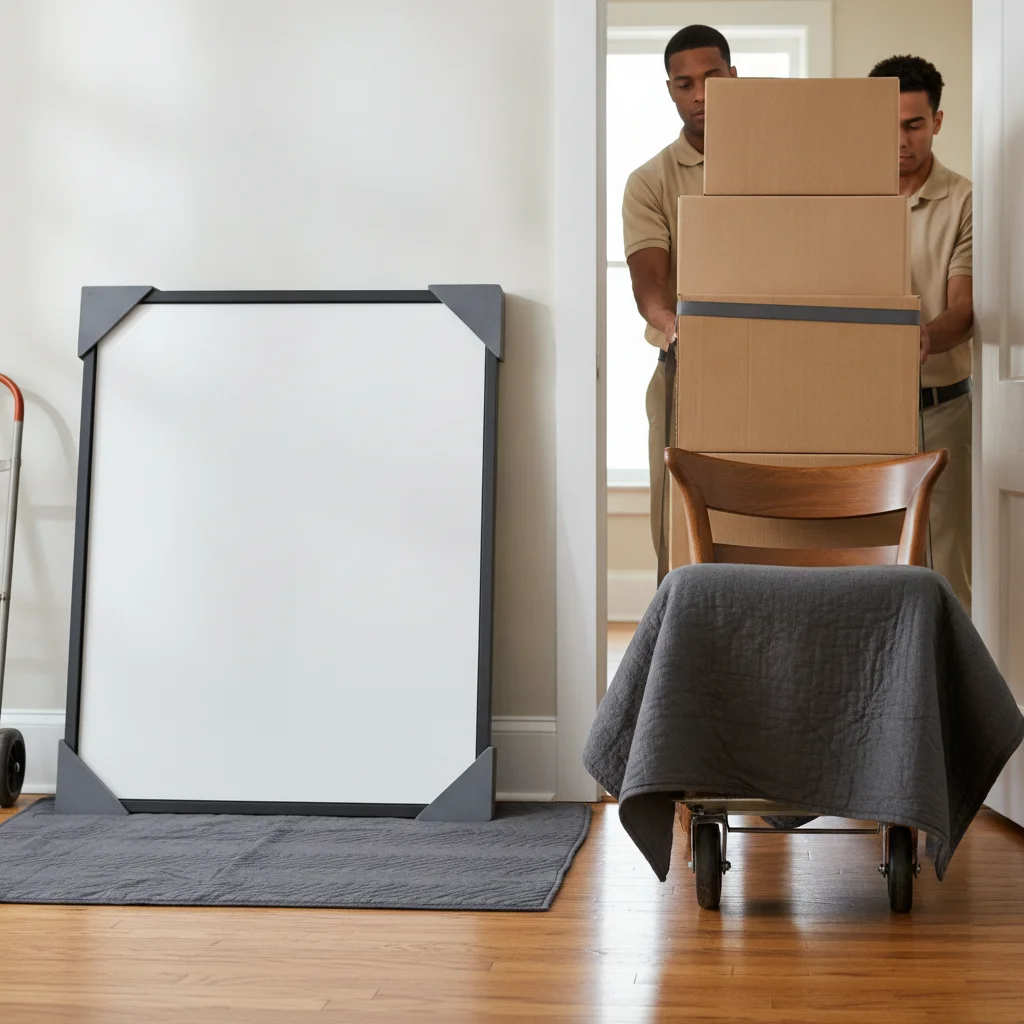
A framed piece can fit inside a room yet create problems along the route. Map the complete path from its current position to the moving vehicle. Repeat that process at the destination.
Measure the frame first, then record narrow points along the path. Check door openings, hallway turns, stair landings, elevator doors, gates, and loading entrances. Include projecting handles, railings, light fixtures, and furniture that reduces usable space. Don’t assume a diagonal turn will work. Give the mover the measurements and let them plan the handling method.
Photograph each tight turn from both directions. A short video walkthrough can add context, but it shouldn’t replace written dimensions. Label each image with the matching artwork and property.
San Diego access varies sharply by address. A Downtown condo may involve a loading dock and service elevator. A La Jolla hillside property may have exterior steps and tight landings. A North Park apartment may offer a shorter indoor route but limited curb access. Tell the mover what applies to your actual properties.
For a building with an HOA or property manager, obtain its moving instructions directly. Ask about elevator reservations, loading access, certificates of insurance, and protected common areas. This guide doesn’t state a universal deadline because each building sets its own requirements.
Walk the destination route through the final placement point. Record the wall location, ceiling clearance, nearby furniture, and preferred orientation. If installation isn’t included, identify a secure place where the packed piece can remain until the appropriate installer handles it.
Keep the route clear on move day. Boxes, parked cars, and unplanned furniture can change the path the mover reviewed.
Put handling and placement details in writing
Turn your notes into a written scope tied to specific items. A general promise to “take care of the art” doesn’t explain who packs it, which method was proposed, or where it goes. Item-level details make the agreement easier to review.
For each framed piece, confirm:
- The exact item covered by the scope
- Who removes it from its current location
- Who supplies wrapping, cartons, or crating
- Who transports and unpacks it
- The agreed carry route and access conditions
- The destination room and placement point
- Whether hanging or installation is excluded
- How a changed condition or method gets documented
Review the mover’s estimate and other shipment documents against your inventory. Ask for corrections when an item, address, service, or responsibility doesn’t match. Keep the final documents and condition photographs accessible during the move.
For a California-only household move, review the BHGS consumer information for household movers. Confirm the mover’s valuation terms directly before signing. Current California intrastate valuation figures couldn’t be confirmed from the approved sources for this guide, so no dollar amount is quoted here.
Different federal rules apply when the shipment crosses state lines. FMCSA defines an article of extraordinary value as one worth more than $100 per pound. If the shipper doesn’t identify such an article in writing, the carrier’s liability may be limited to $100 per pound for that article. Written notice can preserve recovery up to the article’s declared value, without exceeding the shipment’s declared value. Review FMCSA’s Protect Your Move and discuss the election with the interstate mover.
Those federal figures don’t govern a move beginning and ending in California. The mover sets its terms and handles any claim. Master Movers San Diego doesn’t set valuation terms or guarantee an outcome.
Before move day, send the final inventory, access notes, and placement plan together. Ask the mover to acknowledge any revisions in writing.
When to call us
Call when framed art needs item-specific packing, measured access planning, or coordination with other specialty pieces. Master Movers San Diego can match you with an independent local moving company, while the mover sets the scope and performs the work. Call us at (858) 400-4069 and we’ll connect you with a permitted local mover.