If you searched “movers Poway CA,” start with property access, not a generic company list. The right mover needs to know where the truck can stop, how furniture reaches the door, and whether a gate controls entry. A short access check before booking can expose problems while they’re still easy to discuss.
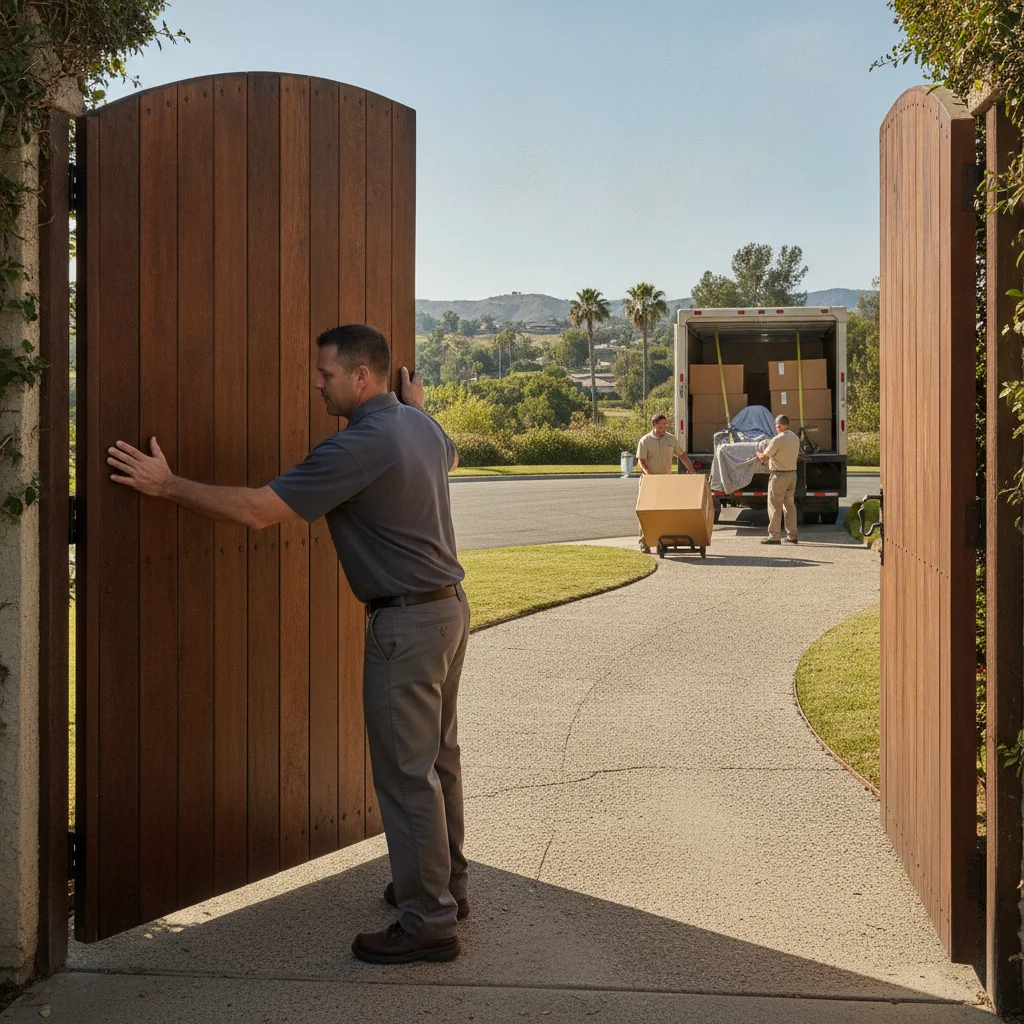
Match the mover to the property’s access
Two Poway homes can require very different moving plans. One may offer a clear driveway near the entrance. Another may involve a gate, a long carry, tight turns, or curb-only loading.
Describe the property before choosing a mover. Start with the truck’s likely stopping point. Then explain the complete path between that point and the rooms being moved. Include stairs, exterior steps, side yards, gate openings, and sharp hallway turns.
Photos help, but measurements settle the important questions. Record the narrowest gate opening and any low clearance along the path. Measure doorways for unusually wide furniture. Tell the mover whether the driveway curves, slopes, or has limited turning space. The mover can then decide what vehicle and moving plan fit the property.
Also explain who controls access. A private gate may require an owner, tenant, association representative, remote, or entry code. Don’t assume the gate will remain open because it usually does. Confirm the move-day procedure with whoever manages it.
When comparing a Poway moving company, ask how it will handle the access you described. The answer should address your actual path, not just the number of rooms. Discuss where loading begins, what happens if the planned truck position isn’t available, and which items need separate handling.
Master Movers San Diego can connect you with licensed, insured independent movers. We don’t provide the moving crew or perform the physical work. Our local moving service is a starting point when you need a mover matched to a Poway property.
Check driveway width, gates, and curb space
Walk the loading path as if you were carrying a large dresser. Start at the curb or proposed truck position. Continue through every gate and doorway to the farthest room.
Write down the narrowest clear width. Measure the usable opening, not the distance between posts when hinges, handles, plants, or stored items reduce the space. Check overhead clearance from tree limbs, roof edges, gate hardware, and cables. Don’t move or touch a cable. Flag it for the property owner and mover instead.
A driveway needs more than enough room for a vehicle. The driver must also judge the surface, slope, approach, and exit. Share photographs taken from the street and from the house. If the driveway is shared, confirm what access rights and neighbor arrangements apply to your address.
Test every gate before moving day. Make sure the correct key, remote, or code is available. Check whether the gate stays open or closes automatically. Remove personal items from the path, including planters, hoses, bicycles, and trash carts.
Next, inspect the curb. Note signs, painted sections, neighboring driveways, and any space that appears restricted. Don’t interpret curb markings or temporary signs yourself. Ask the City of Poway which parking or curb-use rules apply to the exact address.
A homemade sign or cone doesn’t establish permission to reserve public curb space. If the mover expects curb loading, confirm the approved process with the city before relying on that space. Give the mover the answer in writing when possible.
Keep a backup position in the plan. The mover must still decide whether that position is safe, legal, and workable for its vehicle.
Confirm HOA and parking rules for the address
HOA and property-management rules can change from one community to another. Ask the association or manager for the rules tied to your exact address. A neighbor’s earlier move isn’t a substitute for current written instructions.
Request clear answers about vehicle entry, gate access, curb loading, common-area protection, and allowed moving periods. If the property requires insurance paperwork, ask for the exact document, wording, recipient, and submission method. Then give those requirements to the mover before booking.
Don’t describe the request as simply “a COI” if the association provided more detailed instructions. The mover needs the actual requirements. Check whether the legal business name on its paperwork matches the company you’re hiring.
Parking deserves a separate confirmation. An association may manage private streets or assigned spaces, while the city may control a public curb. Ask the property manager who controls the proposed loading location. If city approval may be involved, confirm the answer directly with the City of Poway.
No Poway-specific truck-parking fee, curb-reservation rule, or storage-container requirement was confirmed from a primary source. Don’t copy a rule from the City of San Diego or another nearby city. Those rules don’t establish Poway’s requirements. Ask the City of Poway what applies to the address and planned placement.
Put the final instructions in one message for the mover. Include the approved entrance, gate procedure, planned truck area, property contact, and any written restrictions. Bring a copy on moving day in case access staff need it.
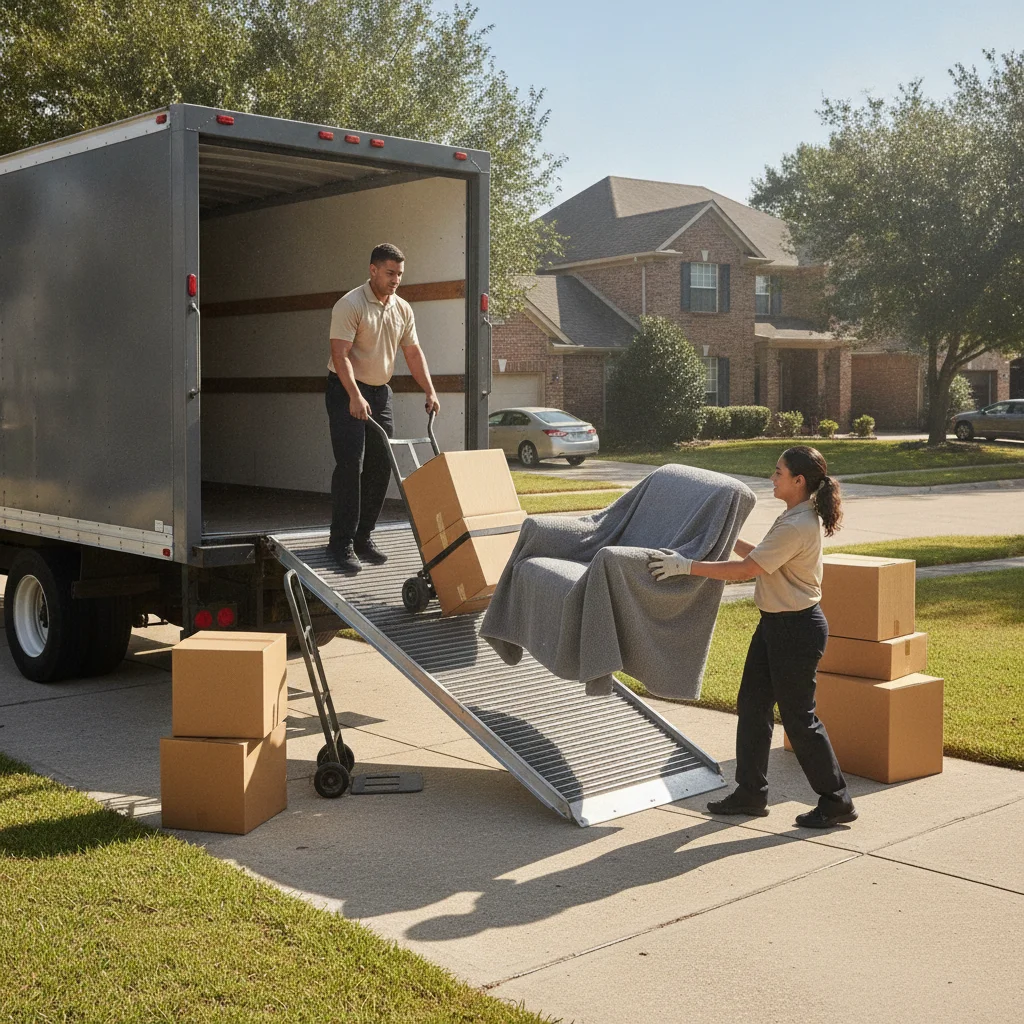
Discuss Poway Road and I-15 routing without fixed times
Route planning for a Poway move has two parts. The driver needs a workable regional route and a clear final approach to the property.
If the proposed trip uses I-15 and Poway Road, discuss that route with the mover before the move. Don’t turn a map estimate into a promised arrival time. Traffic, road conditions, vehicle restrictions, and the chosen truck can affect the driver’s decision.
Ask which direction the truck will approach the property. A route that works for a passenger car may not suit the moving vehicle. Tight turns, gate angles, and limited turnaround space may matter during the last part of the trip. Share street-level photographs when the entrance is hard to identify.
Create a short arrival note with the property address and approved gate. Add the intended loading position and the name of the person who controls entry. Describe visual landmarks only when you’ve checked them yourself. Don’t rely on an old photograph or an outdated gate code.
The mover should make the final routing decision for its vehicle. Your job is to provide accurate property information and confirmed access instructions. The mover can use current road information when selecting the route.
Repeat the same review for the destination. A clear pickup doesn’t guarantee a clear delivery. Check the destination’s driveway, curb, gate, and property rules as carefully as the Poway address.
Avoid scheduling other commitments around a fixed travel guess. Instead, ask the mover how it communicates updates and what the written agreement says about timing. Review those terms before signing rather than assuming every company follows the same process.
Check the mover’s BHGS license before booking
California intrastate household movers are regulated by the Bureau of Household Goods and Services, or BHGS. BHGS is part of the Department of Consumer Affairs. It took over household-mover regulation from the CPUC in 2018.
A California moving company isn’t licensed by the CSLB as a contractor. For a move within California, ask the company for its household mover license number. Check the business through the official BHGS Household Mover License Search before booking.
Search using the mover’s exact business information. Compare the search result with the name on the estimate and other move documents. If details don’t match, pause and ask the company to explain the difference. Don’t guess that two similar names represent the same business.
The state’s household mover consumer information provides more guidance for California moves. Use it when reviewing a mover and the documents supplied for your shipment.
License verification doesn’t replace reading the written agreement. Confirm that the company named in the paperwork is the company you intend to hire. Review the inventory, access conditions, requested services, valuation terms, and payment terms before signing. Make sure the driveway, gate, and parking details appear wherever they affect the moving plan.
If the shipment crosses state lines, the regulatory check changes. Interstate household moves fall under federal FMCSA rules in addition to applicable requirements. Use FMCSA’s Protect Your Move resources and check the mover’s USDOT registration.
For more screening steps, read our guide on how to choose a San Diego mover. Master Movers San Diego can make a referral, but the independent mover holds the license and performs the move.
When to call us
A restricted gate, long carry, difficult driveway, or uncertain truck position deserves a professional access review. Call us at (858) 400-4069 and we’ll connect you with a licensed local mover.