Sectional sofa movers need more than pickup and delivery addresses. Before hiring anyone, identify every section, measure both routes, and confirm exactly what the written quote includes. That preparation helps the mover judge whether the sofa needs disassembly and how each piece reaches its final position.
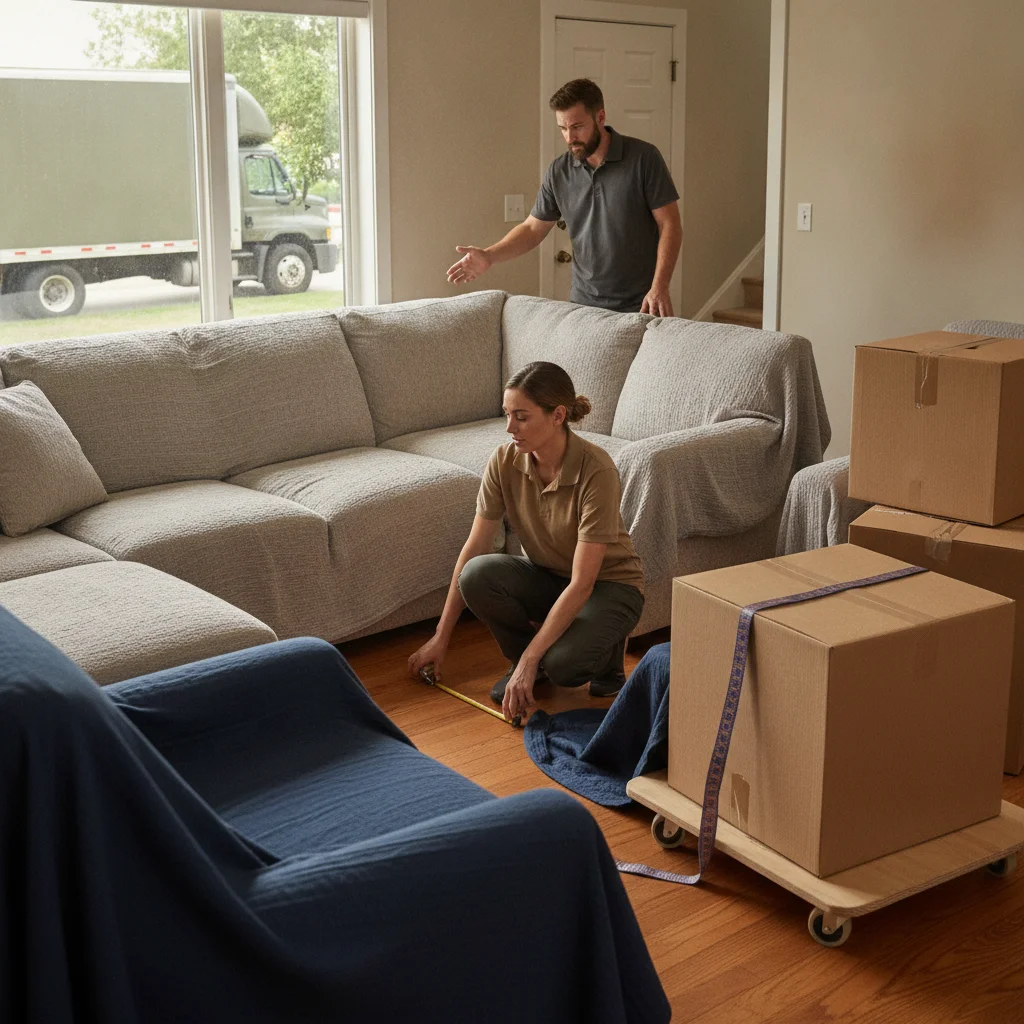
Identify sectional pieces, connectors, and moving parts
Start by separating the sofa’s appearance from its moving configuration. A wide sectional may divide into several manageable units. Another may have connected seats, fixed arms, powered recliners, or a sleeper mechanism. The mover needs details about those components before defining the job.
Count each physical section and describe its shape. Note corner units, chaises, armless seats, consoles, and recliners. Include loose cushions, removable legs, and any matching ottoman. Seat count alone doesn’t tell the mover how many pieces must travel.
Look between and beneath the sections for connectors. Some pieces lift from brackets. Others use clips, bolts, latches, or another manufacturer-specific system. Don’t force a connection that isn’t clear. Share the manufacturer and model when you can identify them. A product manual or assembly diagram may answer questions that photographs can’t.
Send the mover clear photos showing:
- The complete sectional in its current arrangement
- Each joint between neighboring sections
- The underside near visible brackets or legs
- Power cords, controls, and reclining components
- Labels showing a model name or number
- Existing marks, loose fabric, or damaged hardware
Ask whether the sofa will travel as separate modules. Also ask how cushions and detached hardware will be tracked. Small feet, bolts, and brackets can look interchangeable even when they aren’t.
This early inventory helps you compare the same scope across companies. Our broader guide to comparing furniture movers in San Diego explains what else to examine before choosing one.
Measure doors, halls, stairs, and turns
Measure the sofa sections first, then measure the complete route. Record each section’s height, width, depth, and longest diagonal. If feet or cushions come off, keep both the assembled and reduced dimensions.
Next, measure the usable doorway opening. The trim-to-trim measurement may not represent the actual clearance. An open door, handle, screen, or security gate can reduce the available space. Don’t remove building hardware unless the property owner approves it and the hired mover accepts that task.
Follow the route from the sectional to the loading point. Record narrow halls, stair widths, ceiling height over stairs, landings, railings, and sharp turns. Measure the space needed to rotate a section, not only the narrowest opening. A piece may fit through a doorway yet fail to make the turn immediately beyond it.
Repeat that work at the delivery address. The sectional may leave its current room easily but not reach the planned room at the destination. This matters whether you’re moving between a Little Italy condo, a North Park bungalow, or a La Mesa home.
Include elevators in the route plan. Measure the door opening and interior, then confirm building rules with management. Ask about elevator reservations, loading areas, floor protection, and required insurance documents. Those requirements belong to the property and the hired mover, so confirm them directly.
Photograph every tight point with the tape measure visible. Label each image by location, such as pickup stair landing or delivery bedroom turn. Measurements don’t guarantee a fit, but they give the mover useful evidence for planning the route.
Confirm who handles disassembly and reassembly
“Move the sectional” can mean different things to different companies. One quote may cover carrying separated modules only. Another may include disconnecting sections, removing feet, and putting everything back together. Get that scope in writing before booking.
Ask which parts the mover is willing to remove. Cover legs, connector brackets, arms, backs, reclining pieces, sleeper components, and attached consoles. Powered seating needs extra attention. Tell the mover about cords, control boxes, batteries, and nearby outlets. Ask what must be disconnected before the crew arrives.
Don’t assume the mover supplies a particular tool or replacement hardware. Ask what the crew expects to use and what you must provide. If the manufacturer requires a special release method, share the manual before move day. If you can’t confirm how a part separates, say so plainly.
Reassembly also needs a clear definition. Ask whether the mover will reconnect the modules, reinstall removed feet, and position the sofa in the requested layout. Confirm whether electrical components will be reconnected or left for you. The written answer matters more than a casual verbal description.
Our furniture disassembly guide covers the questions to settle before any hardware comes off. For a sectional, add one more step: photograph every connection before disassembly. Label separated pieces in a way that matches your placement plan.
If a section can’t be disassembled further, tell the mover. Don’t describe it as removable based only on appearance. The company you hire should decide whether its crew can handle the piece and the measured route.

Share pickup and placement access before quoting
A useful quote reflects the complete carrying path. Give the mover more than the street address. Explain where the truck can legally stop, how the crew reaches the sofa, and where every section belongs at delivery.
At pickup, describe the route from the room to the loading area. Include the floor, stair count, elevator access, gates, patios, courtyards, and narrow side paths. Mention whether the sectional crosses carpet, tile, wood, or an outdoor surface. The mover can then explain its handling plan and any customer preparation.
At delivery, identify the exact room and planned arrangement. “Inside the house” isn’t specific enough. A sectional going upstairs or around a tight corner creates a different scope from one placed inside a street-level room.
San Diego access can vary within the same move. A beach-area pickup might involve limited curb space. A downtown building might direct movers through a loading area. A suburban destination might add a gate or sloped driveway. Don’t assume the company recognizes these conditions from the address alone. Describe what you can see and confirm property rules separately.
Send photos of the curb, entrance, stairs, elevator, hallways, and final room. A short video can show how those points connect, if the mover accepts video. Include closed doors and open-door clearance when both affect the route.
If this is the only item being moved, say that clearly. Ask whether the written quote covers one sectional, its loose pieces, and the stated access conditions. You can also review the site’s furniture moving service when deciding what kind of help fits the job.
Put handling and placement details in writing
The final written scope should identify the sectional and both locations. It should also record access, disassembly, handling, transport, reassembly, and placement responsibilities. Don’t rely on “standard service” when the sofa has powered, reclining, sleeper, or fragile components.
List the number and type of modules. Note removable pieces and any components that must remain attached. Include the floor at each address, stairs, elevators, gates, carrying distance, and loading instructions supplied by the property.
Then separate mover tasks from customer tasks. Your list might say that the customer clears the route and removes loose personal items. The mover’s list should state only the work that company has agreed to perform. Ask for corrections when the written scope conflicts with your conversation.
Confirm the planned room and orientation. A simple sketch can show where the chaise, corner, and reclining sections belong. Also discuss what happens if a piece doesn’t fit along the proposed route. The company should explain its options before anyone removes doors, railings, windows, or sofa components.
Take dated photos of the sectional before pickup. Capture existing scratches, fabric wear, hardware, electronics, and each separated module. Ask the mover to explain its valuation terms and claims process. Don’t assume that a particular repair, replacement, or damage outcome is included.
For a California-only household move, verify the company through the BHGS household mover license search. Search the mover’s legal name and confirm the current record before booking. Master Movers San Diego doesn’t hold the mover’s license or set the carrier’s terms. The independent company you hire controls its written estimate, service scope, and handling procedures.
When to call us
Professional sectional couch moving help makes sense when the route is tight, the modules are heavy, or the connection method isn’t clear. It’s also useful when stairs, elevators, powered seats, or sleeper components complicate the job. Call us at (858) 400-4069 and we’ll connect you with a licensed local mover.